

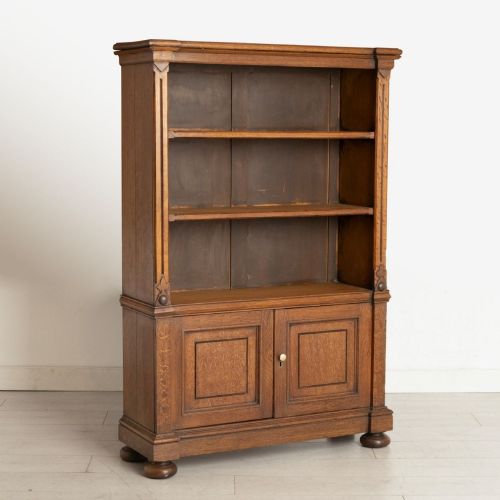
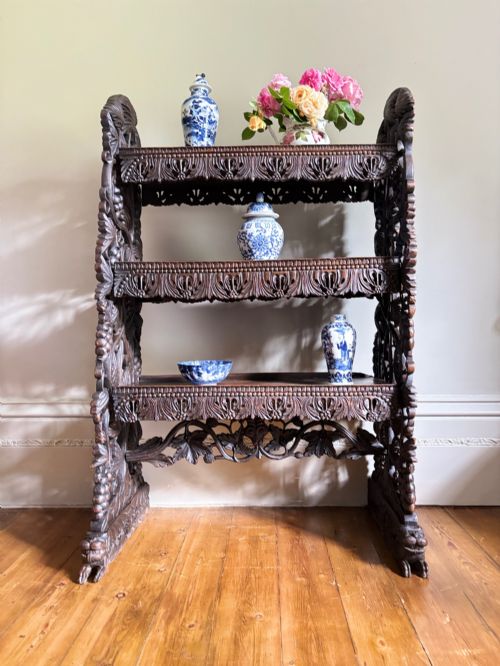
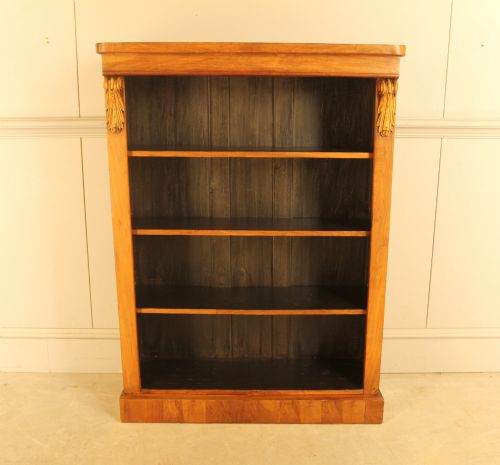
Victorian Carved Display Shelving
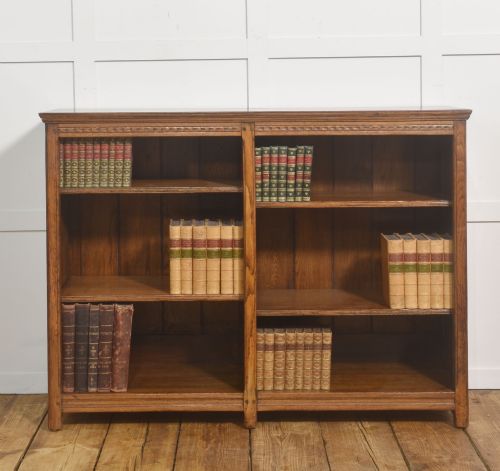
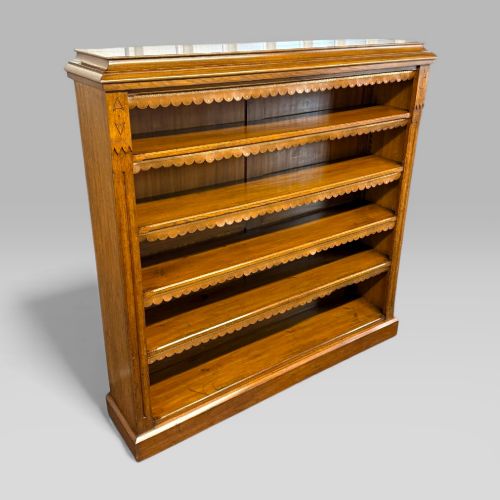
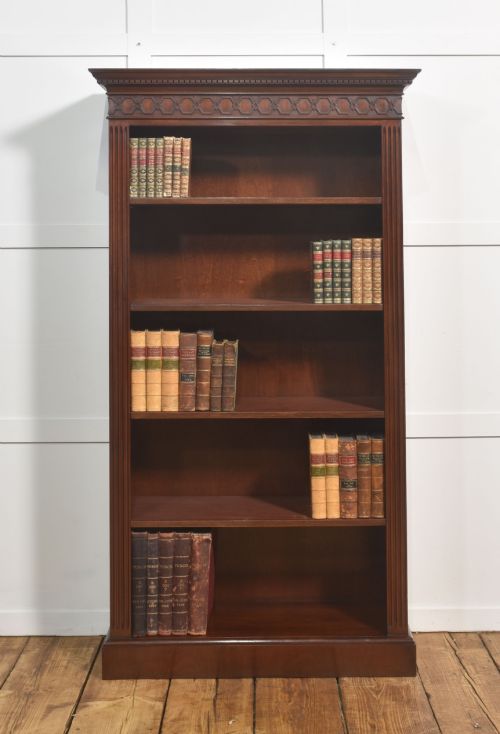
Victorian carved display shelving offers a practical stage for cherished objects, bringing rich timber and fine carving straight into daily rooms.
Victorian Carved Display Shelving
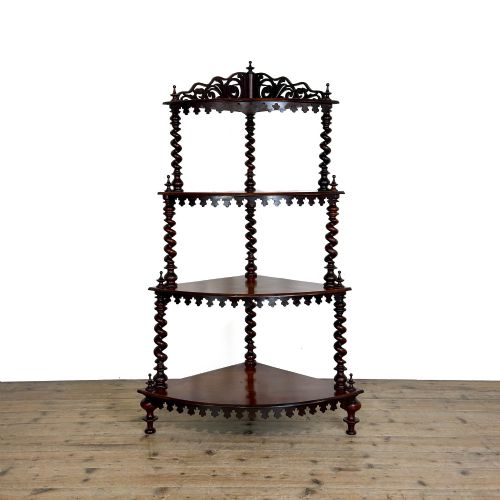
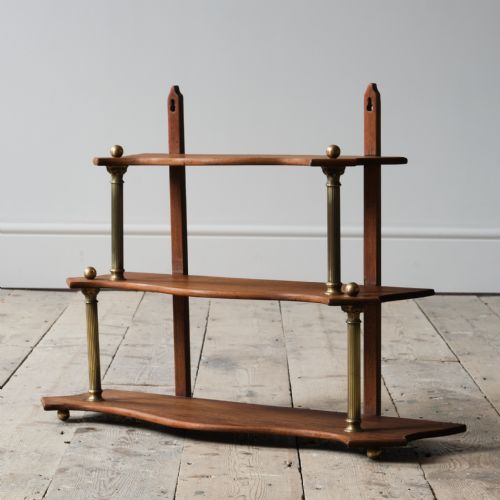
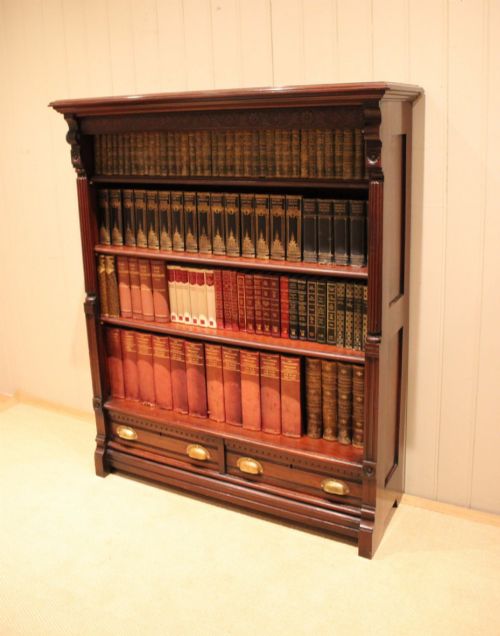
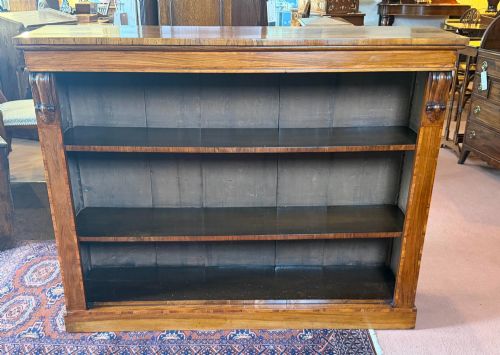
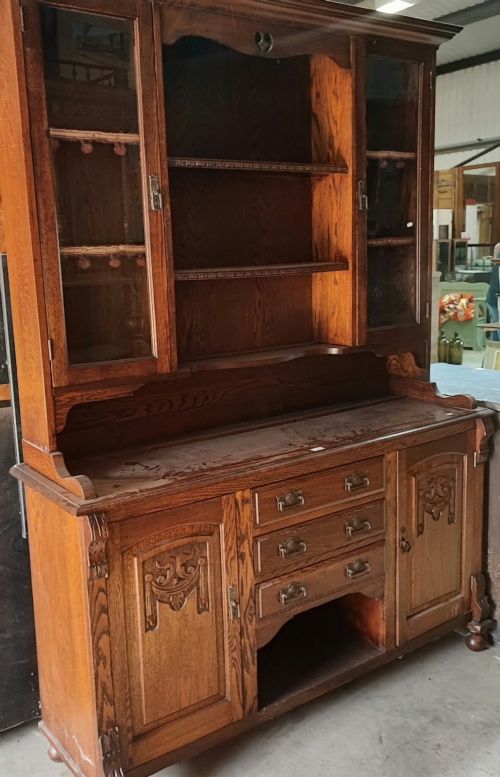
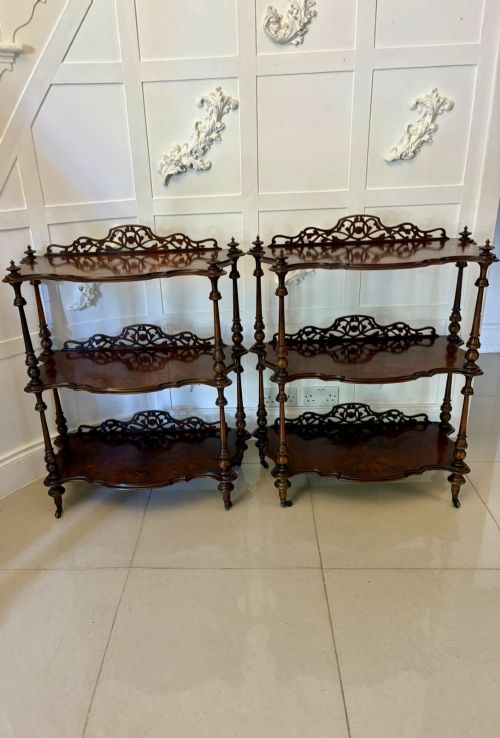
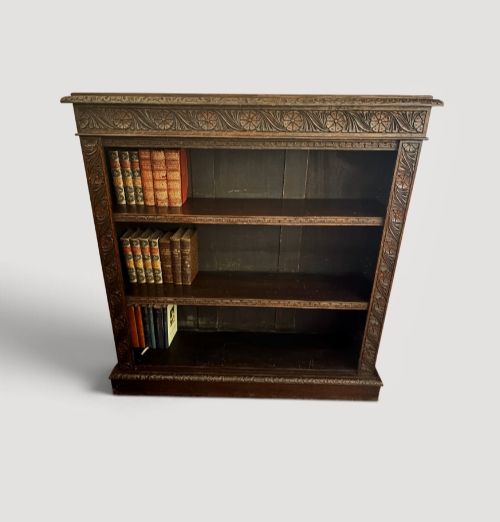
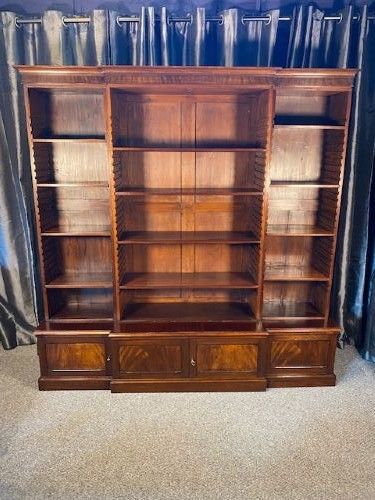
Victorian carved display shelving spans several distinct forms designed to hold books and ornaments, with open bookcases and tiered whatnots appearing most frequently across these listings. Pieces range from modest wall-hanging shelves to large library bookcases and corner units, often bearing dates across the nineteenth century.
The materials used reflect the cabinetmaker's choice of fine hardwoods, featuring walnut, mahogany, and oak alongside burr walnut and rosewood. These items serve to organise and display collections within domestic spaces, adhering to Victorian, Regency, and Aesthetic Movement design preferences.
Materials and Techniques
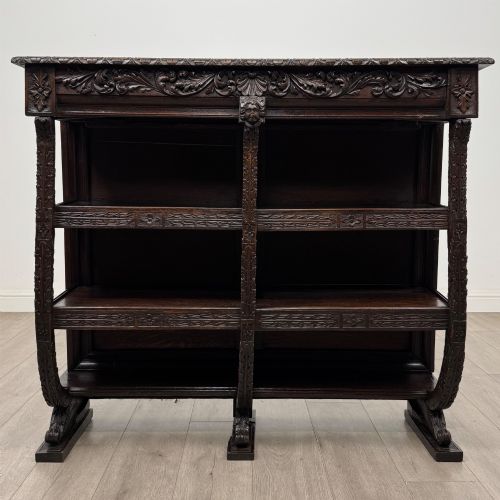
Makers constructed these pieces using solid timbers and decorative veneers such as burr walnut and mahogany, supported by brass fittings and glass elements where cabinets required glazing. Carving was applied by hand to cornices, pilasters, and friezes, particularly on oak and walnut library pieces.
Adjustable shelving mechanisms appeared in larger open bookcases, allowing owners to alter shelf heights for varying book sizes. Surface finishes were polished to highlight the natural grain of woods like rosewood, padauk, and tiger oak.
Listings feature walnut, mahogany, oak, burr walnut, and rosewood across nineteenth-century bookcases and whatnots.
Design and Execution
The distinction between standard utility shelving and finer display pieces rests upon the depth of the carving and the selection of timber veneers. Master cabinetmakers employed highly figured burr walnut or dense mahogany, pairing them with crisply cut relief carving rather than plain mouldings.
Proportion and structural integrity also separate the finer examples, seen in balanced corner whatnots and substantial library bookcases with harmonious stepped tiers.
Edwards & Roberts
The Victorian Carved Display Shelving Glossary
- Étagère
- A freestanding piece of furniture with a set of open shelves for displaying ornaments. This French term often applies to decorative whatnots from the period.
- Breakfront
- A piece of furniture whose central section projects forward from the side sections. This layout creates depth and visual interest in large bookcases and cabinets.
- Shodona
- A Japanese-style display cabinet featuring asymmetrical shelving. These pieces reflect nineteenth-century European fascination with imported Eastern design.
Victorian Carved Display Shelving: Frequently Asked Questions
What is a Victorian whatnot?
A whatnot is a multi-tiered set of open shelves designed to hold ornaments, small books, and curiosities in nineteenth-century drawing rooms.
These pieces range from corner units to freestanding stands, offering visible storage that elevated everyday domestic displays.
How do I style wall hanging shelves?
Wall-hanging shelves suit smaller spaces where floor area is limited, providing an elevated surface for ceramics, small books, or framed photographs.
Ensure they are fixed securely to solid wall fixings to bear the weight of dense hardwood timbers like mahogany or walnut.
Are these shelves suitable for heavy books?
Many open bookcases feature adjustable wooden shelves specifically built to support heavy volumes of library books without sagging.
Larger oak and mahogany library bookcases are structurally robust enough to function as working storage in a study.
What woods were used in these pieces?
Cabinetmakers utilised a variety of native and imported timbers, favouring walnut, mahogany, and oak for their strength and grain.
More decorative items employed burr walnut veneers, rosewood, padauk, and olive wood to achieve rich visual textures.