





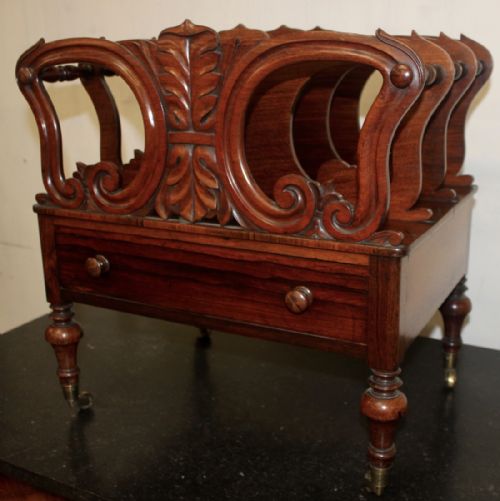
Victorian Carved Canterbury
A victorian carved canterbury is a practical piece of furniture designed for holding folios, sheet music, or journals.
Victorian Carved Canterbury
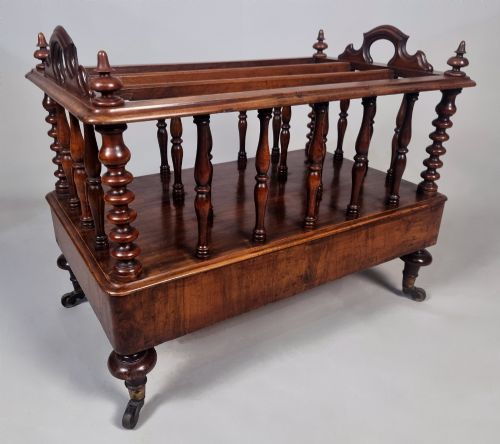
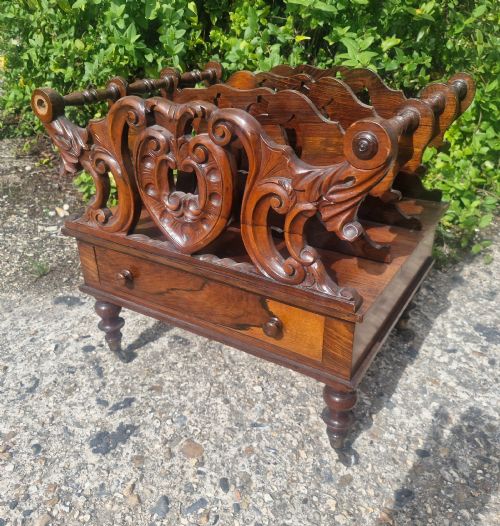
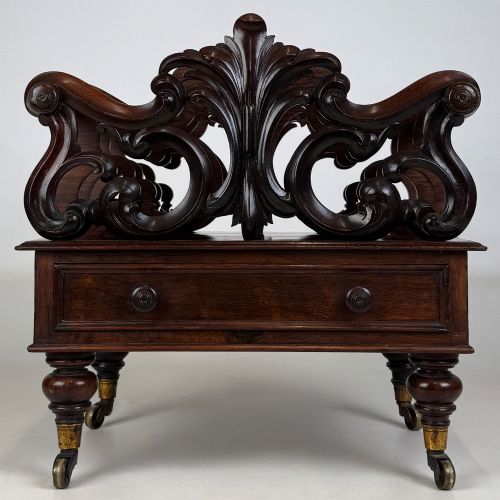
A victorian carved canterbury typically appears as a low, compartmented stand intended for papers, magazines, or music sheets. Most examples met here date from the nineteenth century, executed in walnut, rosewood, or mahogany.
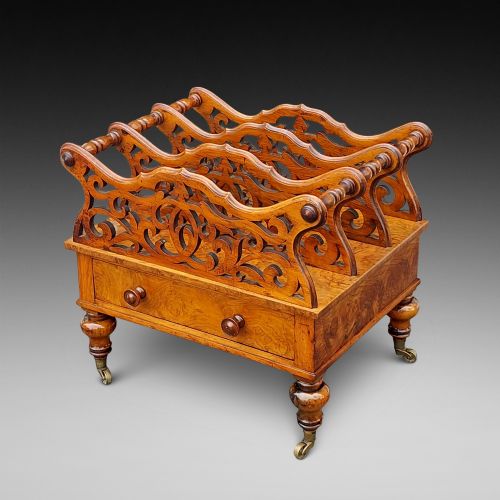
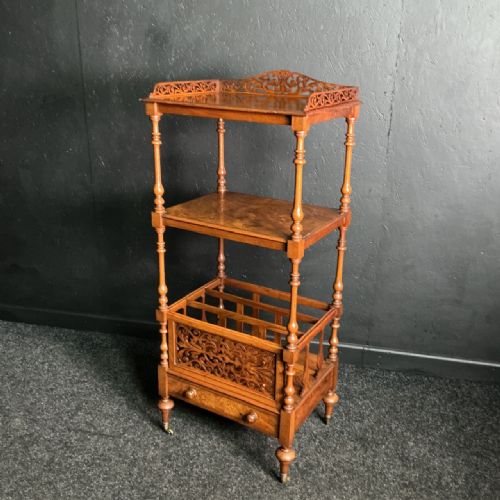
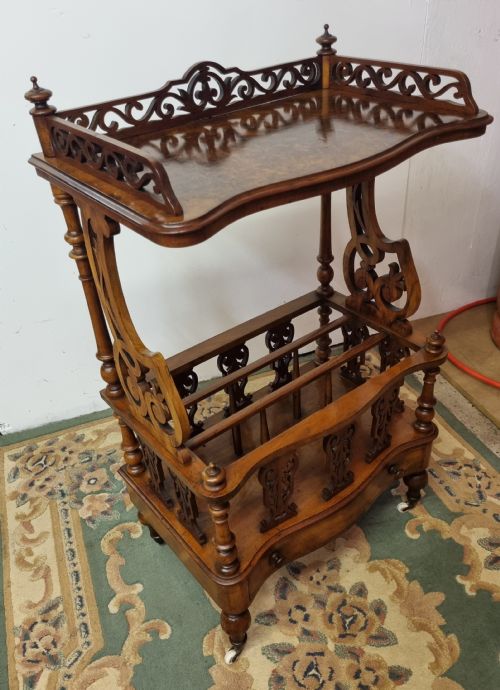
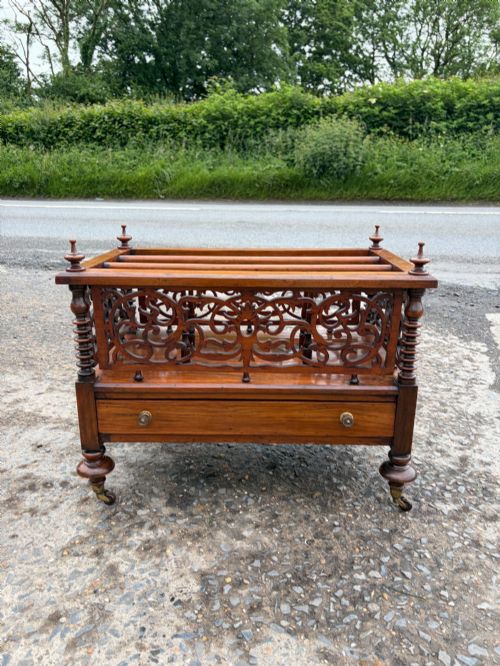
Makers produced these stands in various configurations, including freestanding racks, designs with lower drawers, and hybrid forms combining music cabinets with whatnots or occasional tables. The divisions are frequently pierced or fret-cut, reflecting prevailing aesthetic movements and revival styles.
While the core form remains a multi-tiered rack on castors, variations encompass serpentine shapes, inlaid surfaces, and drop-front storage compartments. These pieces functioned originally beside a piano or in a parlour to keep bound volumes close at hand.
Materials and Construction
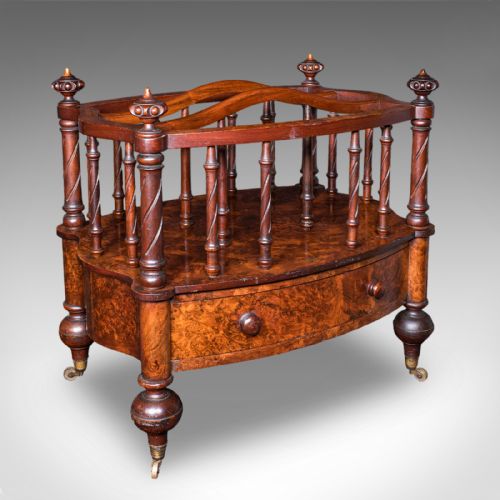
Cabinet makers utilised dense hardwoods, predominantly burr walnut, figured walnut, and richly grained rosewood, often applying intricate inlay or marquetry to the surfaces. Mahogany also appears regularly, providing a robust structural frame for pierced fretwork divisions.
Turning and carving formed the structural supports, with slender columns or turned pillars holding the tiers together above low castors. Joinery relied on traditional housing and tenoning to ensure the upright partitions withstood the weight of heavy folios.
Victorian Carved Canterbury Retail Price Guide 2026
Typical asking prices for victorian carved canterbury among the pieces listed under this phrase on Sellingantiques today, from the lower quarter to the upper quarter. They describe what is for sale here now, not the wider market.
Listings feature walnut, rosewood, and mahogany across various nineteenth-century eras, including Regency and Victorian periods.
Material Selection and Detail
Quality rests heavily on the choice of timber veneer, where richly figured burr walnut or select rosewood elevates a piece above standard mahogany constructions. The crispness of the carving on the upright supports and the finesse of any inlaid woodwork indicate the level of craftsmanship involved.
Structural complexity also defines the tier, ranging from simple open partitions to elaborate combinations incorporating lower drawers, turned finials, and serpentine forms. Better examples integrate the lower drawer and castors seamlessly into a cohesive, balanced silhouette.
Henry Ogden & Son
The Victorian Carved Canterbury Glossary
- Canterbury
- A low stand with upright divisions used originally for sheet music or folios. The name derives from the Archbishop of Canterbury, who commissioned the first such rack.
- Burr walnut
- Timber taken from a growth on the walnut tree, showing swirling, highly decorative grain patterns. It was frequently sliced into thin veneers for nineteenth-century cabinet fronts.
- Whatnot
- A piece of furniture consisting of a set of open shelves for displaying small objects. They often appear combined with canterbury bases in Victorian interiors.
- Serpentine form
- A cabinet shape featuring an undulating front edge with alternating convex and concave curves. This contour required precise woodworking skill to execute properly.
- Fretwork
- Ornamental woodwork perforated with patterns by means of a scroll saw or piercing. It appears frequently on the vertical partitions of music racks.
Victorian Carved Canterbury: Frequently Asked Questions
What is a canterbury used for?
A canterbury served originally as a stand for holding sheet music, folios, and books near a piano or seating area. Victorian households utilised them to keep current journals and newspapers tidy in the parlour.
Today, they function well beside a sofa or desk for storing magazines, art books, and daily reading material.
How do I tell a Victorian canterbury from a Regency one?
Regency examples generally display cleaner classical lines, often utilising rosewood with brass inlay or simpler reeded supports. They tend to reflect earlier neoclassical design influences.
Victorian pieces frequently employ heavily figured burr walnut, more elaborate carving, and more complex multi-tiered combinations with drawers and whatnots.
Are these stands sturdy enough for daily use?
The open slatted partitions are built to support the weight of paper folios and magazines rather than heavy volumes. Their low centre of gravity provides stability on four original castors.
Placing moderate reading material inside poses no issue, though moving them requires care to protect the slender turned uprights.
What woods were used for these pieces?
Cabinet makers relied primarily on rich tropical and native hardwoods, with burr walnut and rosewood being the most prevalent choices. Mahogany and satinwood appear across various nineteenth-century examples.
Veneers were frequently applied over firmer secondary timbers to create highly figured decorative surfaces.