

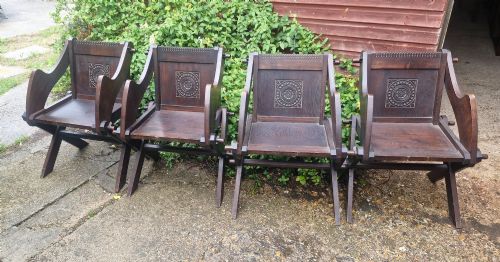
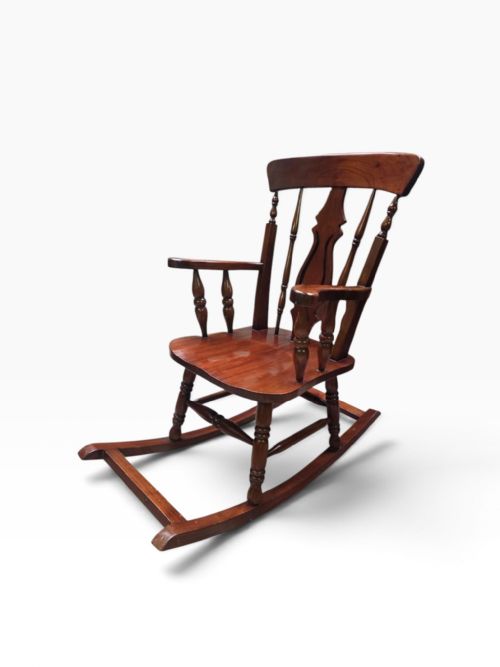
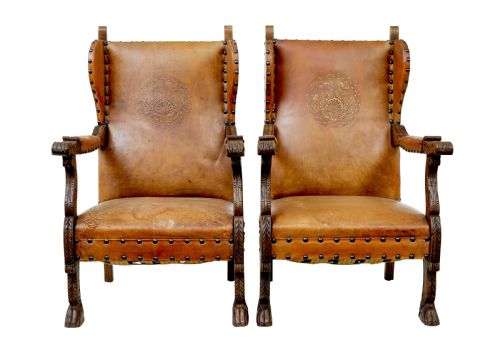
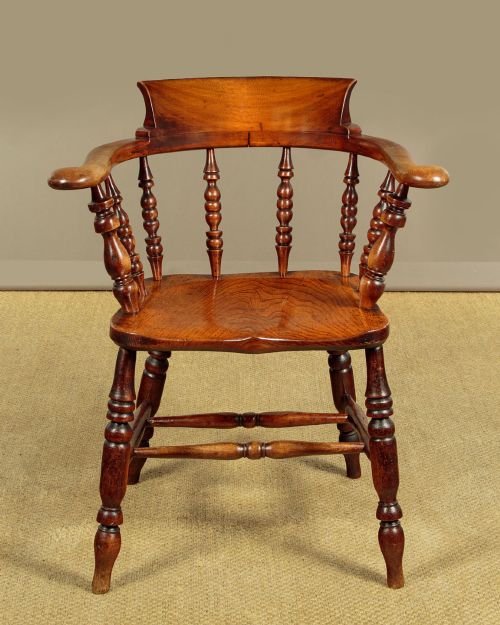
Victorian Carved Armchairs
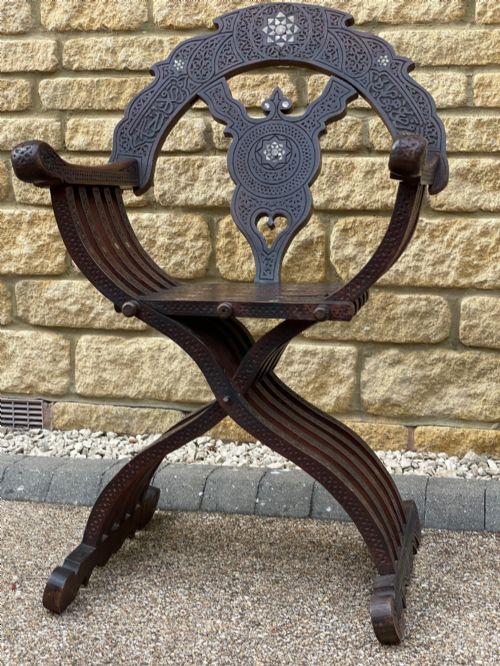
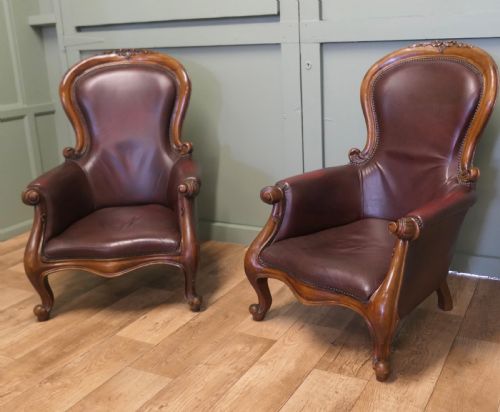
Victorian carved armchairs combine solid timber frames with elaborate sculptural detail, offering substantial seating that anchors a traditional room.
Victorian carved armchairs
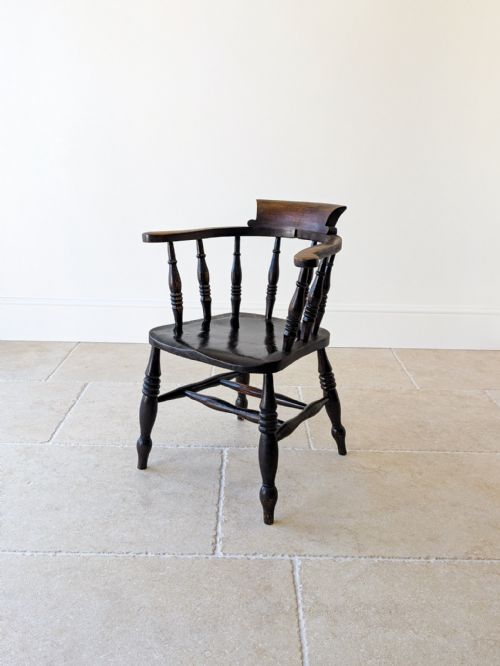
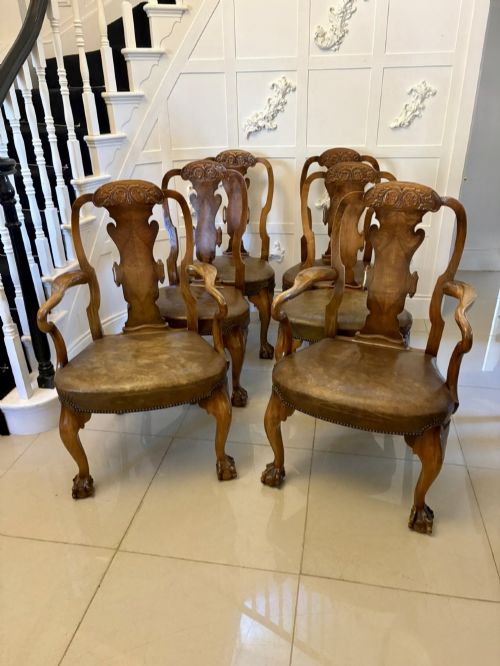
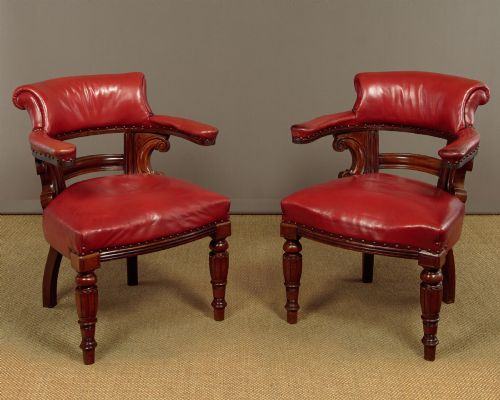
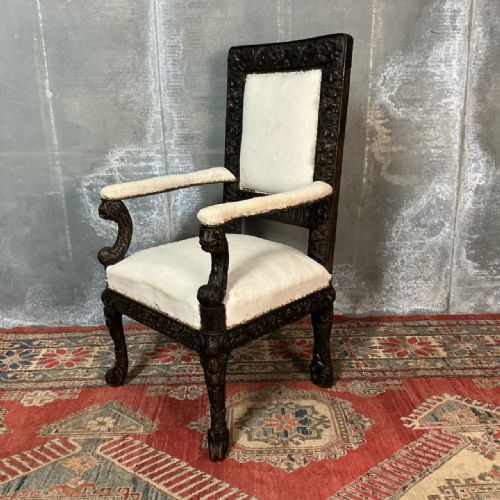
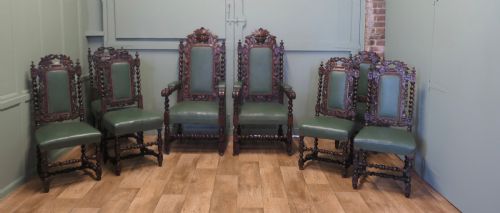
When you search for Victorian carved armchairs, you encounter sturdy seating forms built across the nineteenth century, most frequently appearing in pairs. The selection ranges from compact library elbow chairs to monumental oak throne armchairs and matching dining sets.
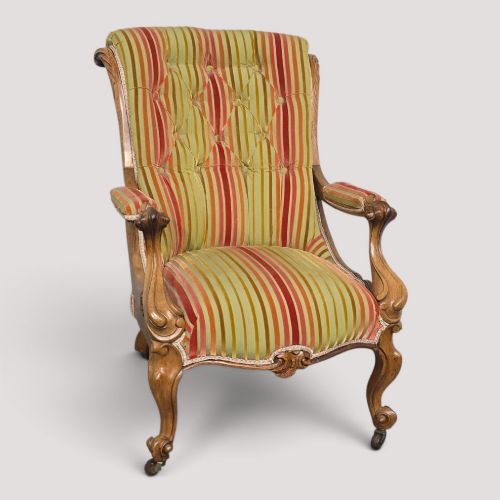
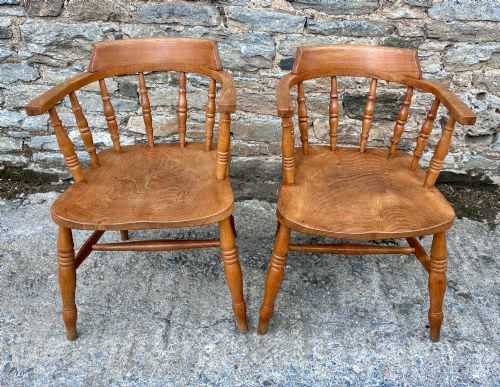
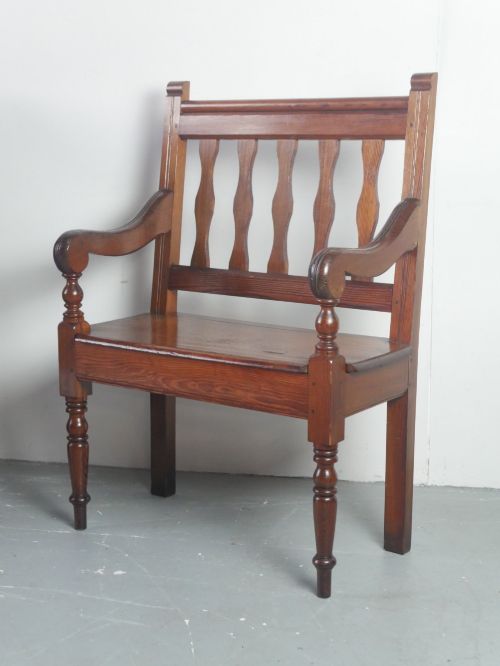
The evidence shows various iterations including library armchairs, ladies and gents elbow chairs, and corner armchairs. These pieces often feature prominent timber frames paired with upholstered elements in leather, velvet, fabric, or tapestry.
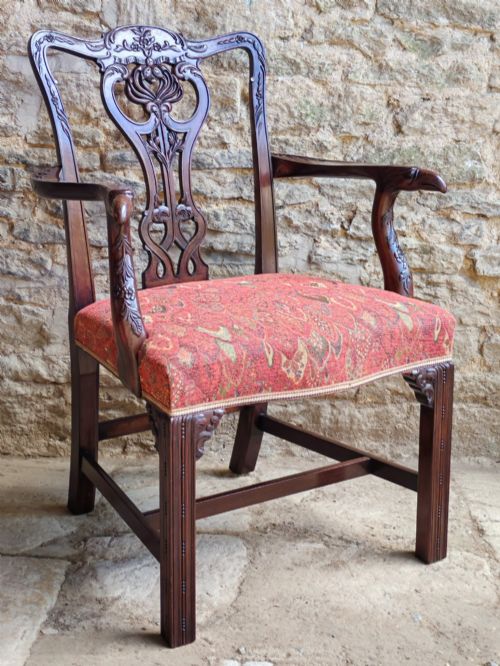
Makers of the period adapted historical motifs, producing Chippendale revival designs alongside Renaissance revival pieces and distinctive local variations such as dolphin or barley twist armchairs.
Materials and construction
The framework relies heavily on dense hardwoods, principally walnut, mahogany, and oak, alongside occasional use of rosewood, beech, and ebonised timber. These woods are shaped using manual carving techniques to create elaborate scrollwork, heavy mouldings, and figurative details.
Upholstery methods incorporate traditional stuffing materials held in place by leather, tapestry fabric, velvet, or standard fabric, often secured with brass studs. Support elements include turned block legs, castors, and caned panels.
Secondary structural details involve brass hardware and wooden stretchers that stabilise the heavy frames, ensuring the durability of the seating over time.
Retail Price Guide 2026
Typical UK retail prices for victorian carved armchairs, calculated from the Sellingantiques database of over a million retail prices indexed since 2003. This retail price guide relies exclusively on Sellingantiques data; no external sources or auction records are used, so the figures do not describe the wider market.
Nineteenth-century makers occasionally added carved marine mammals to domestic seating, as seen in surviving dolphin armchairs.
Evaluating the pieces
Quality rests in the depth and crispness of the timber carving, where manually chiselled details display sharper definition than mechanically smoothed surfaces. The choice of primary timber, such as highly figured walnut or substantial mahogany, dictates the baseline calibre of the frame.
The integrity of the construction shows in the weight and solidity of large formats like throne armchairs and library chairs, where joints remain rigid without excessive modern reinforcement. Matching pairs and sets demand uniform grain patterns and consistent carving across all items.
Upholstery execution also defines standard, with properly tensioned leather or fabric matching the period character of the carved woodwork.
The Victorian Carved Armchairs Glossary
- Elbow chair
- A seating form featuring supportive arms, often designed for specific domestic tasks or library use.
- Throne armchair
- A heavily carved, large-scale seating option with an elevated back and imposing proportions.
- Showwood
- Exposed timber framing on an upholstered chair, allowing the carved details of the wood to remain visible.
- Bergere
- An enclosed armchair design featuring caned panels on the back and sides.
- Barley twist
- A spiral timber turning technique used on chair legs and structural stretchers during the nineteenth century.
Frequently Asked Questions
How do I identify a Victorian armchair?
Look at the timber selection, which typically includes mahogany, walnut, or oak, combined with characteristic nineteenth-century revival styles. The presence of hand-carved ornamentation helps anchor the piece to this period.
Check for construction methods standard to the era, such as pegged joints and traditional upholstery supports beneath the fabric or leather.
Where were these armchairs placed?
Library armchairs and heavy throne chairs served in studies, libraries, and formal reception rooms where substantial seating was required. Smaller elbow chairs and ladies and gents pairs often furnished nineteenth-century parlours and drawing rooms.
Dining armchairs functioned at the heads of large tables within formal dining spaces.
Are these chairs comfortable for daily use?
Many examples provide solid ergonomic support due to their generous proportions, deep padding, and supportive armrests. Their comfort depends largely on the condition of the internal upholstery and springing.
Larger library and leather armchairs generally offer a relaxed sit compared to upright dining variants.
What is a near pair?
A near pair consists of two armchairs that match closely in style, timber, and carved decoration but were likely produced at slightly different times or by different hands. They share identical overall forms while showing minor variations in detail upon close inspection.
This grouping was common when furnishing traditional spaces where exact symmetry proved difficult to source.