


Victorian Caned High Chair
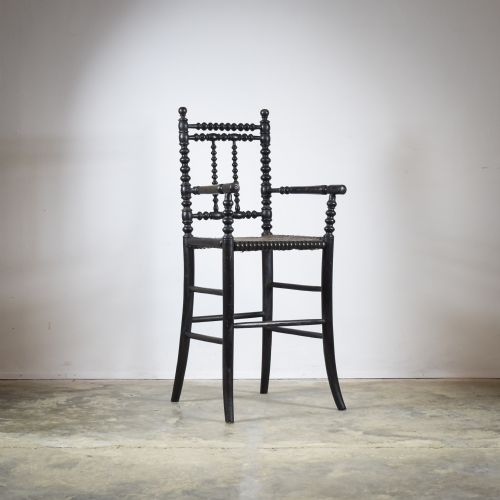
A victorian caned high chair offers children's seating elevated for the family table, combining period joinery with woven panels.
Victorian Caned High Chair
A victorian caned high chair brings elevated seating into the nineteenth-century domestic interior, often appearing alongside related child's chairs and small armchairs. These items serve young diners or sit safely in nurseries, drawing on forms recorded from the Regency through to eighteen ninety.
The selections available here range from mahogany and walnut frames to beech and oak structures. Alongside dedicated high chairs, the broader record shows standard children's seating, rocking chairs, and larger armchairs sharing similar carved details and turned elements.
Materials and construction
Timbers such as mahogany, walnut, oak, and beech form the structural framework, shaped through turning and deep carving. Many examples incorporate woven cane panels into the backrests and seats, creating a resilient yet light surface.
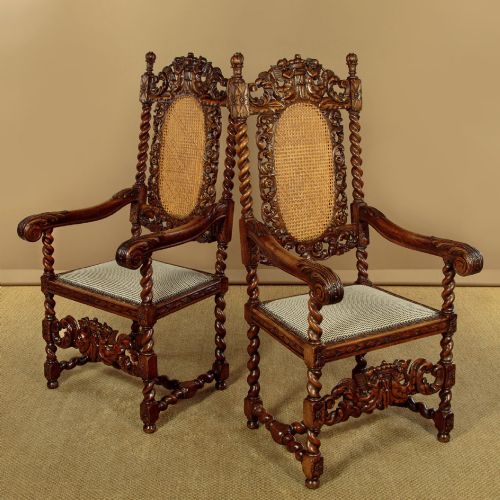
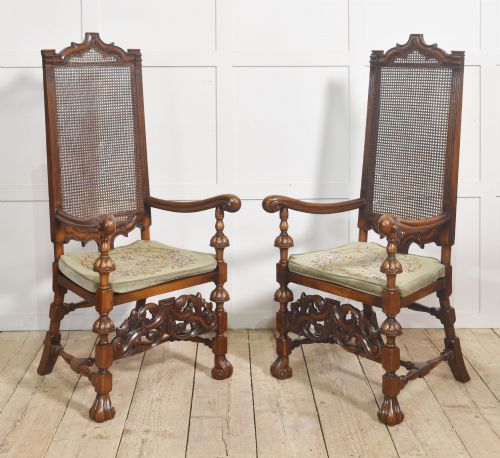
Revival styles heavily influence the joinery, with Carolean, Jacobean, and Gothic details appearing across the wooden elements. Makers also utilised spindle turning, bobbin turning, and ebonised finishes to ornament the frames.
Listings span the nineteenth century, featuring oak, walnut, mahogany, and beech combined with woven cane.
Distinguishing quality
The standard of carving and the selection of timber dictate the distinction between simpler vernacular items and more ambitious pieces. Dense hardwoods like walnut and mahogany support crisper detail in the ornament than softer or plainer woods.
The integrity of the woven cane panels and the firmness of the frame joints govern the overall construction. Pieces that retain their original woven work and tight joinery display greater visual coherence.
The Victorian Caned High Chair Glossary
- Cane
- A material woven from peeled rattan stems to form seats and backrests. It provides a flexible yet durable mesh.
- Spindle back
- A chair back constructed from a series of slender turned wooden rods. This style appears frequently on rocking chairs and children's seats.
- Bobbin turned
- A method of woodturning that produces a series of rounded spheres resembling bobbins along a leg or stretcher. It appears on various nineteenth-century frames.
Victorian Caned High Chair: Frequently Asked Questions
How were high chairs used?
These elevated seats allowed young children to join adults at the dining table during meals. They provided security and height for infants in the nineteenth-century household.
Over time, many served successive generations within a family before entering the antiques market as decorative or collector items.
What woods were used?
Carpenters and cabinetmakers utilised a variety of hardwoods suited to structural strength and decorative carving. Walnut and mahogany appear on finer items, while oak and beech serve sturdier farmhouse forms.
Secondary woods sometimes support internal framing where the primary timber remains visible on the exterior surfaces.
How do I spot revival styles?
Revival pieces incorporate decorative motifs borrowed from earlier centuries, such as seventeenth-century Jacobean scrollwork or Carolean carving. Makers applied these historical vocabularies to nineteenth-century chair forms. Nomenclature in listings often references these past movements to describe the specific ornamental vocabulary used on the frame.
Are these chairs safe for children?
Antique children's furniture is primarily acquired for display, collection, or gentle domestic use rather than modern nursery requirements. The structural joints and original materials reflect nineteenth-century standards of manufacture.
Buyers often place these items in living spaces or hallways as decorative examples of period joinery and small-scale seating.