


Victorian Candle Wall Sconces
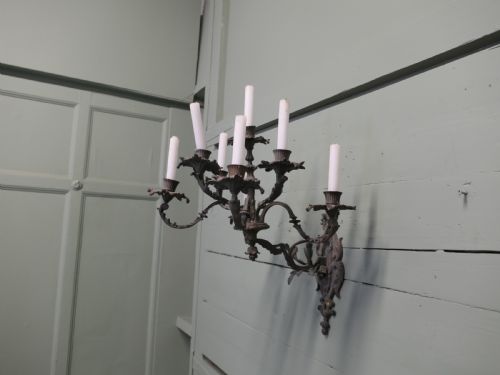
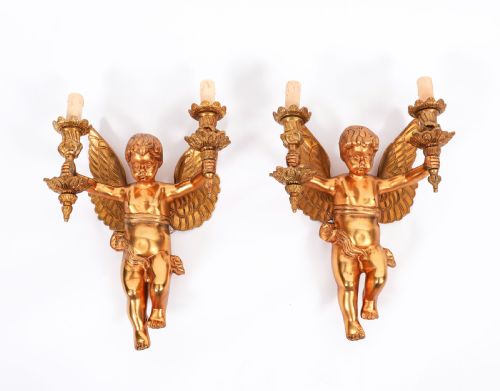
Victorian candle wall sconces bring flickering warmth to a room, cast in heavy brass and giltwood to bounce candlelight across the walls.
Victorian Candle Wall Sconces
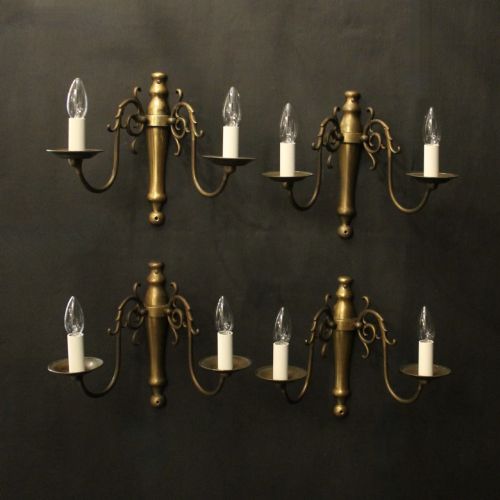
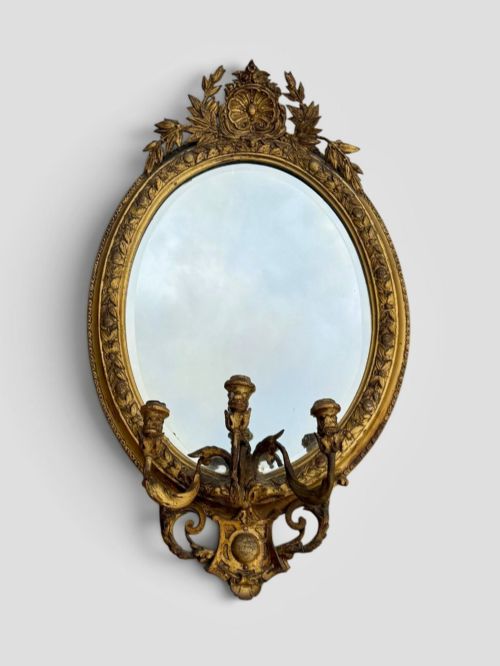
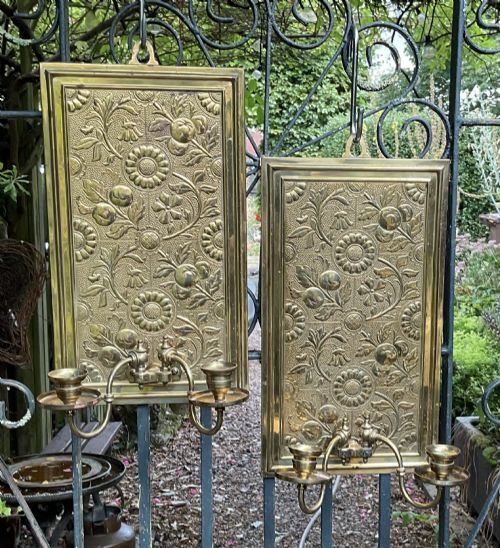
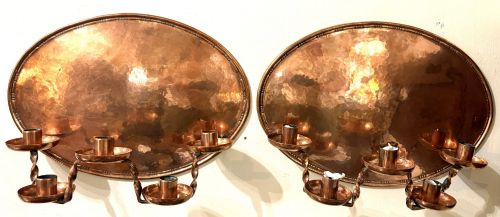
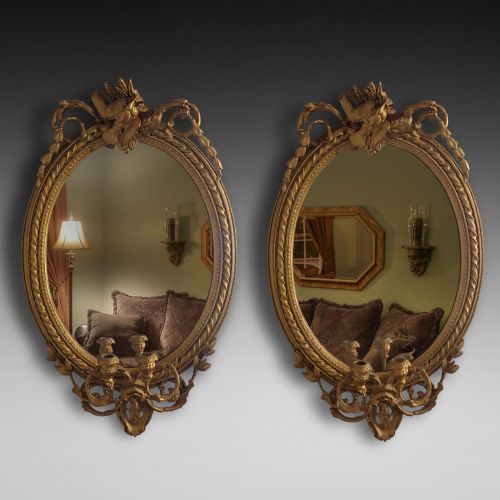
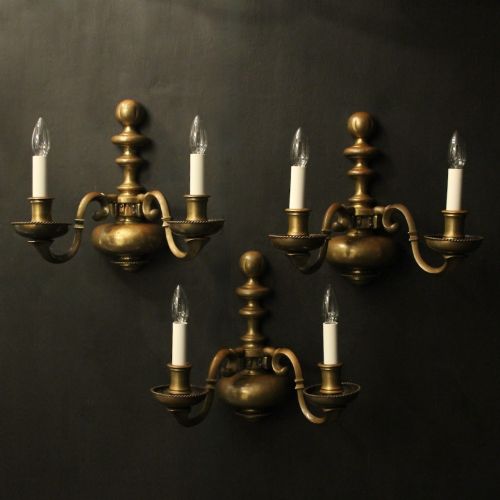
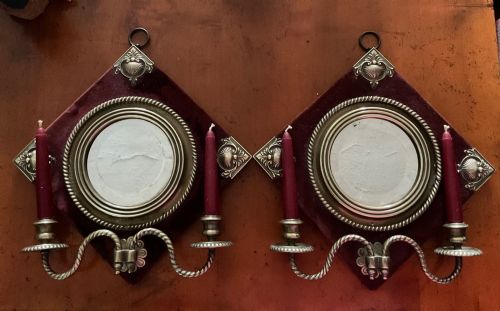
Victorian candle wall sconces combine functional domestic lighting with decorative wall furniture, often taking the form of paired bracket lights or reflective girandole mirrors. These pieces emerge from periods spanning the mid nineteenth century into the early twentieth, taking inspiration from Rococo revival, Gothic and Aesthetic movements.
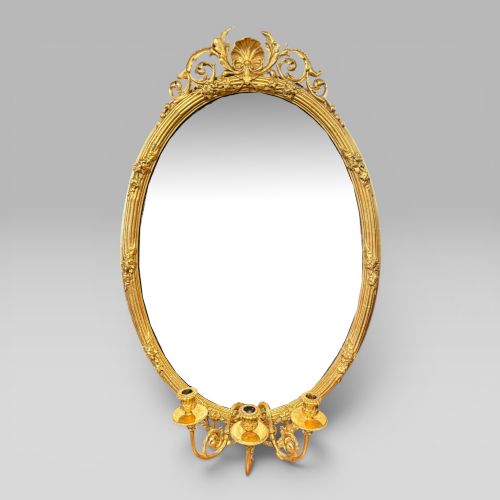
Brass and bronze form the core of the metalwork encountered here, alongside carved timber frames finished in giltwood and gesso. Many incorporate mirror glass to multiply the candle flame, creating deep reflections in hallways and drawing rooms.
The regional origins stretch across English workshops, French ateliers and Italian foundries, showing diverse domestic and continental tastes. Buyers meet everything from simple ecclesiastical brass brackets to ornate channelling of French Belle Époque design.
Materials and Manufacture
Foundries cast bronze and brass components to form rigid backplates and branching arms, often chasing the metal by hand to sharpen surface detail. Other examples rely on carved gesso built over wood foundations before receiving layers of gilding or paint.
Girandole mirrors integrate silvered glass plates within moulded frames, securing candle arms directly to the wooden or metal base. Patination develops naturally on the exposed metal surfaces and gilt highlights over decades of handling and wax exposure.
Materials span patinated bronze, cast brass, silver-plated white metal, and gilded gesso over carved wooden frames.
Judging Quality
The distinction between ordinary and exceptional pieces lies in the crispness of the casting and the depth of the hand carving on the frame. Heavier gauge metals and deeply modelled floral or figurer relief indicate superior workshop production.
Original surface finishes, whether patinated bronze or intact gilding, dictate the visual integrity of the piece. Integrated components that show uniform construction across brackets and backplates hold greater stylistic coherence.
Bruce Talbert·Liberty·E.G
The Victorian Candle Wall Sconces Glossary
- Girandole
- A wall bracket carrying candles, frequently incorporating a mirror to reflect the light into the room. These fixtures often feature ornate frames carved from wood or moulded in gesso.
- Ormolu
- Gilded bronze, where a mercury and gold amalgam is fired onto the bronze base to create a rich golden finish. This technique appears widely on decorative French lighting fixtures.
- Gesso
- A plaster mixture applied to wood frames as a base for carving and gilding. It allows for intricate relief ornamentation before the application of gold leaf or paint.
- Aesthetic Movement
- A late nineteenth century design approach that emphasised visual beauty over narrative meaning, drawing on Anglo-Japanese motifs. Pieces from this circle display restrained geometries alongside traditional brass and copper work.
Victorian Candle Wall Sconces: Frequently Asked Questions
How do I mount Victorian candle wall sconces safely?
Most wall sconces rely on secure screw fixings through the backplate directly into wall studs or suitable masonry plugs. Given the weight of cast bronze or framed mirrors, proper anchoring supports the downward leverage of the candle arms.
Ensure the wall brackets sit level so that the candles burn evenly without dripping wax onto the surrounding wall surfaces or furnishings.
Were these sconces electrified later?
Many surviving wall lights undergo conversion to electricity during the twentieth century, while others retain their original configuration for wax candles. Examining the backplate and nozzle interiors reveals whether wiring channels or original drip pans remain intact.
Collectors often seek out pieces that preserve their untouched candle fittings, avoiding alterations that compromise the original metalwork.
How do I clean antique brass and gilt surfaces?
Gentle dusting with a soft, dry cloth preserves the accumulated patination and fragile gilt layers on antique wall fixtures. Harsh metal polishes strip away the aged surface character that defines nineteenth century work.
For giltwood and gesso frames, moisture should be avoided entirely to prevent softening the underlying plaster composition.
What rooms suit wall sconces best?
Entrance halls, dining rooms and drawing rooms provide traditional settings where candle sconces contribute ambient reflected light. Girandole mirrors function particularly well in narrow spaces by bouncing natural and artificial light across the room.
Pairing matching sconces on either side of a fireplace or doorway creates symmetrical balance derived from nineteenth century interior decoration.