

Victorian Candle Sconces
Victorian candle sconces bring the warm, flickering atmosphere of nineteenth-century interiors into modern rooms through ornate metalwork and reflective glass.
Victorian Candle Sconces
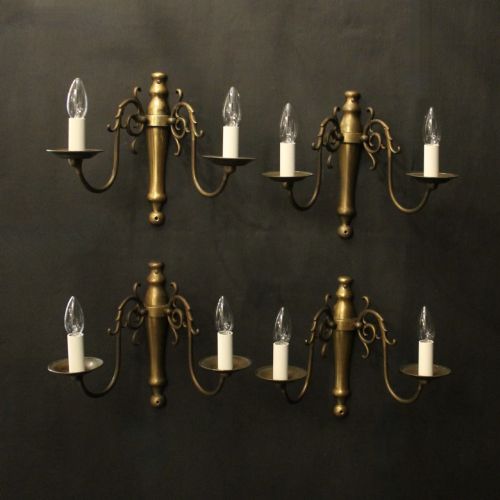
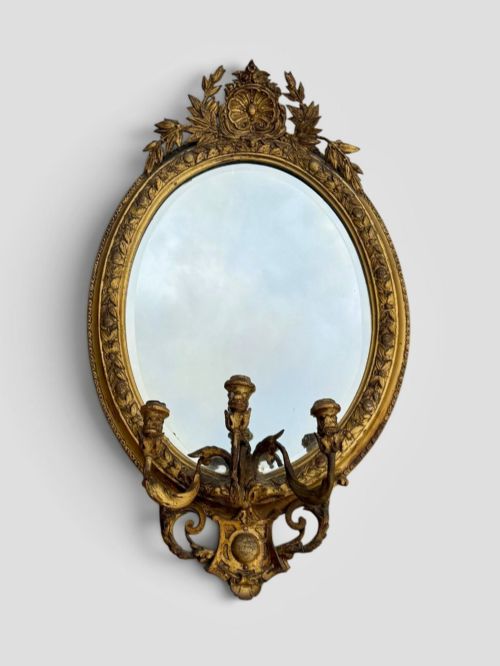
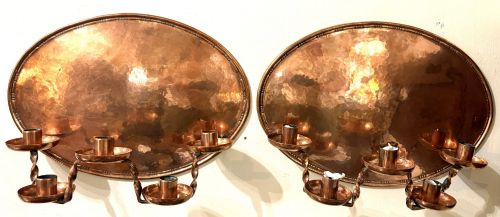
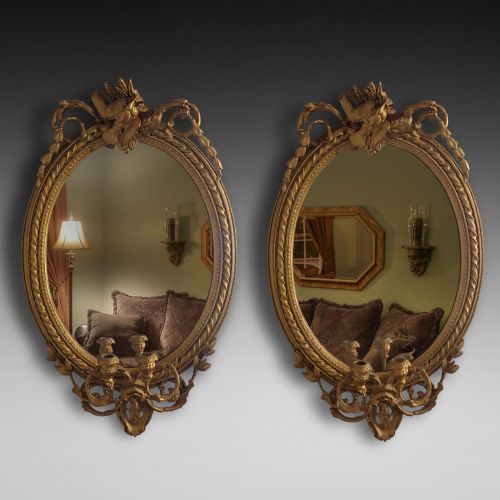
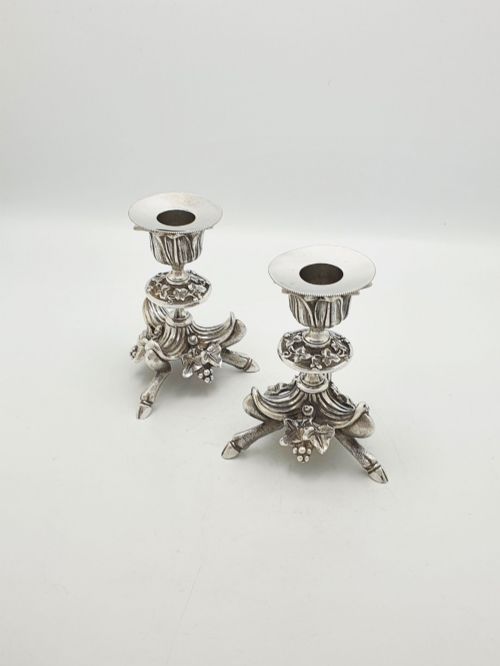
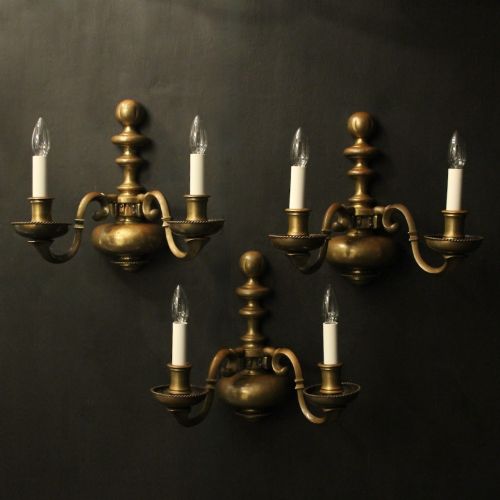
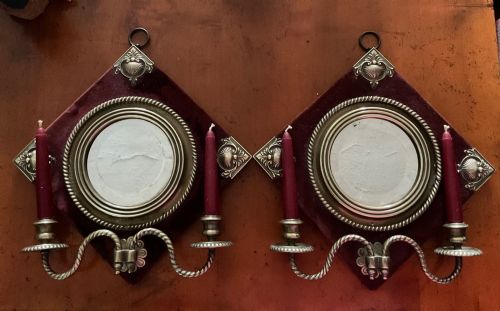
Victorian candle sconces encompass wall-mounted and hanging lighting fixtures designed to hold candles, frequently encountered as matched pairs in brass, bronze, and gilt metal. Buyers seeking victorian candle sconces will discover bracketed wall lights, girandole mirrors with candle arms, and figural designs spanning the mid-nineteenth century to the Edwardian period.
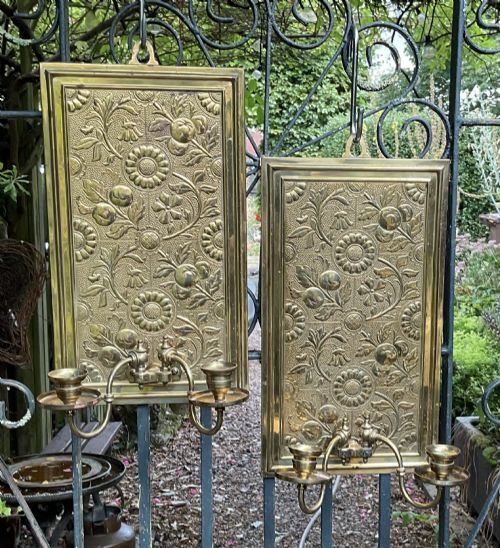
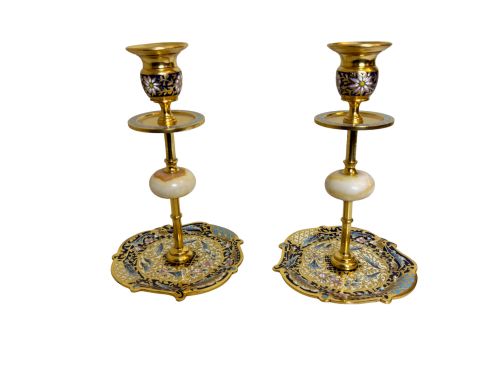
The selection ranges from robust Gothic Revival bronze arms and Aesthetic Movement brass brackets to elaborate giltwood and gesso girandole mirrors that bounce candlelight across a room. Many examples reflect revivalist tastes like Rococo and Neoclassical, alongside Continental imports featuring porcelain or champleve enamel details.
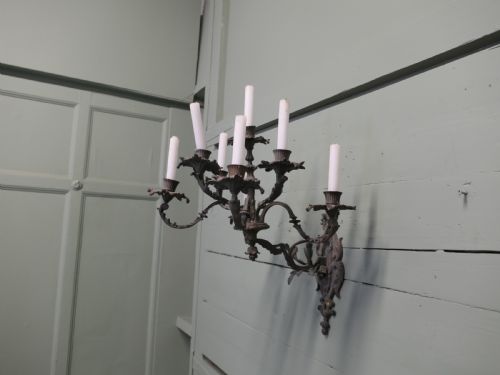
Makers and workshops of the era produced these wall fixtures for principal reception rooms and hallways, utilising durable metals to support multi-branch configurations. The surviving inventory reveals a heavy reliance on brass and silver plate, often paired with ruby glass accents or carved wooden frames.
How they were made
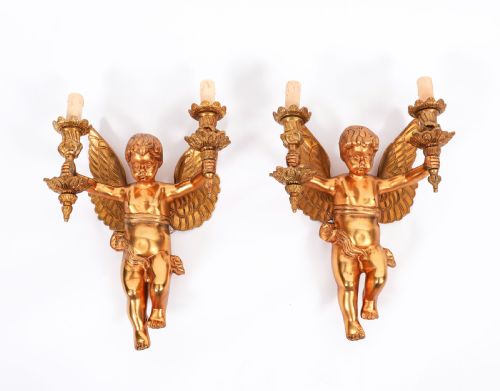
Metal components such as brass, bronze, and ormolu were cast using traditional foundry methods, then hand-chased and patinated to achieve deep surface textures. Silver-plated and gilded pieces relied on applied metal leaf or electroplating over base metals to create a lustrous finish.
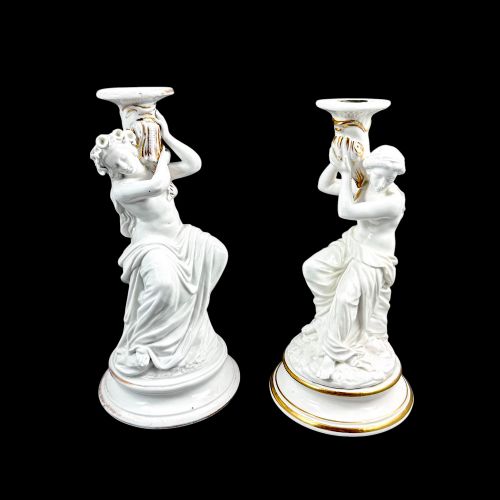
Giltwood and gesso frames for girandole mirrors involved carved wooden substrates coated in plaster layers, which were meticulously water-gilded and burnished. Porcelain figures and capitals incorporated moulded ceramic bodies with hand-painted polychrome glazes and gilded highlights.
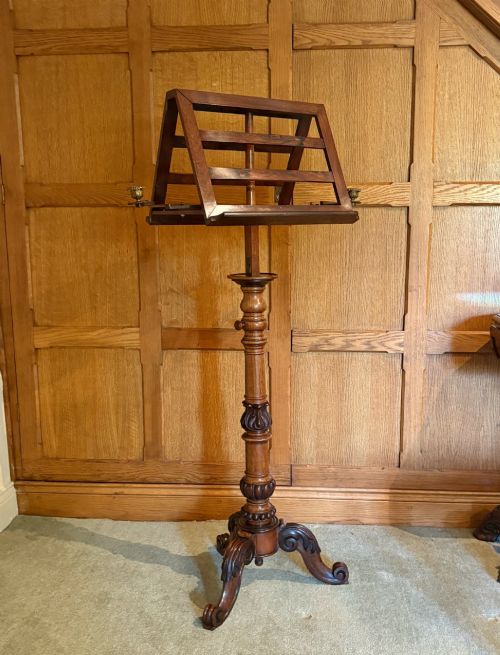
Object forms span wall sconces, girandole mirrors, figural candlesticks, and duet music stands.
What varies in quality
The distinction between standard production and superior craftsmanship lies in the crispness of the casting and the depth of hand-chasing on metal mounts. Finer brass and bronze sconces display sharply defined foliage, figures, or architectural motifs rather than soft, smoothed edges.
In giltwood and gesso girandoles, quality is determined by the precision of the carved wooden detailing beneath the gilding and the clarity of the original mirror plate. Multi-branch configurations with robust structural joints and intact original drip pans command greater admiration than later composite assemblies.
Bruce Talbert·Gillows·Liberty·Sutherland And Sons·Royal Worcester Hadley
The Victorian Candle Sconces Glossary
- Girandole
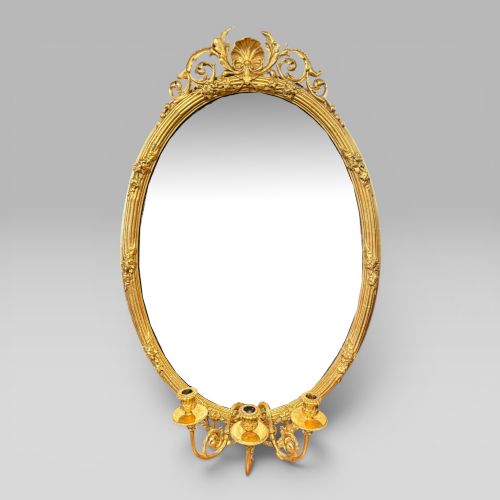
- A wall mirror featuring one or more candle branches attached to the frame. The reflective glass amplified the dim light of nineteenth-century candles.
- Ormolu
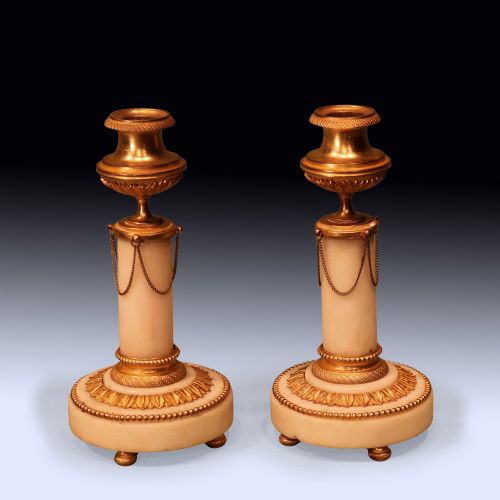
- Finely ground high-carat gold mercury-gilded onto a bronze base. This technique produced a rich, durable golden finish characteristic of decorative French and English metalwork.
- Gesso
- A plaster mixture applied to wood frames as a smooth base for gilding. It allowed artisans to carve intricate relief ornamentation before applying gold leaf.
- Champleve
- An enamelling technique where troughs are dug into a metal surface and filled with vitreous paste before firing. The resulting coloured patterns complemented polished bronze mounts.
Victorian Candle Sconces: Frequently Asked Questions
How were Victorian candle sconces mounted?
These fixtures were secured directly to wall studs or panelling using heavy screws through backplates designed to bear the weight of extended metal arms and heavy candles. Many featured hinged or pivoting brackets allowing users to adjust the angle of the light.
In grander settings, they flanked pier glasses and wall mirrors to maximise the illumination of nineteenth-century parlours before the widespread adoption of gas and electric lighting.
Were these sconces electrified later?
Many surviving examples have undergone conversion to electricity during the twentieth century to suit modern domestic requirements. Collectors often encounter sconces retaining original drip pans alongside discreet modern wiring channels.
Purely candle-lit specimens generally preserve their original sockets and wax catchers untouched, offering a more authentic representation of period interior lighting.
How do I distinguish Gothic Revival from Rococo pieces?
Gothic Revival sconces display architectural elements like pointed arches, trefoils, and heavy, dark patinated bronze or brass finishes. Their forms mimic medieval ecclesiastical ironwork and stone tracery.
Conversely, Rococo Revival examples feature asymmetrical C-scrolls, naturalistic foliage, and bright gilt finishes that emphasise fluid, organic movement rather than rigid geometry.
What is a girandole mirror?
A girandole is a decorative wall mirror equipped with integrated candle arms projecting from the lower portion of the frame. They were positioned between windows to reflect natural daylight during the day and multiply candlelight at night.
The frames are frequently fashioned from giltwood, gesso, or gilded brass, often incorporating ornate crests and sculptural motifs.