




Victorian Candle Lustres
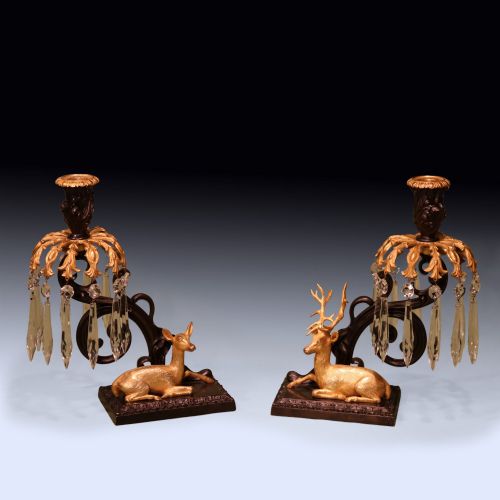
Victorian candle lustres bring brilliance to a mantelpiece, catching the flicker of a flame with glass prisms suspended from shaped bowls.
Victorian Candle Lustres
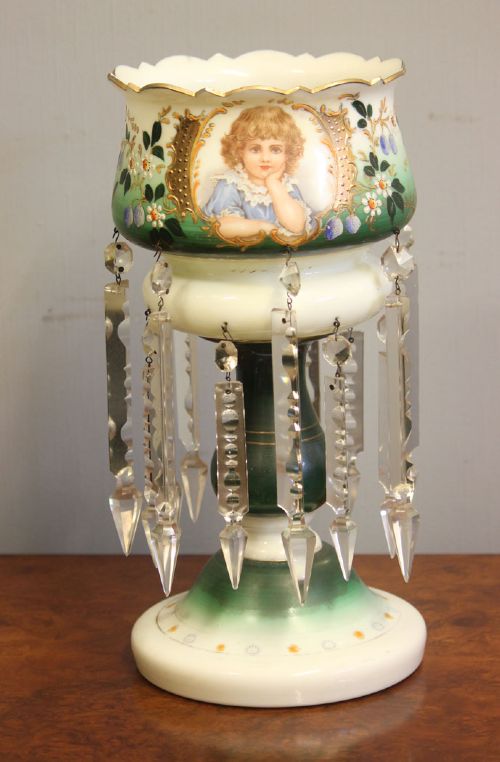
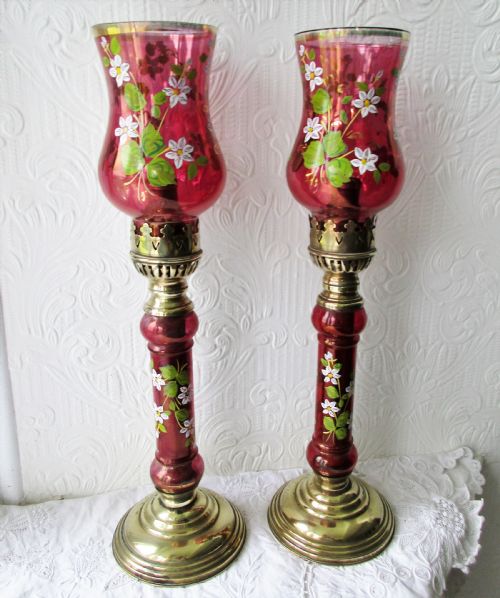
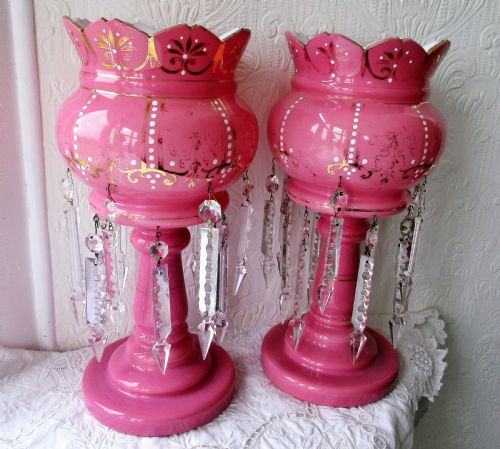
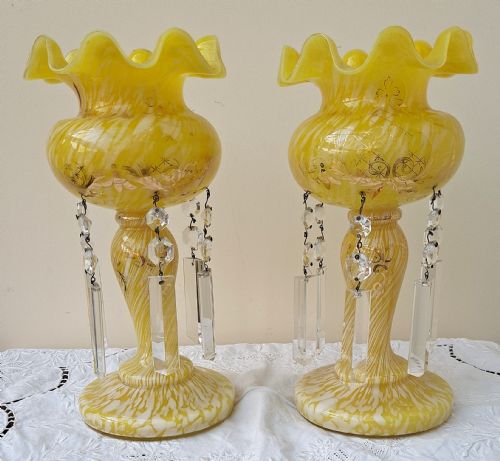
When you search for victorian candle lustres, you encounter mantel lustres, table lustres, and candle lamps designed to sit on a surface and reflect light. These decorative pieces appear in varied glass colours including ruby, green, pink, yellow, opaline, and cranberry.
The evidence shows forms ranging from single lustre candlesticks to pairs of mantel lustres and candelabra. Styles span the nineteenth century, Victorian, Regency, and William IV periods, alongside French Empire and Rococo Revival influences.
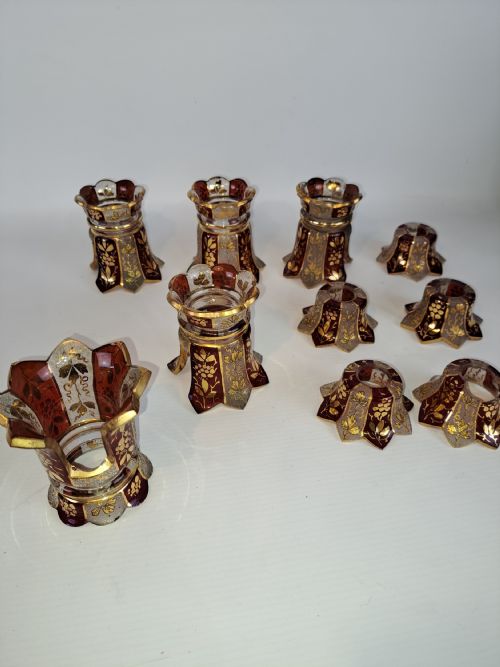
Pairs dominate the selection, often taking the form of Bohemian overlay glass or flash-cut vessels hung with crystal drops. Brass, bronze, ormolu, and gold leaf provide structural support for the glass elements.
How they were made
Maker workshops combined blown or cast glass with metal components such as brass, gilt bronze, or ormolu. Glass bodies received treatment through cutting, etching, gilding, hand-painting, or overlay techniques to create layered colours.
Hanging crystal prisms, known as drops, were suspended from notched rims using wire attachments to maximise the reflection of candlelight. Capitals and bases incorporated metal mountings secured to glass shafts or urns.
Materials recorded across the selection include crystal, glass, enamel, cut glass, gold leaf, brass, gilt, and gilt bronze.
What varies in quality
Quality rests in the crispness of the glass cutting, the depth of colour in flash glass, and the precision of the gilding on capitals and stems. Superior examples demonstrate heavier metal casting in bronze and ormolu mounts.
The completeness and matching nature of the suspended crystal drops distinguish finer pairs. Richly saturated glass hues, such as deep ruby or cranberry with intricate etching, mark out pieces produced by skilled nineteenth-century makers.
The Victorian Candle Lustres Glossary
- Lustre
- A candlestick or ornamental vase fitted with a ring of hanging crystal prisms designed to reflect candle flame. These decorative objects stood upon mantelpieces and tables in nineteenth-century interiors.
- Flash glass
- Glass made with a thin layer of coloured glass cased over a colourless or contrasting glass body. This technique allowed artisans to cut through the outer layer to reveal the contrasting glass beneath.
- Ormolu
- Gilded bronze applied to mounts, bases, and structural elements of decorative objects. The process involved coating bronze with a mercury and gold amalgam before heating.
- Cricklite
- A brand of patented table lamp or candelabra often mounted in brass and cut glass. These late nineteenth-century items utilised specialised night-light or candle arrangements.
- Overlay glass
- Glass formed by fusing two or more distinct layers of coloured glass together before shaping and cutting. The resulting contrast added visual depth to mantle lustres and vases.
Victorian Candle Lustres: Frequently Asked Questions
What is a lustre?
A lustre is an ornamental candlestick or vase featuring a circle of hanging glass prisms. These drops catch and multiply the flickering light of a candle.
They gained popularity during the nineteenth century for display on mantelpieces and dining tables.
How do you clean them?
Cleaning requires removing the hanging glass prisms individually and washing them in warm, soapy water. Metal mounts and gilded surfaces need careful dusting with a soft brush to preserve the finish.
Harsh chemical cleaners should be avoided because they can damage gilding or flash glass surfaces.
Were they used for lighting?
They served a dual purpose as decorative mantel ornaments and functional light sources. The suspended crystal drops enhanced the illumination provided by candles in dimly lit rooms.
During daylight hours, the coloured glass and cut crystals acted as decorative showpieces.
What colours do they come in?
The available evidence shows ruby, green, pink, yellow, cranberry, and opaline glass. Many examples feature clear glass overlaid with colour and cut back to reveal patterns.
Gilt and enamel decoration often accentuates these vibrant glass bodies.