






Victorian Burr Walnut Worktable
These victorian burr walnut worktable examples bring together rich timber figure and practical nineteenth century craftsmanship for the modern room.
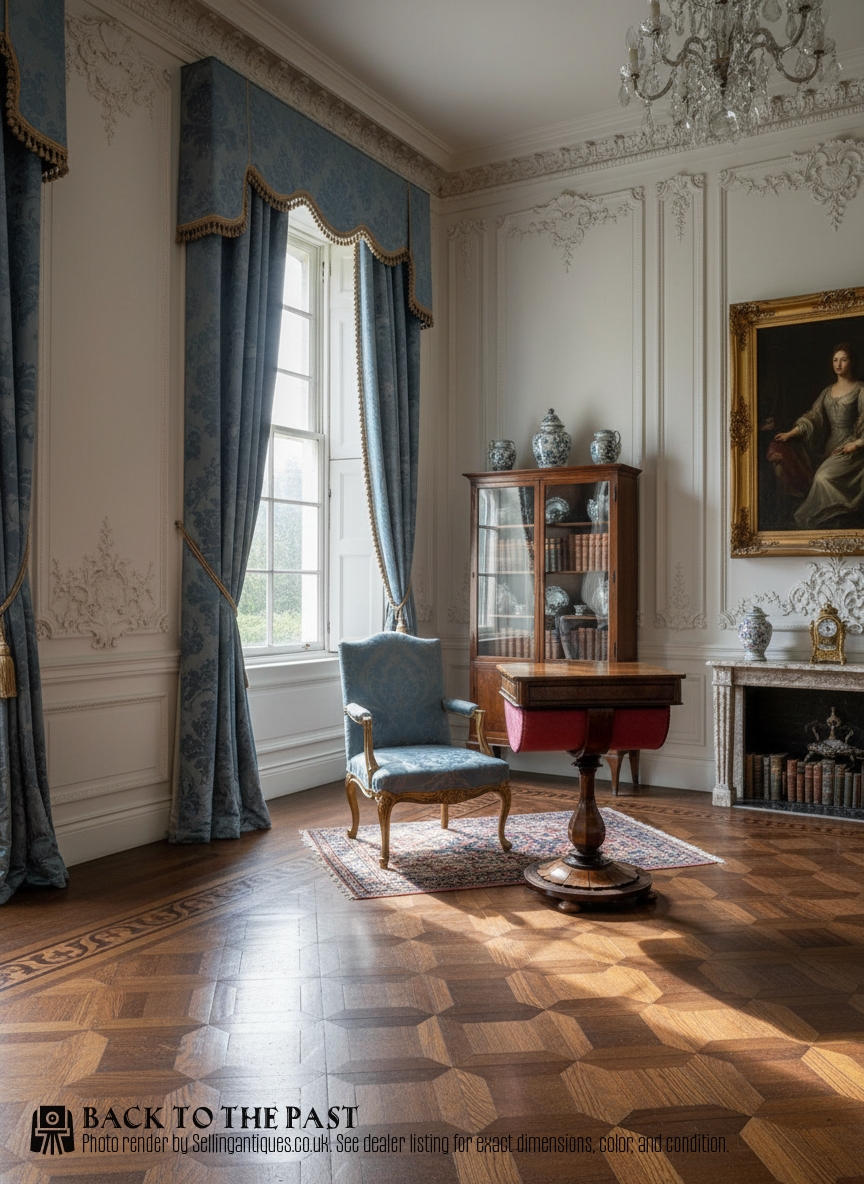
Victorian Burr Walnut Worktable
A victorian burr walnut worktable serves as a refined sewing, writing, or games surface outfitted with internal compartments for domestic tasks. The selections found here span the Victorian era, the nineteenth century, and associated decades such as 1850, 1860, 1870, 1880, and 1950.
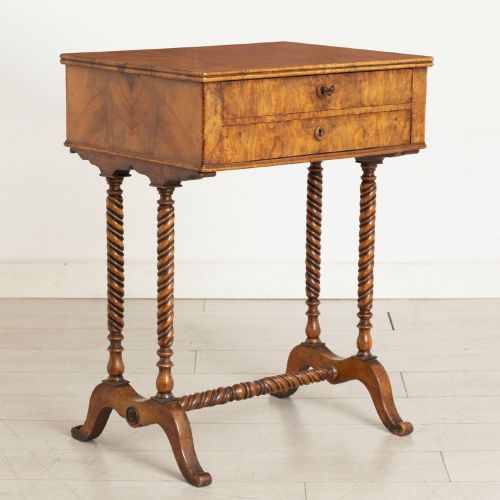
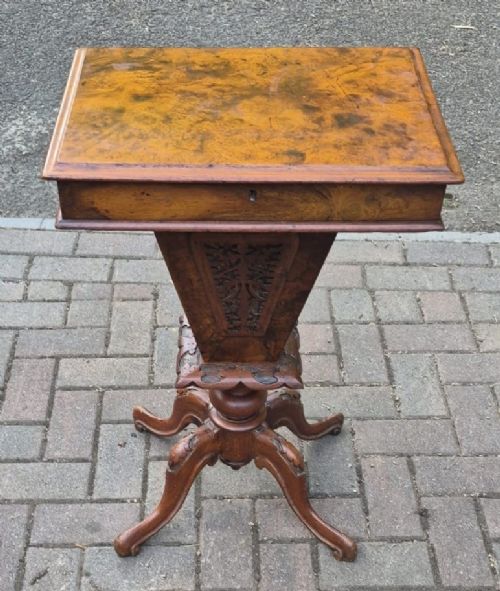
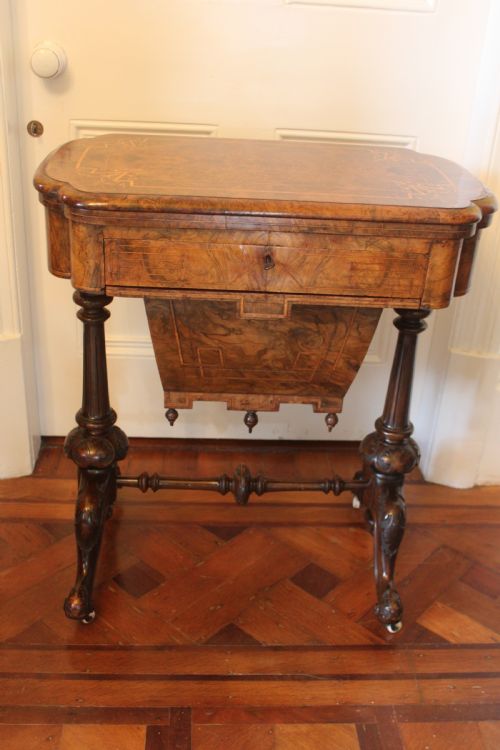
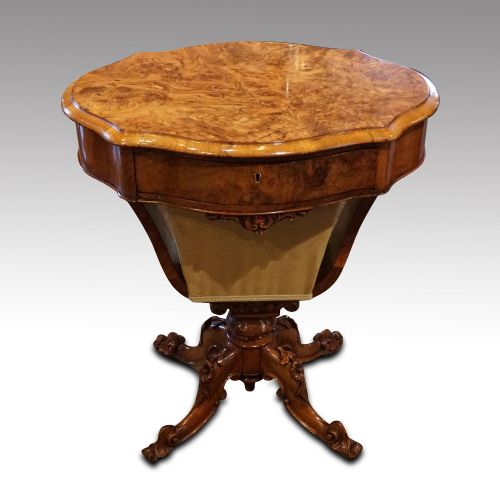
Most pieces meet the eye as freestanding sewing tables or work tables, occasionally combining games boards or writing desks within their frames. Oval formats, trumpet workboxes, and inlaid surfaces appear frequently across the available selections.
Construction and Materials
Cabinet makers utilised burr walnut and plain walnut veneers over solid timber carcases, creating patterned grain effects across tabletops and lids. Boxwood and fruitwood inlay added decorative contrast, while brass hardware secured internal compartments and operational hinges.
Supports range from turned columns to heavily carved pedestals and legs, pairing structural wood with fabric linings inside the sewing boxes.
Some trumpet workboxes flare outward like brass instruments, ready to sound a triumphant note upon the discovery of a dropped sewing needle.
Distinctions in Quality
The sophistication of the timber veneer dictates visual hierarchy, with tightly swirled burr walnut figuring commanding attention above plain walnut surfaces. Finer examples display meticulous wood inlay in boxwood and fruitwood, alongside precise carving on the structural supports.
Multifunctional pieces that integrate games boards or writing surfaces alongside sewing compartments demonstrate higher levels of nineteenth century cabinet making ambition.
Holland and Son
The Victorian Burr Walnut Worktable Glossary
- Burr walnut
- A prized timber veneer harvested from the warted growths of walnut trees, displaying complex and swirling grain patterns. This material defines the primary aesthetic of the pieces gathered here.
- Trumpet workbox
- A freestanding sewing table featuring a flared, octagonal body resembling a musical horn. It rests upon a carved pillar and tripod base.
- Work table
- A nineteenth century multifunctional piece of furniture designed for needlework, sewing, and small domestic tasks. These tables usually include fitted interior compartments and a hanging fabric bag.
- Wood inlay
- The technique of embedding contrasting strips of timber, such as boxwood and fruitwood, into the main surface veneer to create geometric or floral patterns.
- Games table
- A convertible table featuring a top that opens or reverses to reveal a playing surface for cards or board games. Some examples combine this feature with sewing compartments.
Victorian Burr Walnut Worktable: Frequently Asked Questions
What is a victorian burr walnut worktable used for?
These tables served nineteenth century households as dedicated stations for sewing, needlework, and correspondence. Interiors featured small compartments for threads, needles, and stationery.
Today, they function well as decorative occasional tables in living spaces or bedrooms, offering concealed storage for small items while maintaining period character.
How do I identify a work table from a games table?
A standard work table focuses on storage for sewing implements, featuring internal trays and drop bags beneath the top. Combined games tables incorporate inlaid boards on the exterior or interior surfaces.
Many Victorian examples successfully merged these functions, allowing owners to transition from needlework to leisure pastimes within a single piece of furniture.
What materials are used in these tables?
The primary visible material is burr walnut veneer, celebrated for its mottled and swirling grain patterns. Secondary construction relies on solid walnut and other native timbers.
Decorative elements often include boxwood and fruitwood inlay, alongside brass hinges, locks, and fabric lined interior compartments.
How can I tell the period of a walnut worktable?
Dating relies upon stylistic markers such as the shape of the pedestal supports, the presence of carved details, and the complexity of the wood inlay. Pieces from the 1850s often display crisp carving and fine inlay work.
Later Victorian examples from the 1870s and 1880s show variations in turned supports and proportions, reflecting shifting nineteenth century cabinet making tastes.