





Victorian Burr Walnut Commode
These Victorian burr walnut commode pieces bring richly figured grain and substantial presence to a room, offering both character and functional storage.

Victorian Burr Walnut Commode
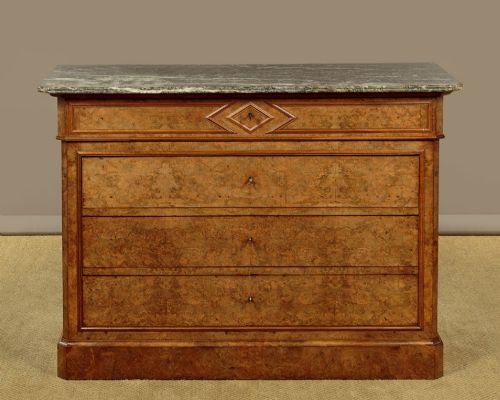
Most pieces you encounter here adopt the classic chest of drawers form, while others include miniature apprentice pieces and French Rococo Revival models with marble tops and ormolu mounts. The predominant timber is burr walnut, often paired with plain walnut and pine.
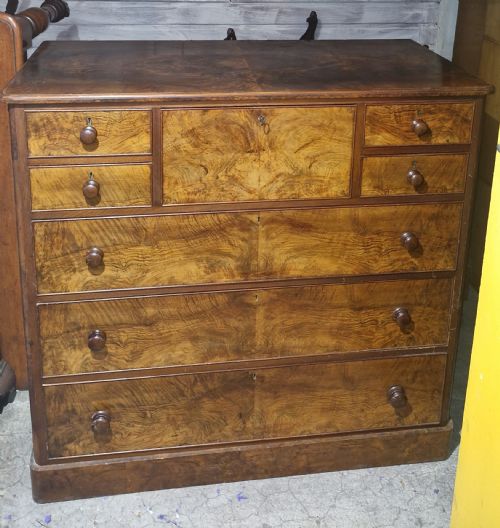
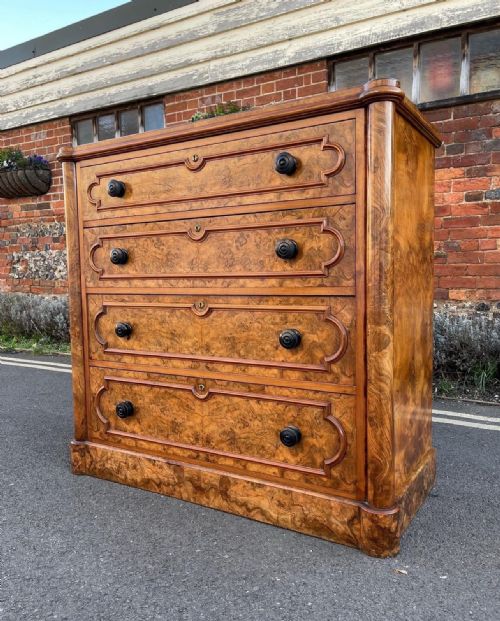
The aesthetic relies heavily on the swirling patterns of the wood, which define the visual weight of each commode. These forms served traditional domestic storage needs while acting as principal decorative furniture in period interiors.
How they were made
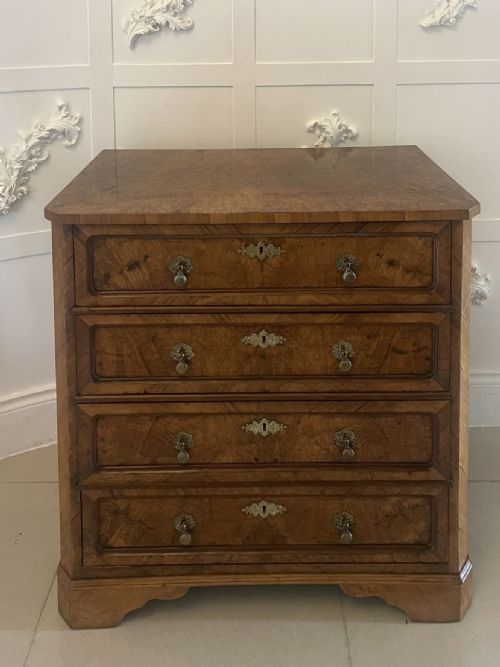
Cabinetmakers constructed these pieces using walnut veneer applied over a secondary timber such as pine, selecting burr sections for their intricate, knotted grain patterns. This technique allowed craftsmen to display dramatic figuring across the drawer fronts and primary surfaces.
Higher specifications incorporate details like marble tops and cast ormolu mounts, aligning with French Rococo Revival tastes seen in certain examples. Brass hardware and metal components complete the construction, secured to sturdy carcases designed to withstand daily use.
Listings feature burr walnut, walnut, pine, marble, and ormolu across Victorian chests of drawers and miniature apprentice forms.
What varies in quality
The visual impact depends largely on the selection and matching of the burr walnut veneer across the drawer fronts. Superior examples display harmonious grain patterns that flow or mirror across the surface, whereas lesser pieces show disjointed or plain timber.
Overall proportions and the integration of decorative elements like ormolu mounts and marble tops distinguish standard utility chests from finer salon or chamber commodes. The finesse of the drawer construction and the crispness of any applied mounts separate the ordinary from the exceptional.
WC Burt
The Victorian Burr Walnut Commode Glossary
- Burr walnut
- A specialised timber cut from growths on walnut trees, prized for its swirling, highly figured grain patterns. It is sliced into veneer and applied to the primary surfaces of fine furniture.
- Ormolu
- Gilt bronze ornamentation applied to furniture, often seen on pieces influenced by French styles. This decorative metalwork adds a bright, contrasting metallic detail to the dark wood.
- Commode
- A low chest of drawers, frequently used as a decorative storage item in principal rooms during the nineteenth century. The term often describes French-influenced models with marble tops.
- Tallboy
- A tall chest of drawers, typically formed by stacking one cabinet on top of another to provide generous vertical storage. These pieces offer an imposing presence compared to standard low chests.
- Apprentice chest
- A miniature piece of furniture made by a craftsman to demonstrate skill or as a detailed scale model. These smaller versions replicate the full-scale construction methods in miniature.
Victorian Burr Walnut Commode: Frequently Asked Questions
What is a Victorian burr walnut commode?
A Victorian burr walnut commode is a nineteenth-century chest of drawers finished with highly figured burr walnut veneer. These pieces range from standard English drawer chests to French-influenced models with marble tops.
They combine practical storage capacity with decorative presence, utilising the natural patterns of the wood to create a striking visual effect in a room.
How do I date these chests?
Dating relies on stylistic clues, construction methods, and materials recorded across the Victorian period. Pieces span from mid-nineteenth-century examples up to nineteen hundred.
Changes in hardware, secondary timbers like pine, and the presence of revival styles such as French Rococo help narrow down the decade of manufacture.
How were marble top commodes used?
Commodes featuring marble tops served as decorative and functional items in principal rooms, providing a durable and stylish surface. The stone protected the wood underneath and added a touch of continental influence.
They functioned primarily for storage while offering a display space for lamps, ornaments, or other household accessories.
What is an apprentice chest?
An apprentice chest is a miniature version of a full-scale chest of drawers, built to showcase a craftsman's skill or serve as a detailed model. These smaller pieces employ the same burr walnut materials and construction techniques.
They were typically kept on tables or larger pieces of furniture and remain popular among collectors for their charming scale.