

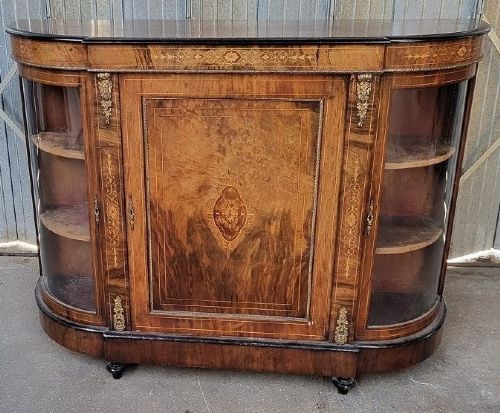

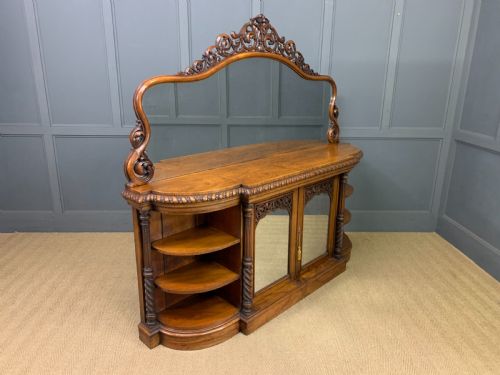


Victorian Burr Walnut Chiffonier
A victorian burr walnut chiffonier combines richly figured timber with practical low storage, forming a striking centrepiece for a period interior.
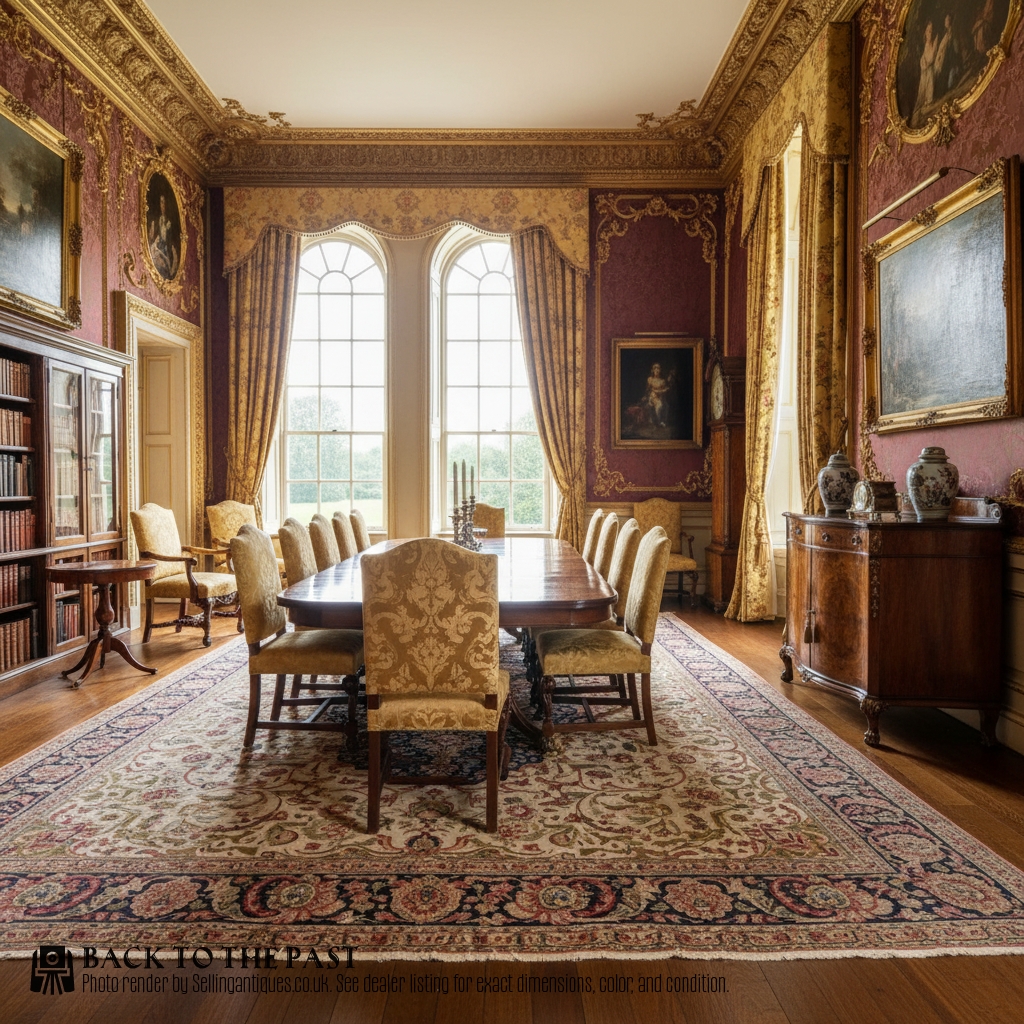
Victorian Burr Walnut Chiffonier
A victorian burr walnut chiffonier is a low cabinet designed for domestic reception rooms during the nineteenth century. These pieces combine enclosed lower shelving with display space, often incorporating mirrored backs or marble tops.
The form appears across several decades of the nineteenth century, with examples dating from the mid-Victorian period up to the late Victorian era. Variations in the evidence include pieces with mirrored backs, marble surfaces, and combined whatnot configurations.
Side cabinets, credenzas, and sideboards share close similarities in construction and domestic function. Buyers searching for a victorian burr walnut chiffonier will frequently encounter pieces that cross these functional categories.
Materials and Construction
Makers utilised burr walnut veneers applied over solid timber carcases to create highly decorative grain patterns on the principal surfaces. Ebonised wood accents and brass details frequently complement the main walnut construction.
Many examples incorporate glass doors, mirrored glass backs, and polished marble tops. Ormolu mounts and fine inlaid detailing appear on pieces associated with exhibition quality standards and French revival influences.
Victorian Burr Walnut Chiffonier Retail Price Guide 2026
Typical asking prices for victorian burr walnut chiffonier among the pieces listed under this phrase on Sellingantiques today, from the lower quarter to the upper quarter. They describe what is for sale here now, not the wider market.
Listings feature 19th Century, Victorian, William IV, and specific decades from 1850 to 1920, executed in burr walnut, glass, brass, marble, and ebonised wood.
Judging Quality and Execution
The distinction between standard domestic production and exhibition quality lies in the crispness of carved details, the symmetry of the burr walnut veneer selection, and the sophistication of any marquetry inlay. Superior examples display careful timber matching across drawer fronts and doors.
The integration of secondary materials such as white marble tops, bevelled mirror glass, and cast brass hardware indicates higher manufacturing ambitions. London quality pieces often demonstrate finer joinery and more substantial proportions in their foundational carcases.
The Victorian Burr Walnut Chiffonier Glossary
- Burr walnut
- A wood veneer taken from the gnarly growths of a walnut tree, prized for its swirling and knotty grain patterns. This material forms the primary decorative surface for the best Victorian cabinetwork.
- Chiffonier
- A low Victorian cabinet equipped with drawers and shelves, originally used for holding bottles or china. It frequently includes a raised back tier or mirror.
- Credenza
- A grand sideboard or cabinet, often featuring curved glass doors and ormolu mounts, adapted from continental forms. These pieces often overlap in function with large chiffoniers.
- Ormolu
- Gilded bronze mountings applied to furniture for decorative effect. They appear on pieces influenced by French revival styles.
- Whatnot
- A set of open shelves for displaying ornaments, frequently incorporated into the upper structure of Victorian side cabinets and chiffoniers.
Victorian Burr Walnut Chiffonier: Frequently Asked Questions
What is the difference between a chiffonier and a credenza?
A chiffonier is typically a lower cabinet featuring enclosed shelving and a raised back, designed for everyday domestic utility in nineteenth-century reception rooms.
Credenzas tend to be more formal exhibition pieces, frequently incorporating curved glass doors, ormolu mounts, and extensive marquetry inlay.
Did these cabinets always have mirrors?
Mirrors were a popular addition to many nineteenth-century designs, particularly on London quality pieces and exhibition pieces dating from the mid-Victorian decades.
However, many standard side cabinets and chiffoniers were manufactured with plain timber backs or open shelving instead of mirrored glass.
How do I date a burr walnut cabinet?
Dating relies on observing stylistic markers such as Rococo or French revival influences alongside the construction methods evident in the carcase and backboards.
Most recorded examples cluster around the mid-Victorian decades, particularly the eighteen-fifties, sixties, and seventies, with occasional William IV antecedents.
Can I use a marble top chiffonier for serving food?
Marble surfaces provide a durable and heat-resistant top that nineteenth-century households utilised for serving drinks or displaying heavy ornaments.
Care should be taken with modern acidic liquids that might etch the polished stone surface over time.