


Victorian Bronze Putto
These Victorian bronze putto figures and decorative objects bring classical charm and sculptural detail to nineteenth-century interiors.
Victorian Bronze Putto
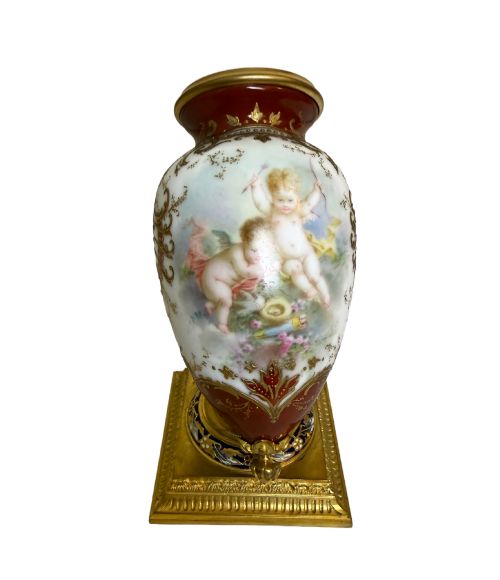
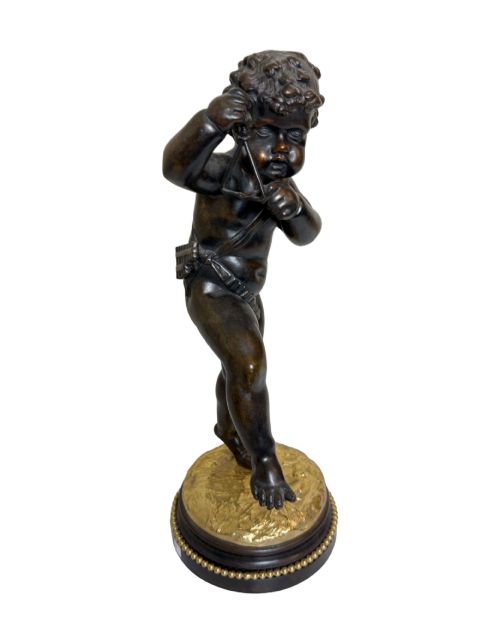
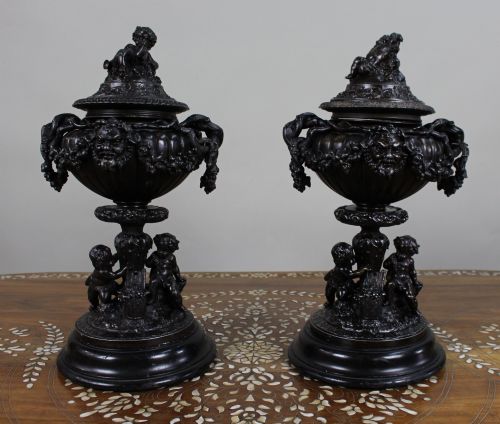
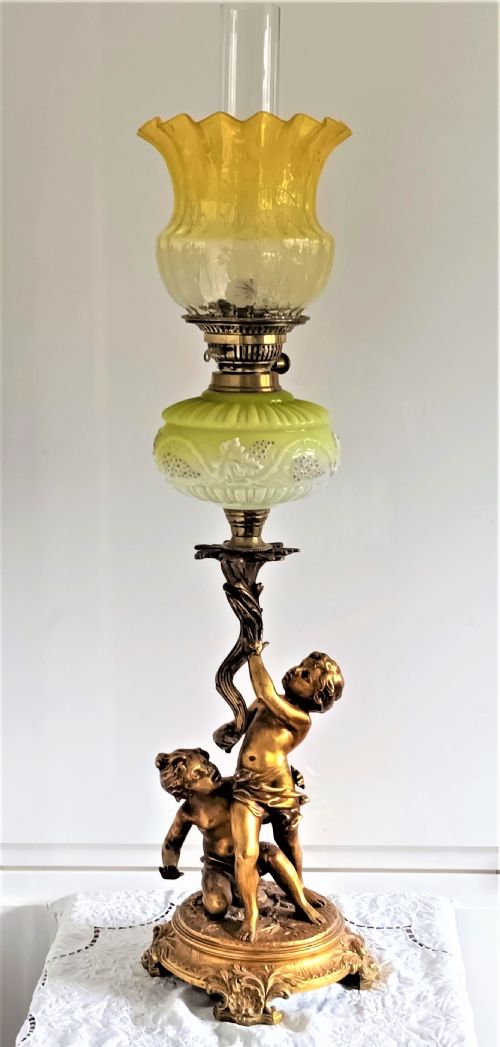
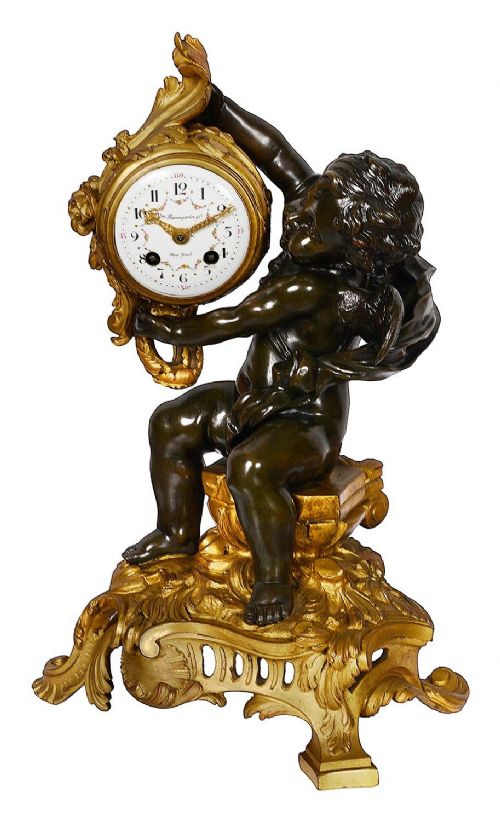
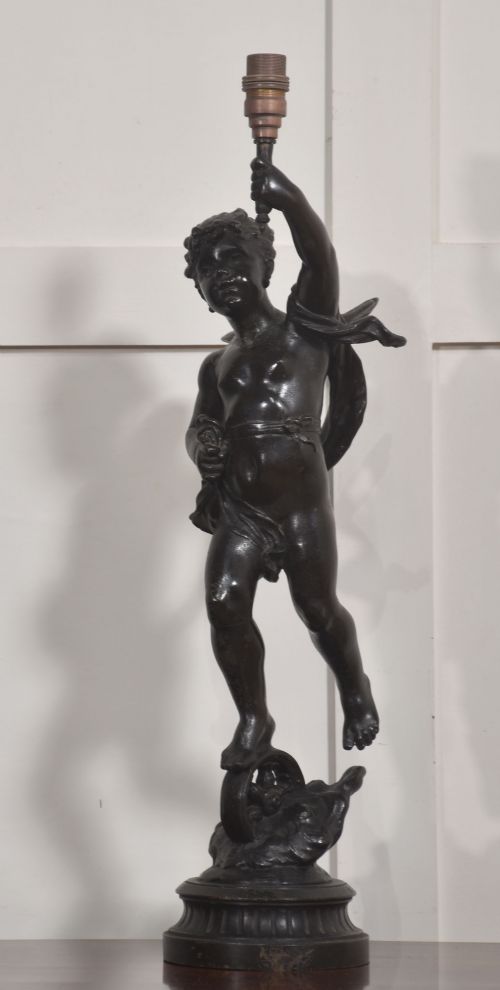
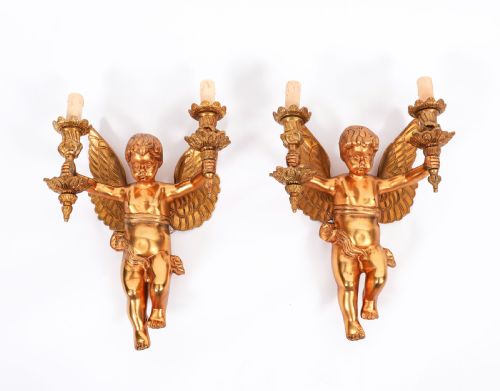
When you search for victorian bronze putto items, you encounter nineteenth-century decorative metalwork featuring winged infant figures, often referred to as cherubs or amorini. These pieces appear across a range of functional and ornamental forms, including mantel clocks, table lamps, wall lights, and candlesticks.
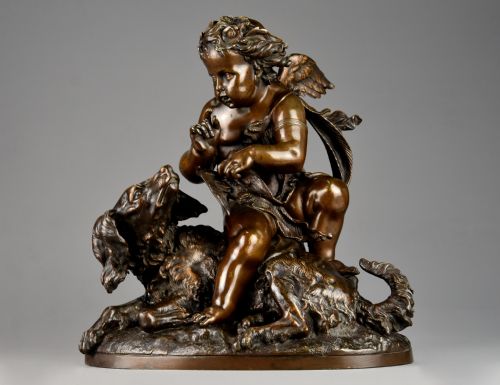
The selection on this page leans heavily towards French and Italian output from the middle to the late nineteenth century, reflecting the popularity of classical revival styles. You will find matched pairs of candlesticks mounted on marble bases, candelabra, and sculptural groups depicting children engaged in musical or mythological pursuits.
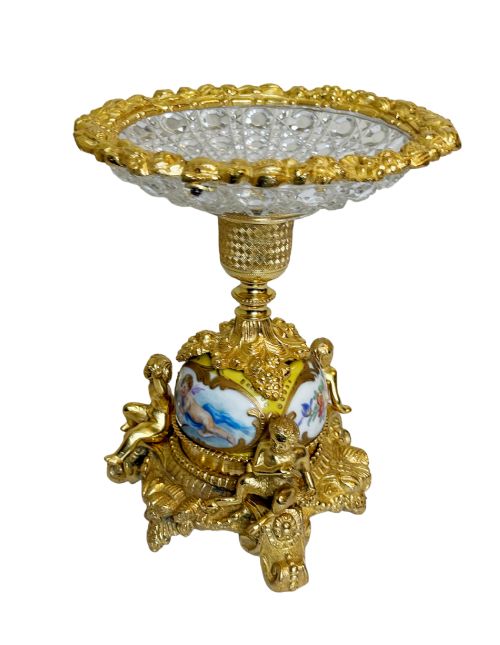
Beyond standalone statuettes, these figures frequently adorn useful objects such as gilt bronze tazzas, cut crystal centrepieces, and architectural andirons. Their presence bridges domestic utility with ornamental display, capturing the nineteenth-century taste for classical motifs within the home.
How they were made
The metalwork relies primarily on traditional lost-wax or sand casting methods in bronze, ormolu, and bronzed spelter, capturing intricate facial expressions and drapery. Cast components are frequently chased and finished by hand to sharpen the detail of wings, hair, and surrounding decorative elements.
Makers integrated mixed media into these works, combining patinated or gilt metal with white marble plinths, hand-painted porcelain panels, and cut glass. This assembly often involved threaded rods and screw fittings to secure heavy metal castings to stone bases or clock movements.
Materials span bronze, gilt bronze, ormolu, marble, porcelain, glass, brass, and enamel.
What varies in quality
The standard of chasing and surface finishing dictates the visual strength of the casting, distinguishing sharper, hand-tooled details from softer, commercially produced surfaces. Superior examples retain crisp definition in the feathers of the wings and the musculature of the figures.
The integration of materials also defines the tier of the piece, where well-balanced proportions between the bronze figures and their marble, porcelain, or crystal mounts indicate deliberate design rather than standard factory assembly.
Aug. Moreau·John Bennett Cheapside London·Phillipe H. Mourey·Sevres
The Victorian Bronze Putto Glossary
- Putto
- A plump, naked child depicted in classical art, often winged and sometimes representing Cupid. In nineteenth-century metalwork, these figures appear singly or in groups.
- Ormolu
- Gilt bronze produced by applying a finely ground mercury and gold amalgam to a bronze base and firing it to drive off the mercury. The technique yields a rich, durable golden surface.
- Spelter
- A zinc alloy used as a less expensive substitute for bronze in nineteenth-century decorative castings. It is usually painted or electroplated to resemble bronze or brass.
- Grand Tour
- A cultural journey undertaken by wealthy young Europeans through France and Italy, leading to a demand for classical sculptures and souvenirs.
- Candelabra
- A branched candlestick designed to hold multiple candles, frequently decorated with figural bronze work and mounted on classical bases.
Victorian Bronze Putto: Frequently Asked Questions
What is a putto?
A putto is a small, winged infant figure derived from classical art and Renaissance sculpture. These motifs symbolise love or domestic merriment.
In nineteenth-century metalwork, they appear frequently on clocks, lamps, and candelabra.
How do I clean bronze?
Bronze objects require only a gentle dusting with a soft, dry cloth to remove surface particles. Avoid modern chemical polishes, as they strip the patination.
Wax can be applied very sparingly to protect bare metal surfaces.
Are these figures solid bronze?
Many nineteenth-century decorative items are cast in bronze or brass, though some utilise bronzed spelter as an alternative material. Weight and surface coldness typically indicate solid metal casting.
Base inspection reveals the underlying colour and construction methods used by the maker.
Where were these pieces made?
The listings show a strong concentration of French and Italian manufacture, alongside English clockmakers and metalworkers. Grand tour souvenirs originated primarily in Italy for foreign travellers.
French workshops produced the majority of the gilt bronze clocks and candelabra.