




Victorian Breakfront Side Cabinet
A victorian breakfront side cabinet is a substantial architectural statement piece designed to anchor a formal interior while housing books or display items.

Victorian Breakfront Side Cabinet
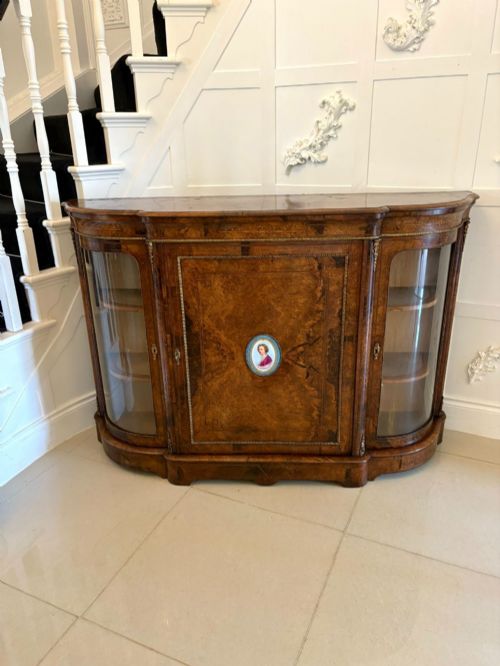
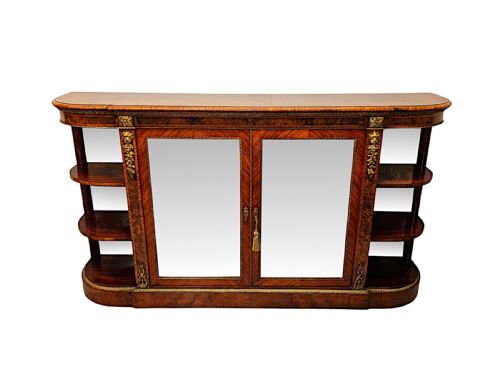
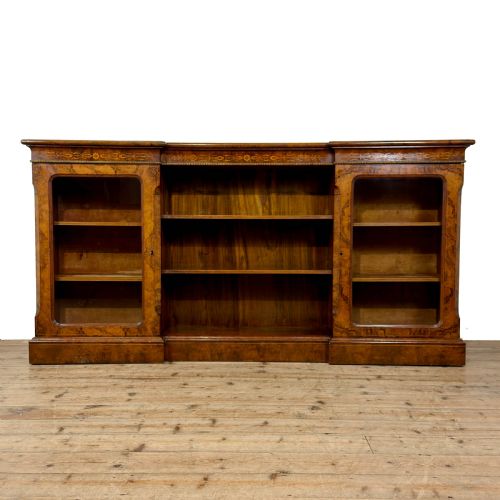
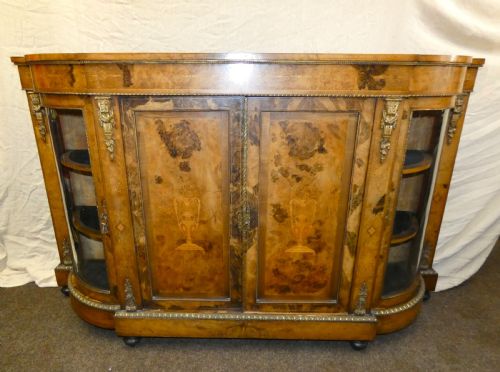
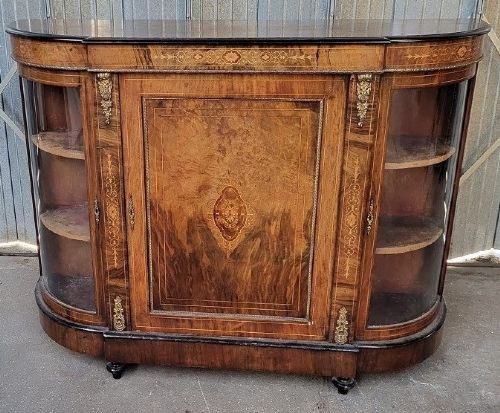
When you search for a victorian breakfront side cabinet, you encounter formal nineteenth-century display furniture designed with a central projection flanked by recessed wings. These pieces functioned as primary storage and display focal points within grand Victorian reception rooms, often incorporating glazed doors for books or porcelain collections.
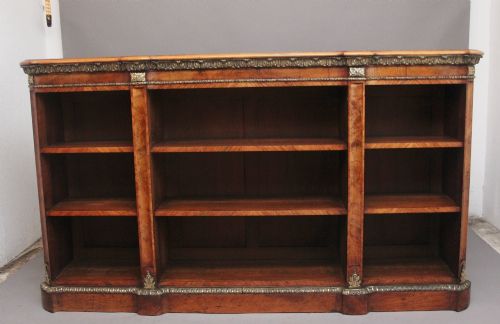
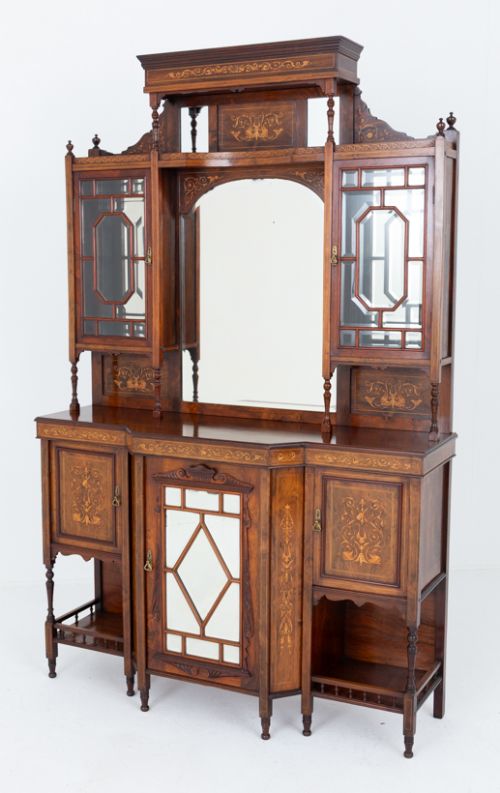
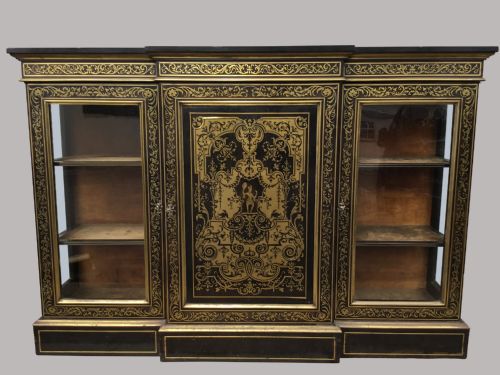
The versions most frequently met on this page span the mid to late nineteenth century, predominantly rendered in burr walnut, rosewood, and ebonised wood. They appear under various overlapping descriptors in the record, including credenzas, bookcases, and sideboards, reflecting the versatile terminology of the period.
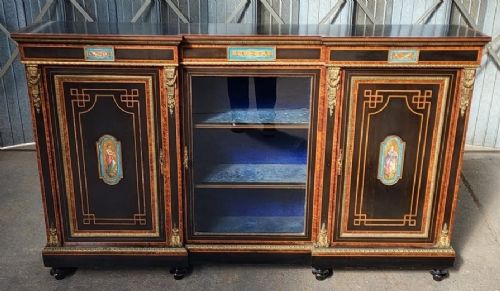
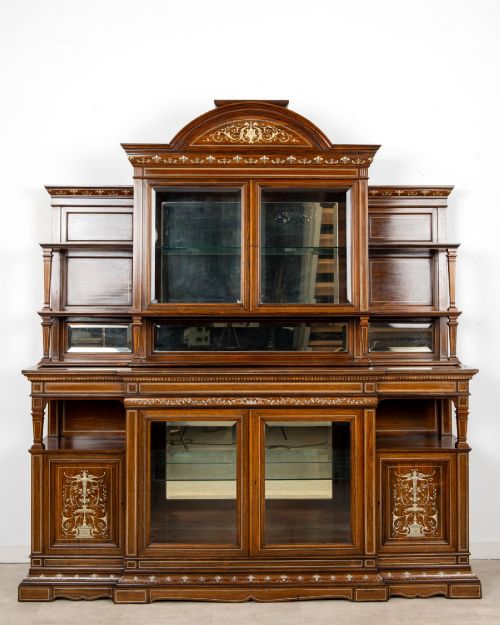
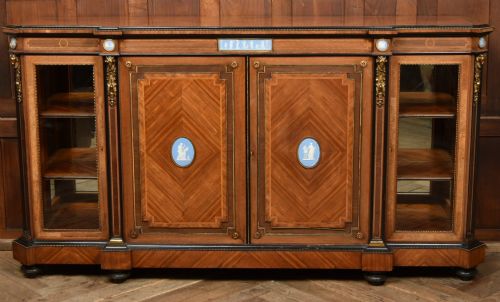
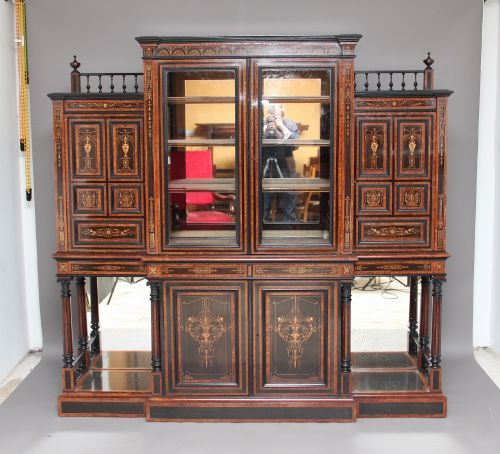
Makers and designers of the era utilised distinct stylistic influences, ranging from French Empire and Napoleon III revivals to Sheraton Revival and Aesthetic Movement details. Cabinets emerge in configurations featuring three or four doors, sometimes incorporating open shelving or porcelain plaques.
How They Were Made
Cabinet makers constructed these pieces using dense structural timbers like mahogany and oak as carcase foundations, overlaid with highly figured decorative veneers such as burr walnut, rosewood, and coromandel. Marquetry panels incorporated intricate floral or geometric inlays using contrasting woods, satinwood, and mother-of-pearl.
Gilt bronze, known as ormolu, mounts were cast and chased to highlight architectural breaks, cornices, and door frames, often paired with fine brass stringing and glazing bars. Specialised workshops also applied ebonising techniques to hardwoods, creating deep black surfaces suited to Boulle brass and tortoiseshell work or hand-painted satinwood decorations.
The listings show a strong preference for figured burr walnut and rosewood across Victorian examples, frequently accented with ormolu mounts.
What Varies in Quality
Quality rests upon the selection and matching of the veneer timbers, where symmetrical grain patterns on large surfaces distinguish master workshops from standard production. The crispness of the hand-chased ormolu mounts and the precision of the marquetry inlays indicate the level of labour invested in the piece.
Internal construction details, such as solid mahogany drawer linings, original brass locks, and thick bevelled glass panes, separate utilitarian storage furniture from exhibition-standard pieces commissioned from notable cabinet makers.
Johnstone and Jeanes·Collinson and Lock·Gillows·Lamb of Manchester·Edwards and Roberts
The Victorian Breakfront Side Cabinet Glossary
- Breakfront
- A cabinet design featuring a central section that projects forward from the flanking side sections. This architectural arrangement creates depth and visual rhythm across the facade.
- Credenza
- A low-standing cabinet or sideboard, frequently fitted with glass doors and central cupboards, popular throughout the Victorian era for displaying decorative porcelain and objects.
- Ormolu
- Gilt bronze mounts applied to furniture edges and panels for decorative accent. The technique involves applying a gold-mercury amalgam to cast bronze.
- Marquetry
- The art of forming decorative patterns using thin veneers of different coloured woods, ivory, or shell applied to a carcase. It requires precise cutting and fitting by hand.
- Boulle
- A style of marquetry using contrasting brass and tortoiseshell inlay, named after the French cabinet maker André-Charles Boulle and revived during the nineteenth century.
Victorian Breakfront Side Cabinet: Frequently Asked Questions
What is a breakfront cabinet?
A breakfront cabinet is a piece of furniture where the central section projects forward further than the sections on either side. This structural device adds architectural presence and breaks up the linear expanse of a large wall.
In Victorian examples, this configuration typically houses multiple doors, allowing for distinct interior storage compartments behind glazed or panelled timber.
Where were these cabinets placed?
These large cabinets were traditionally positioned against the main wall of a Victorian parlour, drawing room, or formal library. They served both as decorative focal points and practical surfaces for displaying treasured objects.
Because of their substantial proportions, they required generous room dimensions to balance their architectural weight.
How do I care for burr walnut?
Burr walnut veneer requires stable environmental conditions away from direct sunlight and strong heat sources to prevent the wood from drying and splitting. Regular dusting with a soft, dry cloth maintains the polished finish without chemical buildup.
Occasional application of appropriate wax polish helps nourish the historic timber surface.
Are these cabinets modular?
Victorian breakfront cabinets and credenzas are solid, unified pieces of furniture constructed as single static units or in fixed modular sections for transport. They are not designed to be disassembled or reconfigured by the user.
Moving them generally requires professional handling due to their heavy timber carcases and delicate glass components.