



Victorian Brass Taper Stands
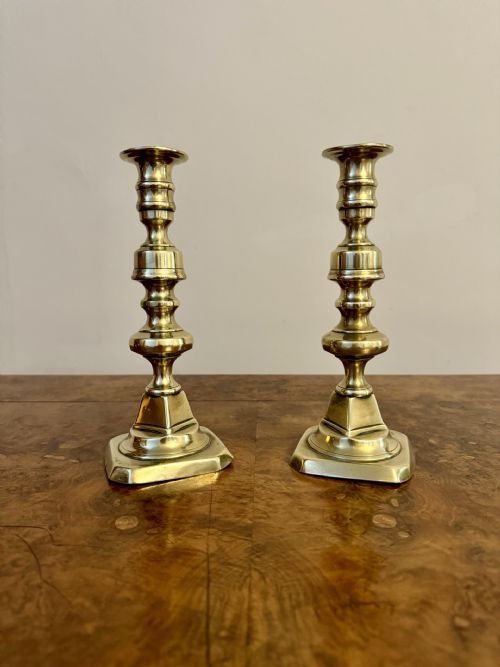
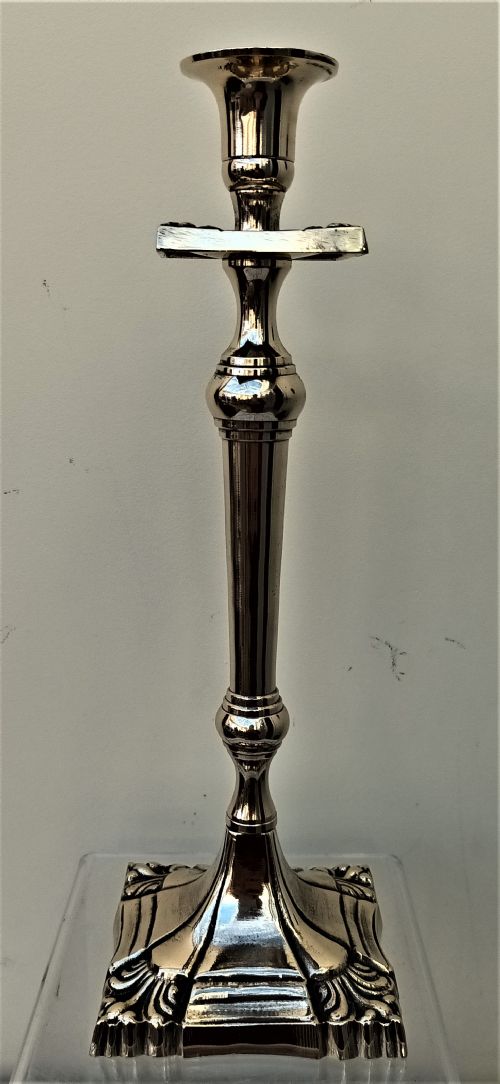
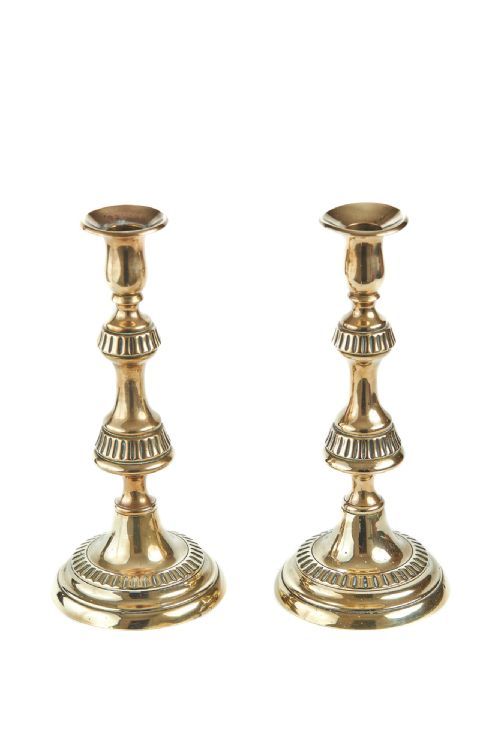
Victorian brass taper stands are small, practical lighting pieces in brass and bronze, providing straightforward illumination for desks and chambers.
Victorian Brass Taper Stands
Victorian brass taper stands appear primarily as candlesticks, desk candlesticks, and chambersticks designed to hold narrow wax lights. These items emerge from the nineteenth century across periods spanning the mid-century decades through to nineteen hundred, matching styles like Gothic Revival, Black Forest, and Victorian Neoclassical.
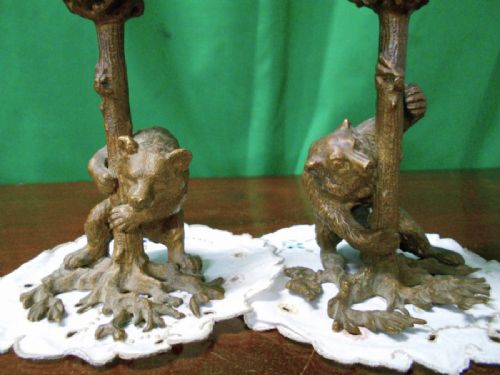
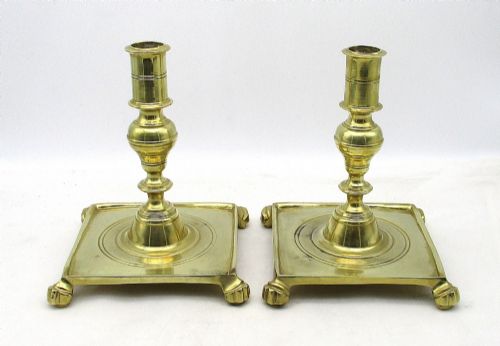
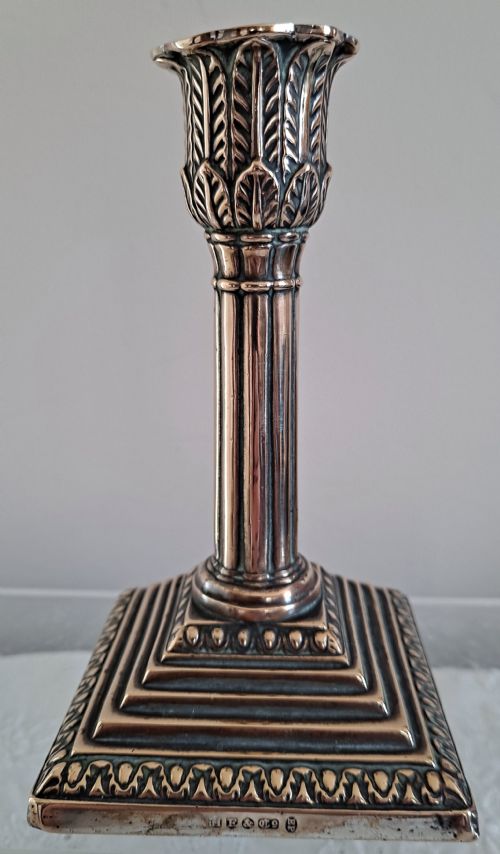
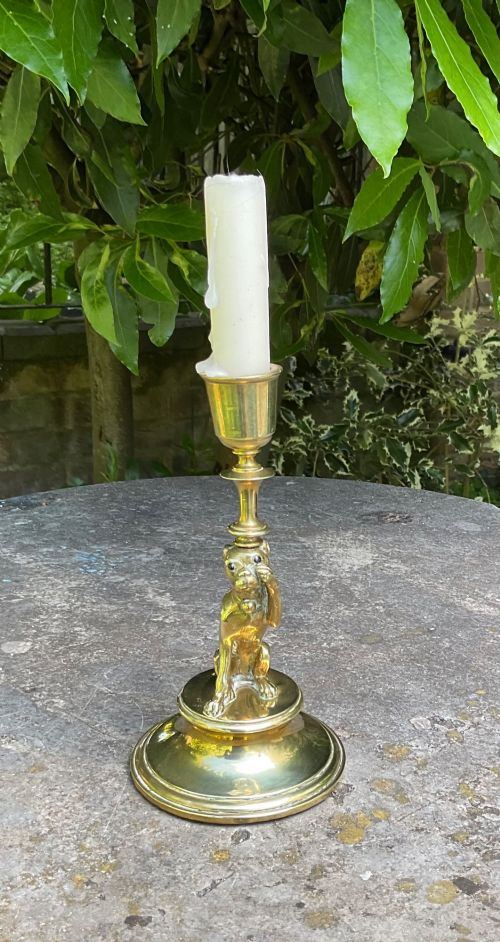
The pieces on this page include standard pairs and single items formed from brass, bronze, copper, and silver plate, sometimes incorporating porcelain elements. Buyers encounter plain baluster shapes alongside ornamental forms such as pug dog figures, bear motifs, and twisted stems.
Originating largely from English workshops, these items serve both domestic desk use and ecclesiastical settings. Tall church candlesticks and heavy seamed bronze examples sit alongside domestic chambersticks fitted with handle pans.
Materials and construction
Makers utilised cast and sheet brass alongside bronze to build these stands, often assembling hollow forms from multiple components soldered together. Seamed bronze items reveal the construction methods common to nineteenth-century metalworking shops.
Surface finishes include polished metal, silver plating, and combinations of brass with porcelain inserts. Black Forest examples integrate carved animal figures with metal sockets, while Gothic Revival pieces display decorative moulding characteristic of the period.
Materials recorded on this page include solid brass, seamed bronze, copper, silver plate, and porcelain inserts.
Judging quality in metalwork
Quality rests on the crispness of casting detail and the weight of the metal used in the stem and base. Heavily cast pieces with sharp decorative enrichment and secure joints demonstrate superior workshop standards.
Proportion and finish separate standard utility items from decorative showpieces. Clean joins, balanced pedestals, and intact surface plating or original patination distinguish finer examples from plain productionware.
Frederick J Smith & Co·Wm Tonks & Sons
The Victorian Brass Taper Stands Glossary
- Chamberstick
- A low candlestick fitted with a saucer base and a finger ring for carrying around a house. These items allowed safe movement through dark corridors before electric lighting.
- Baluster
- A vertical architectural form with a swelling contour used to shape the stem of a candlestick. This profile provides visual weight and stability to the base.
- Gothic Revival
- An architectural and decorative style drawing on medieval forms, featuring pointed arches and heavy ornamentation. Pieces in this style display ecclesiastical motifs.
- Seamed
- Formed from metal sheet bent and joined along a vertical seam rather than cast in one solid piece. This technique appears frequently in nineteenth-century bronze and brass production.
- Silver Plate
- A thin layer of silver applied over a base metal such as copper or brass. This finish offered the appearance of solid silver at a lower manufacturing cost.
Victorian Brass Taper Stands: Frequently Asked Questions
What is a Victorian brass taper stand?
A Victorian brass taper stand is a small candlestick or chamberstick produced during the nineteenth century to hold narrow wax tapers or candles. These items were placed on writing desks or carried by hand.
They combine practical utility with the decorative metalwork styles of the period, including Gothic Revival and Neoclassical designs.
Were these stands used for desks?
Many examples function specifically as desk candlesticks, designed to hold wax lights near writing materials. Their compact bases allowed them to sit safely upon paperwork.
Chambersticks with saucer bases served a similar purpose for moving through rooms or sealing letters with hot wax.
What materials are used besides brass?
While brass dominates, makers also utilised bronze, copper, silver plate, and porcelain. Some pieces incorporate carved wooden elements in animal forms.
These mixed materials often align with specific aesthetic movements, such as Black Forest carvings or Arts and Crafts metalwork.