


Victorian Brass Samovar
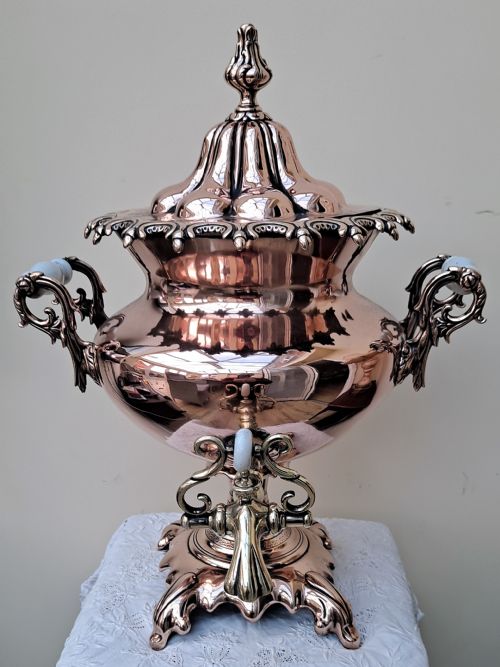
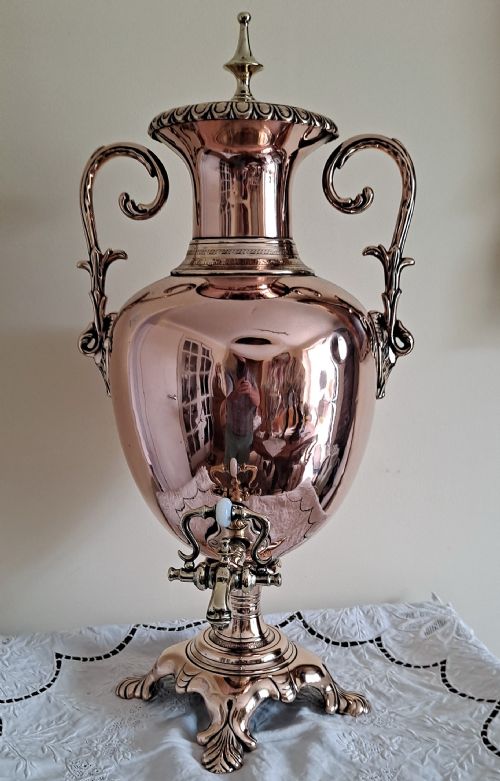
These Victorian brass samovar pieces are substantial tea urns and spirit kettles designed to heat water, bringing period presence and warmth to a room.
Victorian Brass Samovar
A victorian brass samovar primarily takes the form of a tea urn or spirit kettle, designed for heating and dispensing water. These vessels stand as centrepieces on a table or dresser, serving both a practical function and a decorative role in nineteenth-century interiors.
The versions met most frequently on this page combine copper bodies with brass mounts, handles, and taps. Alongside these standard tea urns, related spirit kettles appear from the period, offering a slightly different scale while sharing the same metalworking traditions.
How they were made
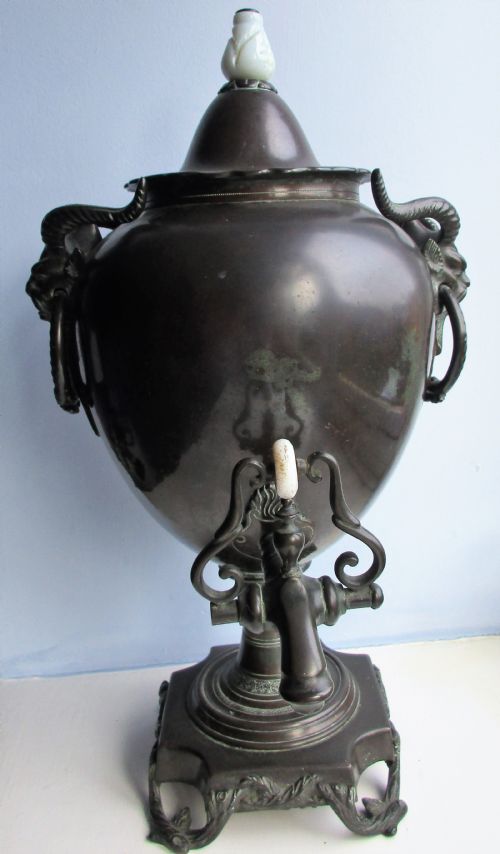
Makers shaped sheet copper and brass into bulbous or pedestal urn bodies, utilising hand-beating and soldering techniques to join the components. Handles and spigots frequently incorporate insulating materials such as bone or ebonised wood to handle heat safely.
Surfaces exhibit varying degrees of patinated metal finish, achieved through age and handling rather than applied coatings. Artisans combined these primary metals with ceramic elements and turned wood details on specific spirit kettle and urn forms.
Listings feature items spanning the nineteenth century, including specific dates from 1850, 1860, 1880, and 1920 alongside general Victorian and Georgian periods.
What varies in quality
Quality rests in the heaviness of the gauge used for the copper and brass, determining the physical heft and structural integrity of the vessel. Superior examples display crisper casting to the brass mounts and taps, alongside more refined proportions in the overall silhouette.
The integration of secondary materials like bone handles or ebonised wood details marks out the finer pieces from simpler utilitarian models. Finish and surface patination further distinguish higher-grade items that retain their original components.
Benetfink & Co
The Victorian Brass Samovar Glossary
- Samovar
- A heated metal urn traditionally used to boil and heat water for tea. These vessels typically feature an internal heating tube or a spigot near the base.
- Spirit Kettle
- A smaller kettle suspended over a burner containing methylated spirit or alcohol. This form allows water to remain hot at the table without a central hearth.
- Pontypool Ware
- A style of lacquered or tinned metalware associated with the region of Pontypool in Wales. Pieces bearing this attribution show distinct decorative surface treatments.
- Spigot
- A tap or spout fitted near the bottom of an urn to dispense hot water. These components are frequently cast in brass and feature turned handles.
Victorian Brass Samovar: Frequently Asked Questions
What is a Victorian brass samovar?
A victorian brass samovar is a large metal vessel designed for heating and dispensing water for tea. These pieces combine functional water containers with decorative metalwork.
They serve as prominent display objects in a room, reflecting nineteenth-century hospitality practices and metalworking skills.
How were samovars used?
These vessels were filled with water and heated to provide a constant supply of hot water for tea service. The built-in spigot allowed users to draw water directly into cups.
They sat upon dining tables, sideboards, or dedicated stands during social gatherings and meals.
How do I live with a samovar?
A samovar works well placed upon a sturdy sideboard or table as a decorative focal point. Their warm metallic tones complement both period and eclectic modern interiors.
Maintenance involves gentle cleaning to preserve the natural patinated metal finish without removing the character accumulated over the centuries.
How do I tell periods apart?
Periods are identified through a combination of manufacturing techniques, material choices, and stylistic details. Nineteenth-century examples often feature heavy copper bodies paired with cast brass mounts.
Later Victorian and Arts and Crafts pieces show shifts in form and handle construction, distinguishing them from earlier Georgian predecessors.