



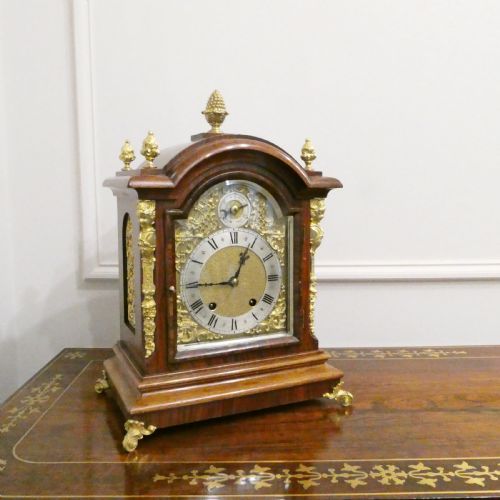


Victorian Brass Mounted Clock
A victorian brass mounted clock brings together heavy architectural stone, warm gilt bronze and precise mechanical movement from the nineteenth century.
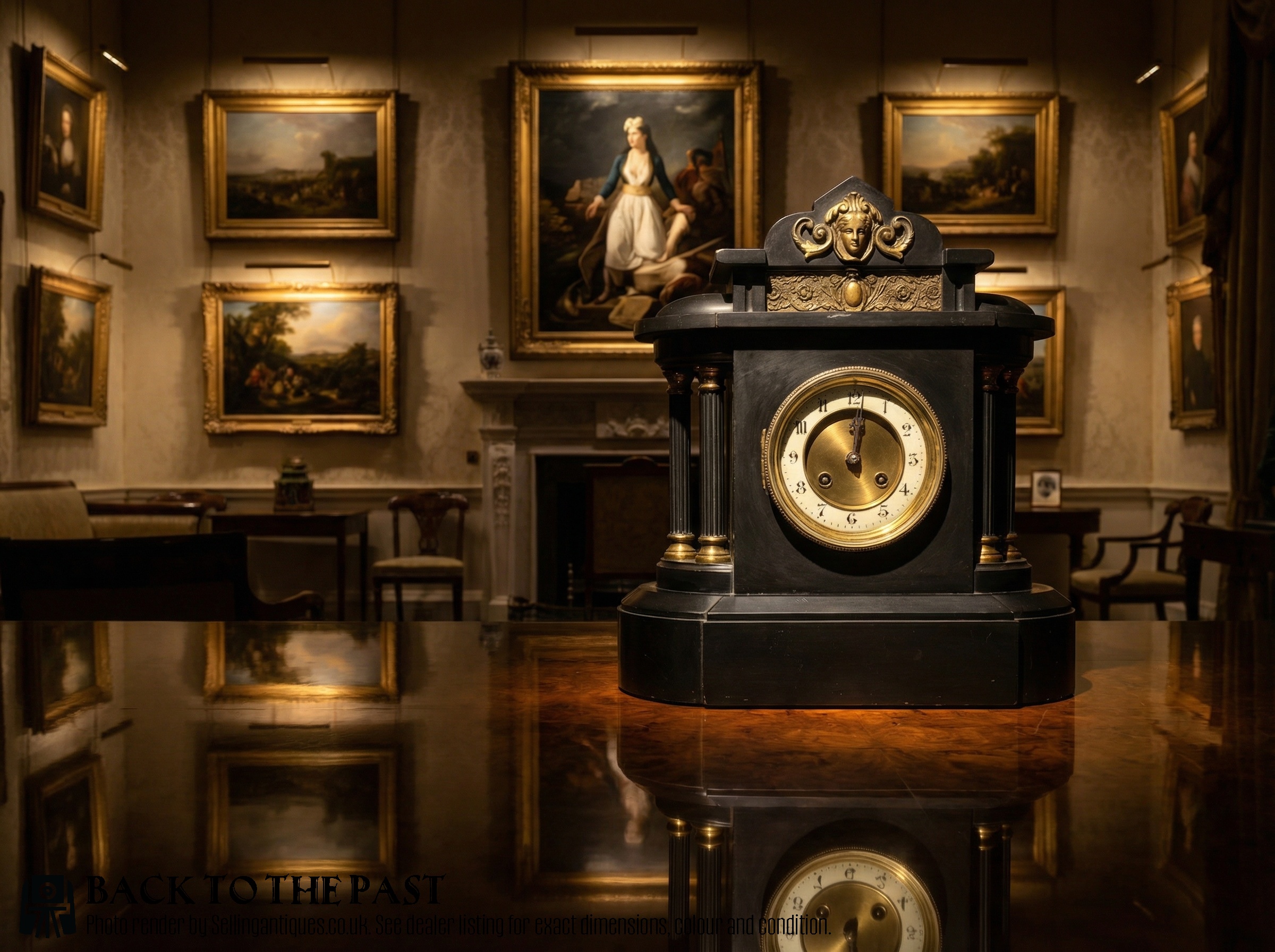
Victorian Brass Mounted Clock
When you search for a victorian brass mounted clock, you encounter timepieces spanning the nineteenth century, including mantel clocks, bracket clocks and clock garnitures. These objects range from English mahogany and ebonised wood designs to ornate French porcelain and ormolu creations.
The pieces you meet most frequently on this page date from the middle decades of the nineteenth century up to nineteen hundred. They take the form of table clocks, library timepieces and larger architectural marble or onyx housings.
Makers and retailers from London and continental workshops produced these works using brass mountings, gilt bronze and enamel dials. Surviving examples reflect both domestic English fusee movements and complex continental striking mechanisms.
Materials and construction methods
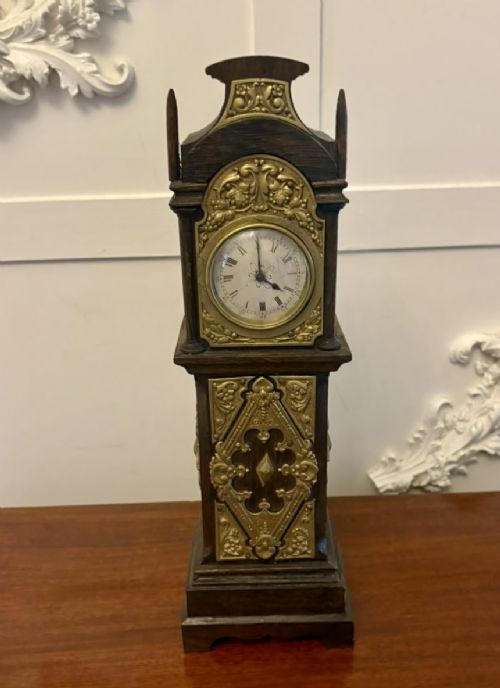
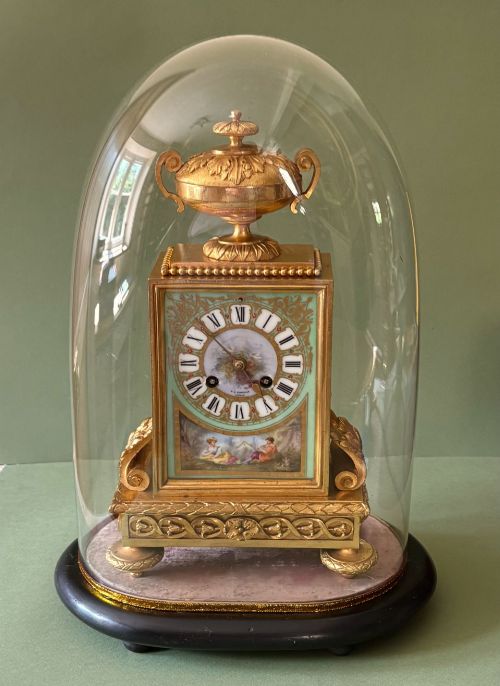
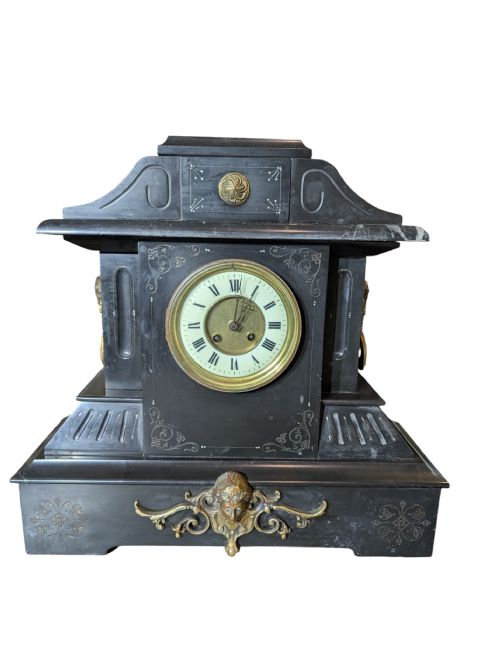
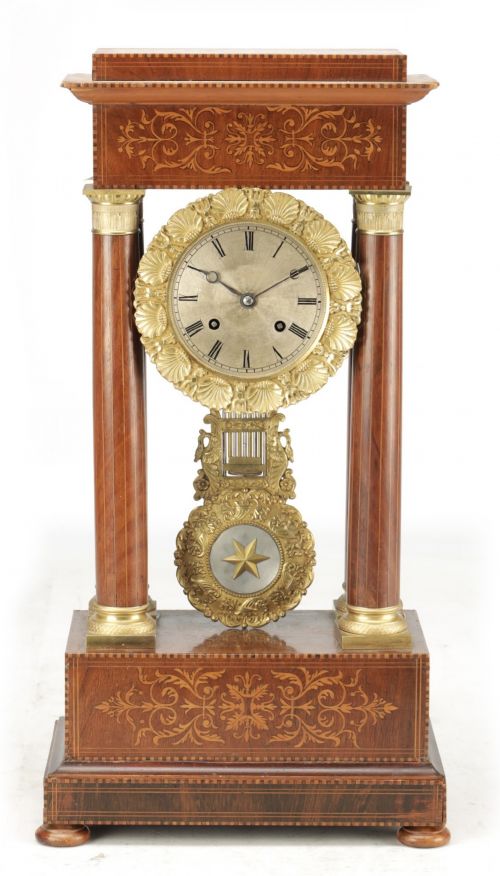
Craftsmen built the housings of a victorian brass mounted clock from dense hardwoods like mahogany, burr walnut and ebonised wood, alongside structural stone including marble and onyx. They applied cast brass, ormolu and gilt bronze mounts to ornament the corners, bezels and feet of each case.
Dial faces combined white enamel with painted numerals, protected beneath bevelled glass and brass bezels. Inside these cases, makers fitted mechanical movements driven by fusee chains, springs or pendulums, often incorporating chiming functions and engraved backplates.
Victorian Brass Mounted Clock Retail Price Guide 2026
Typical asking prices for victorian brass mounted clock among the pieces listed under this phrase on Sellingantiques today, from the lower quarter to the upper quarter. They describe what is for sale here now, not the wider market.
Materials appearing across these listings include mahogany, marble, onyx, tortoiseshell, ormolu, porcelain and ebonised wood.
Measures of quality in nineteenth century timepieces
Quality rests in the crispness of the brass castings and the depth of the case timber or marble carving. Finer pieces display hand-chased ormolu mounts, signed movements by recognised makers, and harmonious proportions between the housing and its metal ornamentation.
Simpler models rely on standard factory movements and mass-produced brass bezels. The presence of matching garniture pieces, original brackets or complex musical and chiming complications elevates the standing of a clock within its period.
Schneckenburger·Lenzkirch·Payne and Co London·Budgen Croydon·Auguste Moreau·McCabe London·JP Delettrez·Maple of London·Miroy Freres·Barraud and Lunds
The Victorian Brass Mounted Clock Glossary
- Fusee
- A conical pulley used in clock movements to maintain even driving force as the mainspring unwinds. This mechanism ensures consistent timekeeping throughout the running period.
- Ormolu
- Finely ground high-zinc brass applied to bronze objects via a mercury gilding process or electroplating. It gives decorative mounts a rich golden surface.
- Bracket clock
- A portable table clock originally designed to sit on a wall bracket or table. These spring-driven pieces frequently feature elaborate wooden cases and carrying handles.
- Garniture
- A set of decorative matching objects, usually a central clock flanked by a pair of candelabras or urns. They formed symmetrical decorative schemes on nineteenth-century mantelpieces.
- Ebonised
- Wood treated with a dark finish to imitate expensive ebony. This technique gained popularity for creating sharp contrast against bright brass mounts.
Victorian Brass Mounted Clock: Frequently Asked Questions
What is a fusee movement?
A fusee movement uses a conical gear to equalise the power delivered by the mainspring as it runs down.
This mechanical refinement helps the clock maintain steady accuracy over several days between winds.
How do I identify a bracket clock?
Bracket clocks are portable spring-driven timepieces housed in wooden or metal cases, often featuring a handle on top.
They derive their name from the wall brackets upon which owners traditionally placed them.
What is a clock garniture?
A clock garniture consists of a central mantel clock accompanied by matching side ornaments such as candelabras or urns.
Victorians arranged these matched sets symmetrically across fireplace mantelpieces.
Where were these clocks made?
The pieces originate from workshops across England, France and Germany during the nineteenth century.
London retailers and continental makers produced both domestic timepieces and ornate revival styles.