


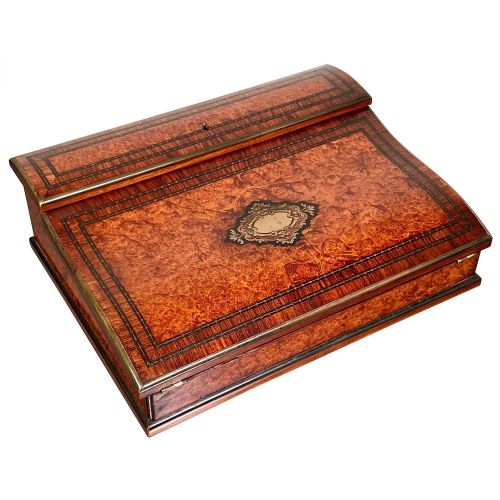


Victorian Brass Inlaid Slope
A victorian brass inlaid slope is a portable writing desk that brings rich timbers and precise metalwork together for correspondence.
Victorian Brass Inlaid Slope
When you search for a victorian brass inlaid slope, you encounter portable writing furniture designed to fold open into a slanted writing surface. These pieces served as personal desks for correspondence and document storage during the nineteenth century.
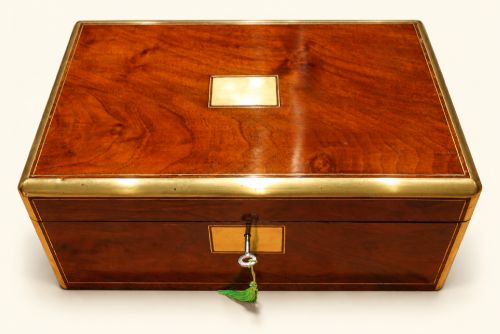
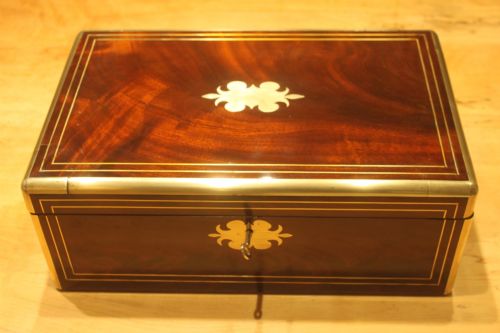
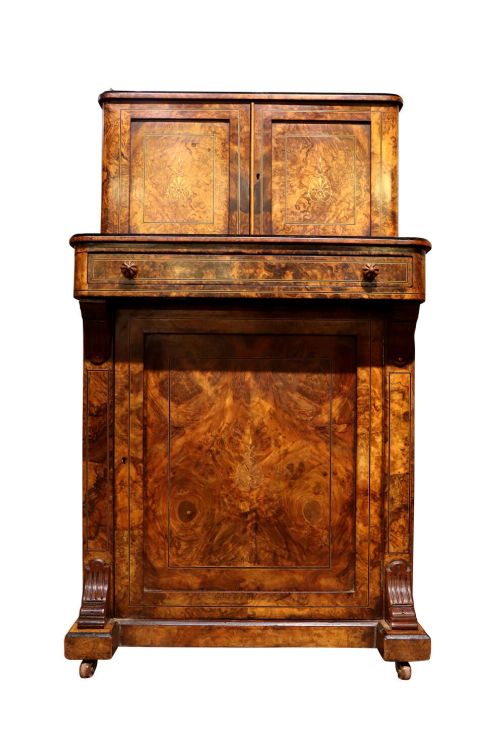
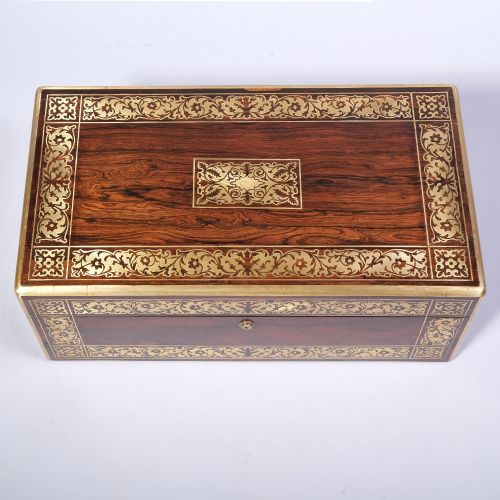
The selections on this page span the Victorian era alongside Regency and late Georgian periods, reflecting shifts in taste across the nineteenth century. Rosewood and burr walnut dominate the examples, often enhanced by finely fitted brass stringing and escutcheons.
Writing slopes, writing boxes, and bureau de dame variations form the core of what you meet here. Many include fitted interiors with secret drawers, pen trays, and inkwell compartments concealed beneath the main writing flap.
Materials and Construction
Cabinet makers built these pieces using dense hardwoods such as mahogany, rosewood, burr walnut, and coromandel over sturdy secondary timbers. Brass inlay and corner binding reinforced the edges while adding decorative contrast to the dark wood grains.
Internal mechanisms required precise carpentry to house secret drawers, hidden spring releases, and specialised brass locks such as those by Bramah. Mother of pearl and ebonised wood occasionally supplemented the primary brass decoration on more elaborate boxes.
Victorian Brass Inlaid Slope Retail Price Guide 2026
Typical asking prices for victorian brass inlaid slope among the pieces listed under this phrase on Sellingantiques today, from the lower quarter to the upper quarter. They describe what is for sale here now, not the wider market.
Some military campaign slopes included dedicated sovereign sections alongside candle sconces for night-time dispatches.
Assessing Quality
The precision of the brass inlay work separates standard boxes from exceptional ones, particularly where the metal meets the wood grain without gaps. Figured timbers with rich, natural burl patterns command greater attention than plain veneers.
Completeness of the internal fitments, such as original glass inkwells, working locks with keys, and smoothly operating secret compartments, dictates the standing of an individual piece.
George Austin of Dublin·Lund of London
The Victorian Brass Inlaid Slope Glossary
- Writing slope
- A portable box with a hinged, slanted lid that opens to reveal a writing surface and stationery storage. These pieces were essential for correspondence before fitted home offices became common.
- Secret drawers
- Concealed compartments hidden behind false panels or accessed via spring-loaded mechanisms within the interior. Owners used these spaces for storing valuables and sensitive papers.
- Bramah lock
- A high-security barrel lock invented by Joseph Bramah in the late eighteenth century. These sophisticated locks indicate a high-quality box made for a wealthy client.
- Campaign slope
- A robust writing box designed for travel, often featuring brass corner brackets and flush-fitting handles. Military officers and colonial administrators used them on active service.
- Escutcheon
- A decorative brass plate surrounding a keyhole that protects the wood from wear. They frequently match the linear brass inlay on the exterior lid.
Victorian Brass Inlaid Slope: Frequently Asked Questions
How do I date a slope?
Dating relies on timber choices, brass deployment, and lock types. Regency and early nineteenth-century pieces frequently utilise rosewood with geometric brass stringing, whereas Victorian examples lean heavily towards burr walnut and heavier brass mounts.
Maker signatures on locks or hidden maker stamps provide more exact chronological markers. Construction methods inside the well also shift from Georgian dovetailed joints to later factory-standard fittings.
Were these used for travel?
Portable writing boxes enabled travellers to maintain correspondence away from a permanent desk. Campaign versions with reinforced brass corners and flush handles were built specifically for military officers and colonial journeys.
Lighter domestic models served guests moving between country houses or individuals writing in private sitting rooms. They offered a self-contained writing station wherever the owner settled.
How do I care for the wood?
Maintain the finish by applying a microcrystalline wax periodically to nourish the dry hardwood surfaces. Avoid placing the box in direct sunlight or near heat sources that cause wood to split and veneer to lift.
Clean brass elements gently with a soft cloth without abrasive polishes that might stain the surrounding timber. Keeping ambient humidity stable preserves the integrity of both wood and metal.