

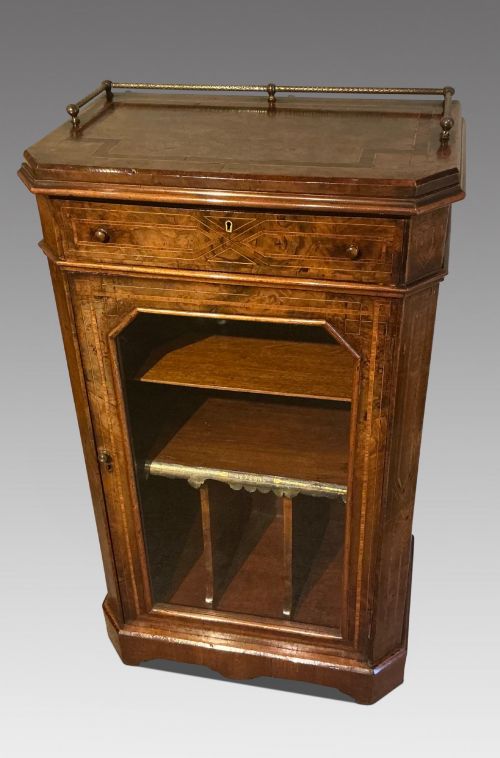
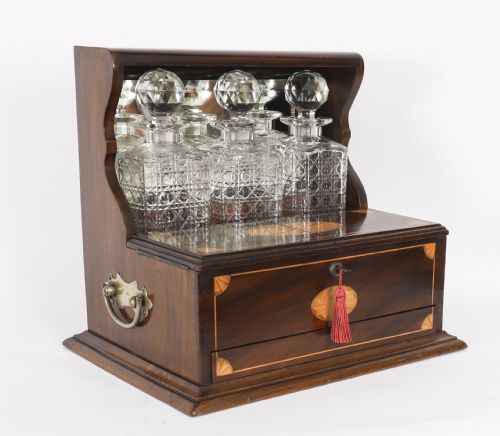
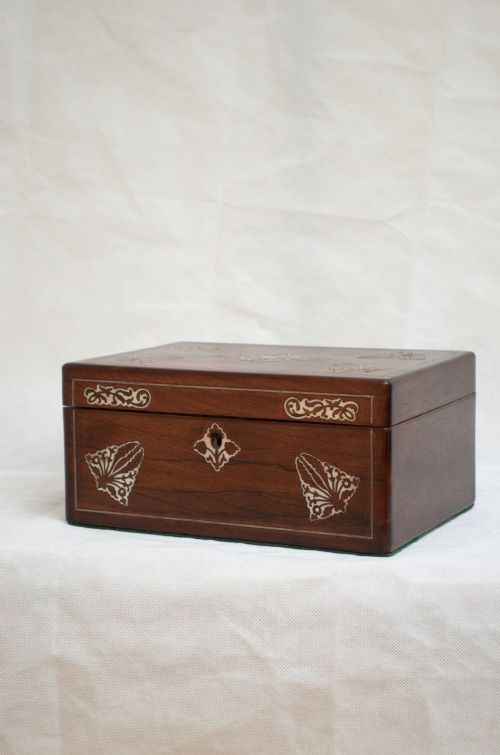


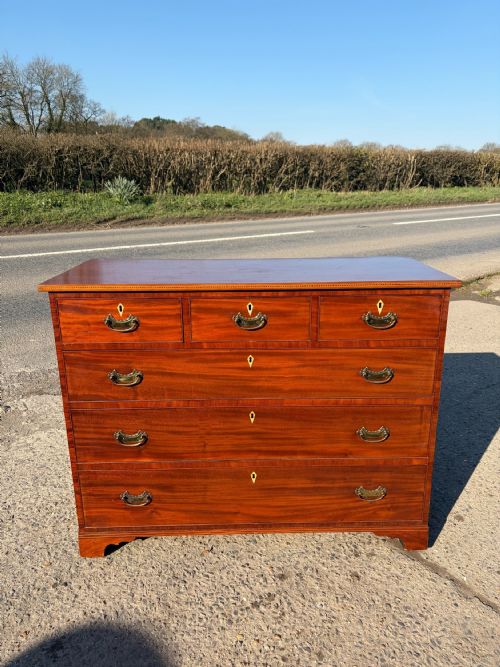

Victorian Brass Inlaid Chest
A victorian brass inlaid chest offers striking contrast through glowing metalwork set against rich timber, making these decorative containers a practical addition to any room.
Victorian Brass Inlaid Chest
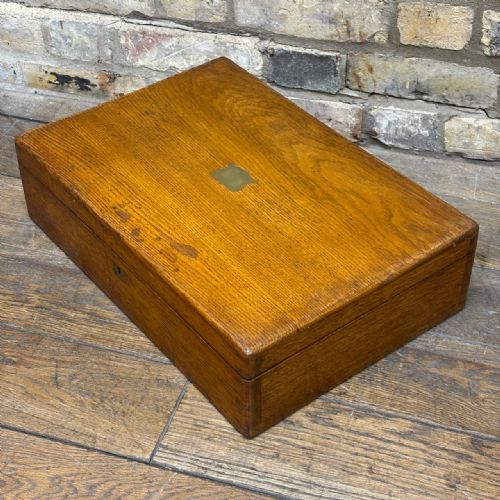
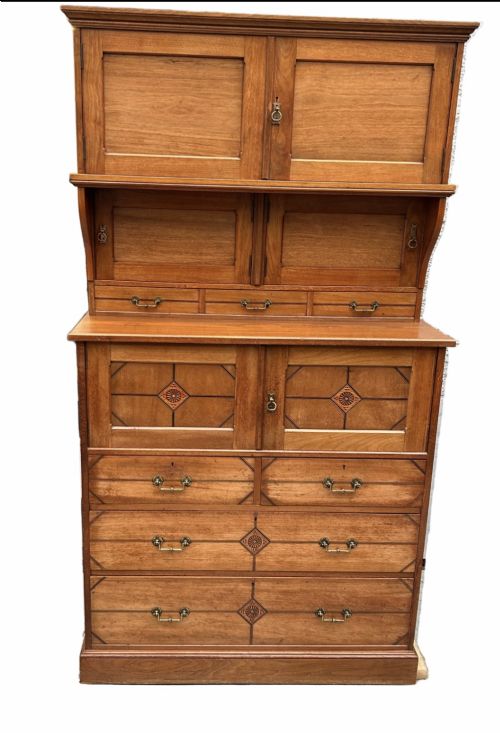
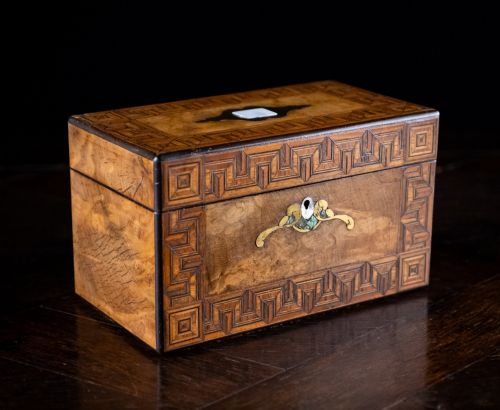
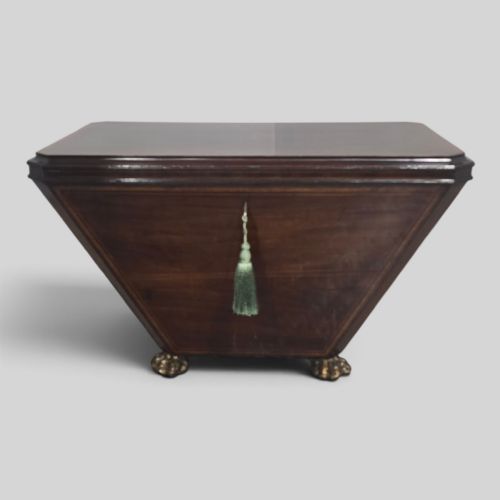
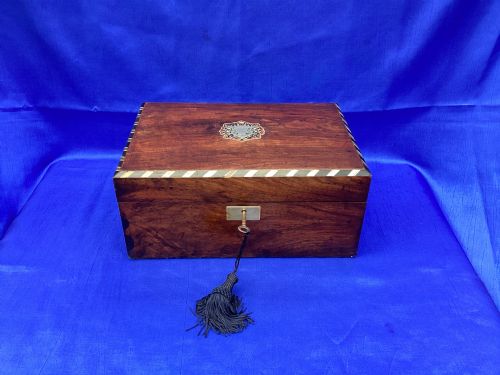
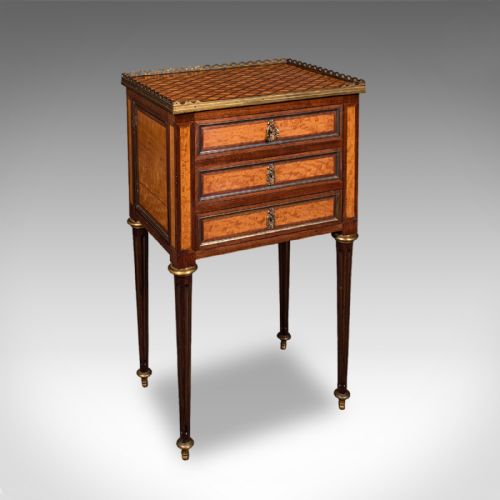
A victorian brass inlaid chest encompasses a diverse array of lidded containers, tabletop caddies, and drawer units produced during the nineteenth century. Buyers searching this phrase most frequently encounter smaller tabletop pieces such as jewellery boxes, writing slopes, and tea caddies rather than large furniture.
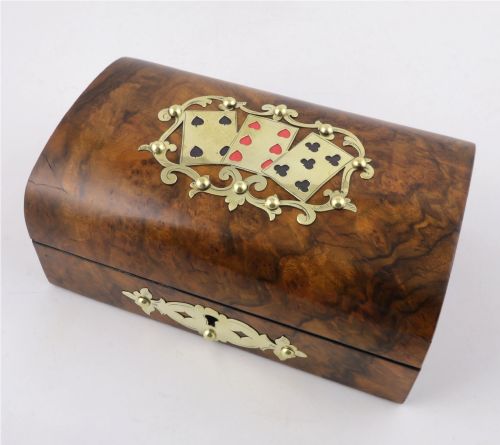
The materials span mahogany, rosewood, walnut, and coromandel, often enhanced with mother of pearl and precision wood inlay. These items reflect the domestic habits and decorative tastes of the Victorian period.
Originating largely from British workshops alongside French revival pieces and Anglo-Indian designs, the selection balances utilitarian storage with elaborate surface decoration.
Materials and construction
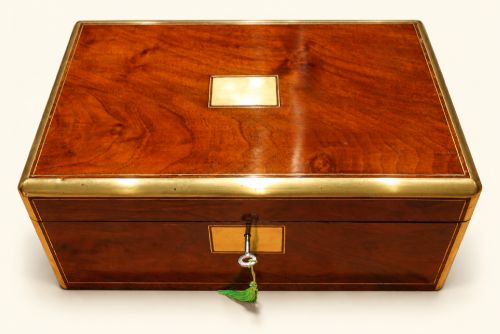
Cabinet makers utilised dense hardwoods like mahogany and rosewood as a stable foundation for intricate brass stringing and geometric inlays. Artisans recessed the metal flush into the timber surface to create smooth, tactile decorative bands and cartouches.
Interior fittings frequently incorporated secret drawers, glass bottles, velvet linings, and fitted trays tailored for specific domestic duties. Precision joinery ensured lids and doors aligned correctly despite changes in humidity acting on the timber.
Victorian Brass Inlaid Chest Retail Price Guide 2026
Typical asking prices for victorian brass inlaid chest among the pieces listed under this phrase on Sellingantiques today, from the lower quarter to the upper quarter. They describe what is for sale here now, not the wider market.
Assessing craftsmanship
The distinction between standard production and superior craftsmanship rests in the precision of the brass work and the selection of the timber veneer. Finer pieces display meticulously fitted brass joints and rich flame mahogany or burr walnut grain patterns.
Internal complexity also dictates the grade of the piece, with integrated secret compartments, original silk or velvet linings, and complete internal fittings commanding greater respect than simpler utilitarian boxes.
Edwards and Roberts·Mawer and Stephenson
The Victorian Brass Inlaid Chest Glossary
- Brass stringing
- A thin inlay of brass let into the surface of wood to form decorative borders or geometric patterns. This technique requires steady hand-cutting and precise routing.
- Tea caddy
- A small lidded container designed to store loose tea leaves securely. These boxes often featured internal compartments and a central locking mechanism.
- Writing slope
- A portable desk with an angled hinged lid that opens to reveal a writing surface and small storage compartments. Many examples include dedicated slots for inkwells and pens.
- Mother of pearl
- The iridescent inner layer of certain mollusc shells, utilised for small decorative inlay accents on boxes and caddies. It provides a luminous contrast against dark timbers.
- Campaign chest
- A sturdy sectional chest designed for easy transport by military officers on campaign. These pieces typically feature brass corner brackets and flush-fitting inset handles.
Victorian Brass Inlaid Chest: Frequently Asked Questions
What were these small chests used for?
Victorian boxes served specific domestic tasks, housing personal valuables, correspondence, or dry tea leaves securely under lock and key. Their portable nature allowed owners to move them between rooms or take them on travels.
Larger variations functioned as bedside storage or apothecary cabinets containing medicinal bottles. Every compartment was designed to protect delicate personal possessions from dust and handling.
How do I identify a Victorian piece?
Examination of the timber species, locking mechanisms, and secondary woods inside the drawers helps confirm the period. Nineteenth-century examples often feature hand-cut dovetails and specific brass hardware profiles.
Stamps or paper labels from retailers can also indicate the workshop origin. Construction methods should align with standard Victorian cabinet-making practices.
How should I care for inlaid wood?
Keep wooden surfaces away from direct sunlight and steady heat sources to prevent the timber from drying and splitting. Natural wax polish applied sparingly helps maintain the lustre of the grain.
Avoid excessive moisture when cleaning brass elements to prevent tarnishing the surrounding wood. Gentle dusting with a soft cloth is sufficient for daily maintenance.
Are campaign chests different from standard chests?
Campaign chests are constructed in separate modular sections to facilitate transport during military deployment. They feature recessed brass handles and corner brackets to protect the edges from impacts.
Standard domestic chests remain as single fixed units intended for permanent placement in a bedroom. The inclusion of carrying handles marks the primary structural distinction.