


Victorian Brass Hurricane Lamp
These Victorian brass hurricane lamps bring steady light and substantial metalwork to a room, offering both practical illumination and period character.
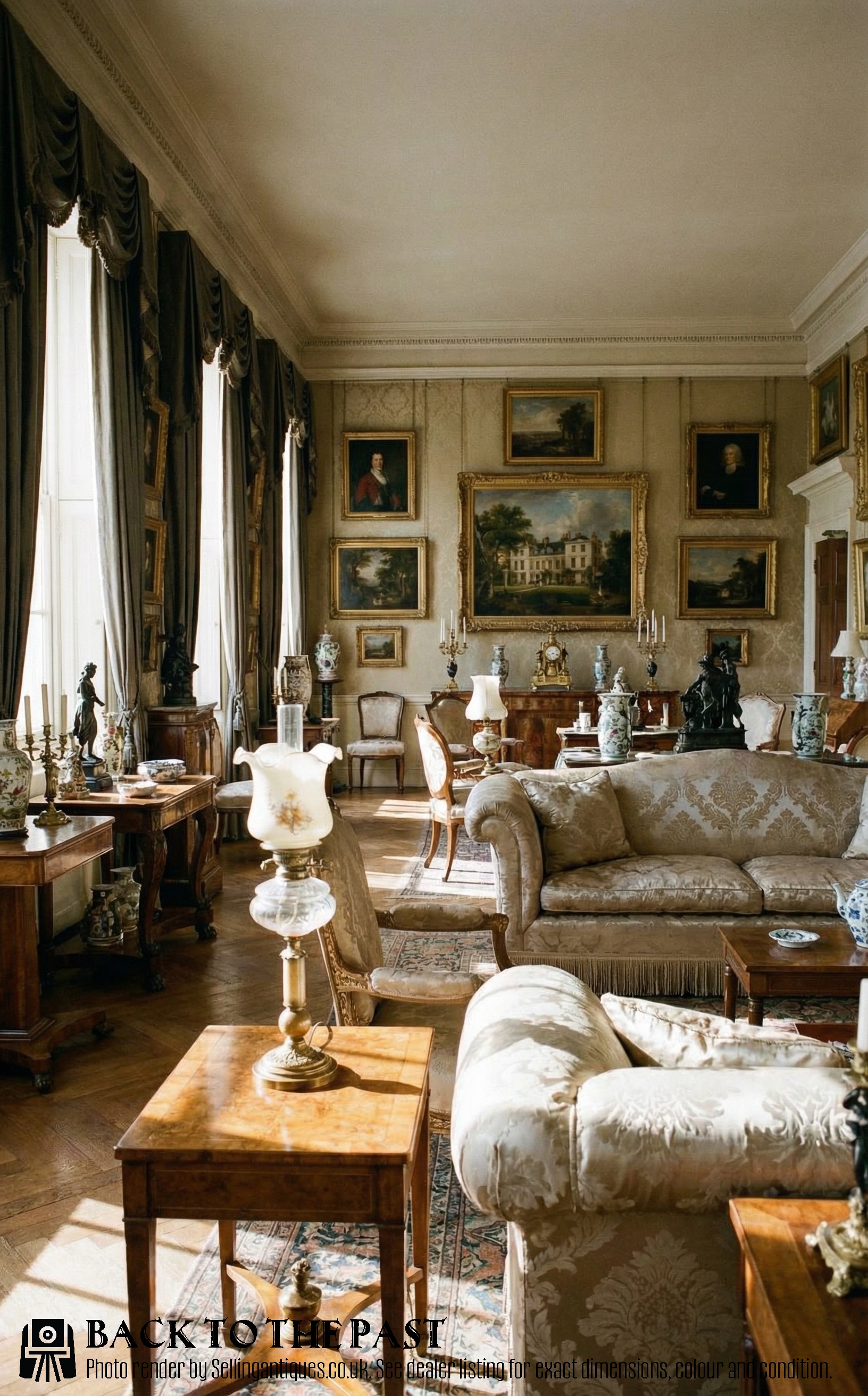
Victorian Brass Hurricane Lamp
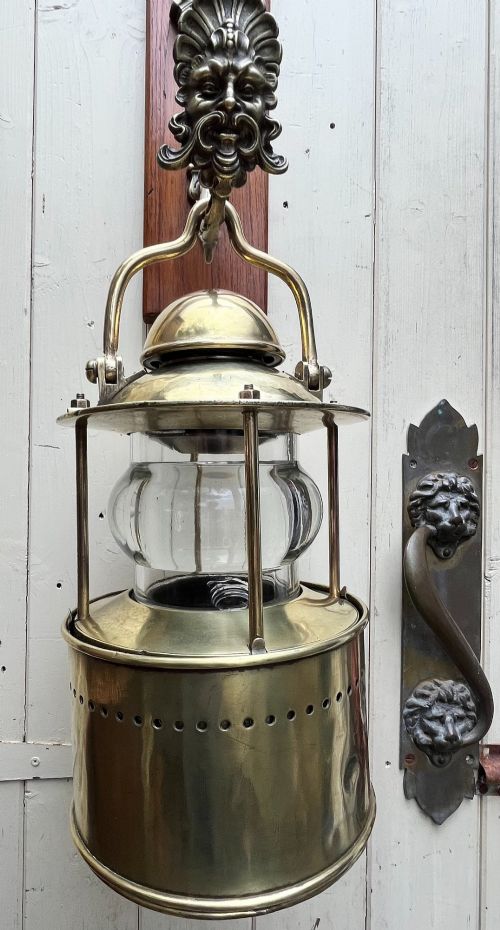
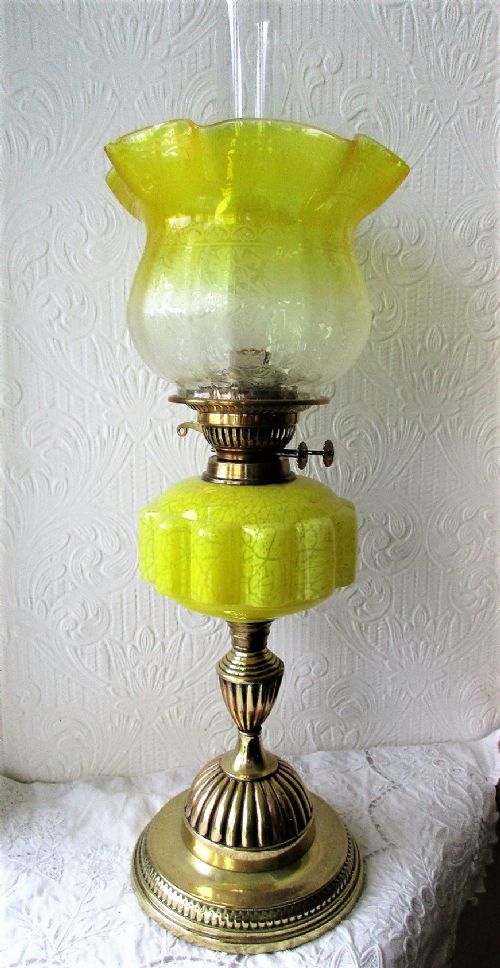
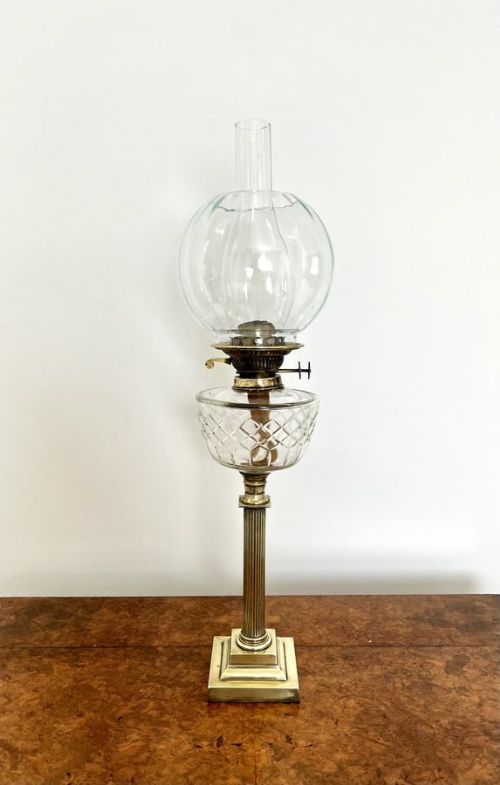
A victorian brass hurricane lamp combines a heavy metallic base with a protective glass chimney designed to steady the flame against drafts. Most examples on this page date from the nineteenth century, including specific pieces from 1860, 1870, 1880, and 1900.
The form spans standard oil and paraffin lamps, table lamps, wall lanterns, and candle lamps with glass chimneys or storm shades. Alongside pure brass bodies, many incorporate ceramic, cut glass, crystal, or coloured fonts.
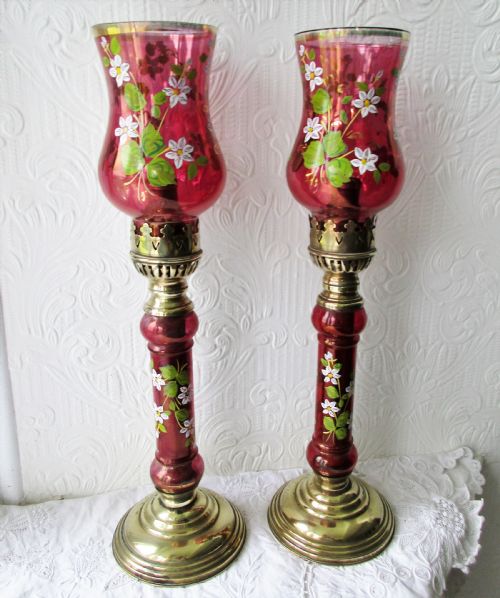
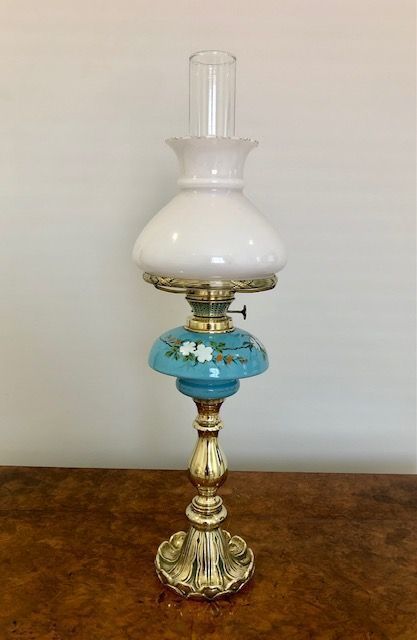
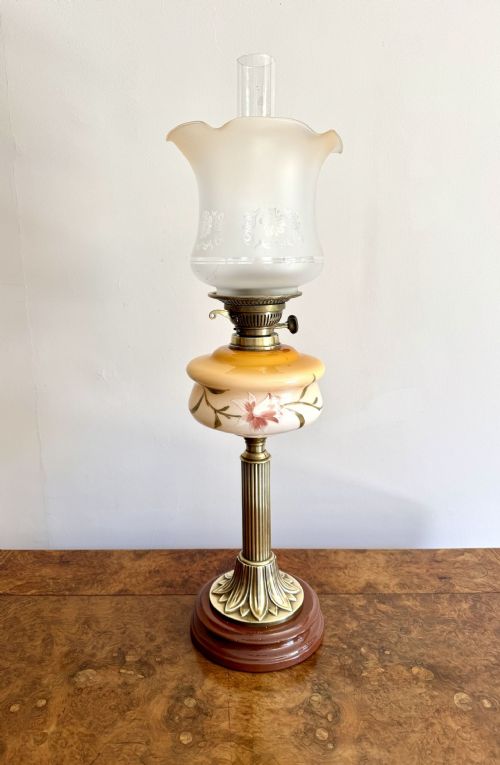
Makers utilised various decorative techniques, ranging from simple turned brass stems to embossed patterns and hand-painted glass fonts. Paired candlesticks and specialised pulpit lamps also appear among the selections.
What Varies in Quality
The weight and thickness of the brass casting dictate the structural stability of the lamp, separating sturdier examples from lighter, more utilitarian pieces. Metal finishing ranges from plain turned surfaces to deeply embossed or finely chased detailing.
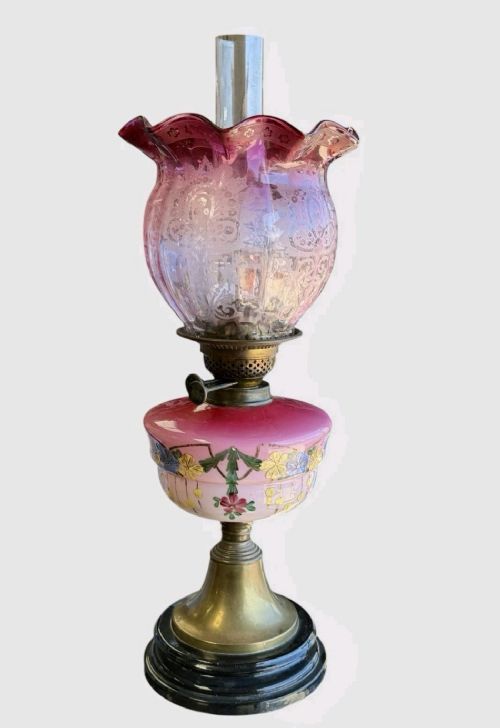
Glass quality depends on the clarity of the crystal or the depth of colour in tinted fonts, such as cranberry and opaline varieties. Hand-painted decoration on the glass elements varies significantly in execution and artistic execution.
Materials recorded on this page range from standard brass and clear crystal to opaline glass, ceramic, and hand-painted porcelain components.
Meissen Porcelain·Clarke
The Victorian Brass Hurricane Lamp Glossary
- Hurricane lamp
- A lamp featuring a protective glass chimney or shade designed to shield an open flame from drafts. These pieces typically combine a heavy metal reservoir with a tall glass surround.
- Cranberry glass
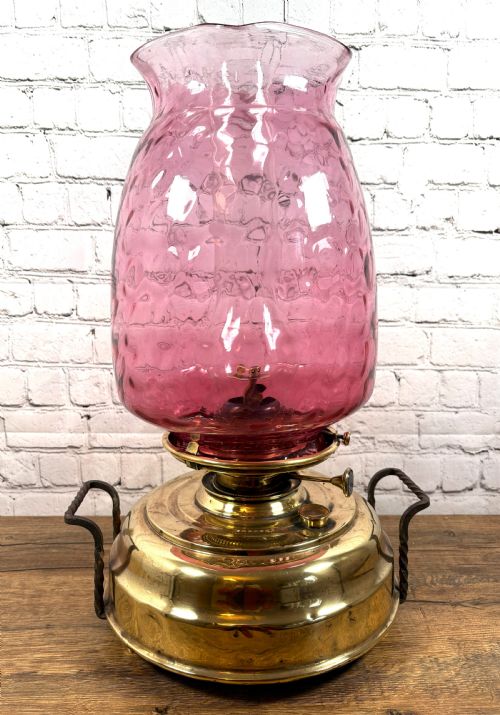
- A rich red-pink transparent glass created by adding gold chloride to the molten mixture. It was widely utilised for decorative lamp fonts and shades during the nineteenth century.
- Opaline glass
- A pale, translucent white glass that diffuses light softly. It gained popularity for lamp shades during the Victorian and Edwardian eras.
- Chimney
- A cylindrical glass tube placed over the burner to steady the flame and draw oxygen. Surviving period chimneys are an integral component of these lamps.
Victorian Brass Hurricane Lamp: Frequently Asked Questions
How do I clean a brass lamp base?
Dust the metal gently with a dry cloth to preserve the aged surface finish and prevent scratching. Avoid harsh chemical polishes that strip away the natural patination built up over decades.
For glass components, remove them carefully from the brass fitting and wash them in lukewarm soapy water. Ensure every part is completely dry before reassembling the lamp.
Can I use modern paraffin in these lamps?
Many period oil lamps remain mechanically suited for standard liquid paraffin fuel. Check the burner mechanism carefully to ensure the wick winds smoothly and the collar fits securely.
Consult a specialist before lighting any antique lamp to verify the integrity of the fuel reservoir. Many collectors simply display them unlit as decorative objects.
How do I tell Victorian from Edwardian lamps?
Victorian models often feature heavier cast brass elements, embossed decoration, and rich cranberry or opaline glass fonts. Rococo Revival influences appear frequently in the mid to late nineteenth-century pieces.
Edwardian examples tend towards lighter frames and simplified forms, reflecting changing domestic interiors around 1900. Dating relies on stylistic cues rather than rigid manufacturing marks.
Are glass chimneys usually original?
Finding a lamp with its original blown glass chimney or shade adds significantly to its character. Many surviving pieces feature replacement chimneys that match the historical dimensions and style.
Inspect the glass closely for age-related bubbles, wear marks around the base, and minor manufacturing imperfections. These traits help distinguish older glass from modern reproductions.