


Victorian Brass Hooks
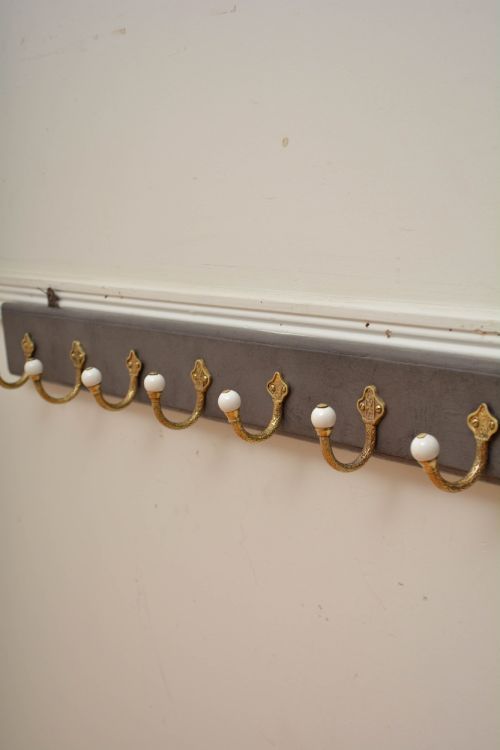
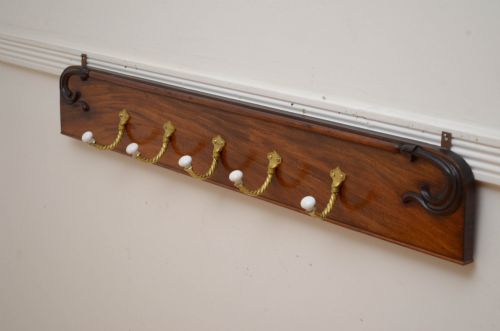
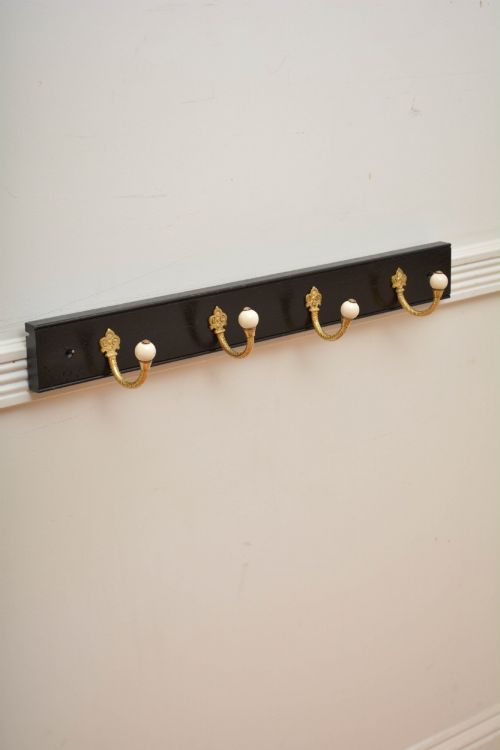
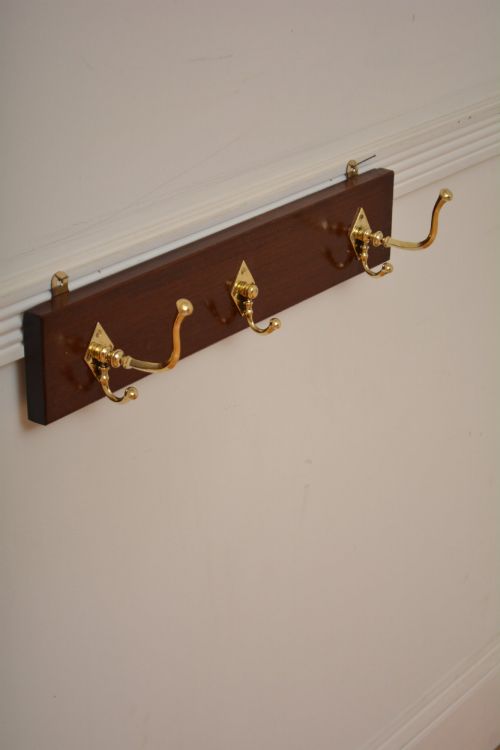
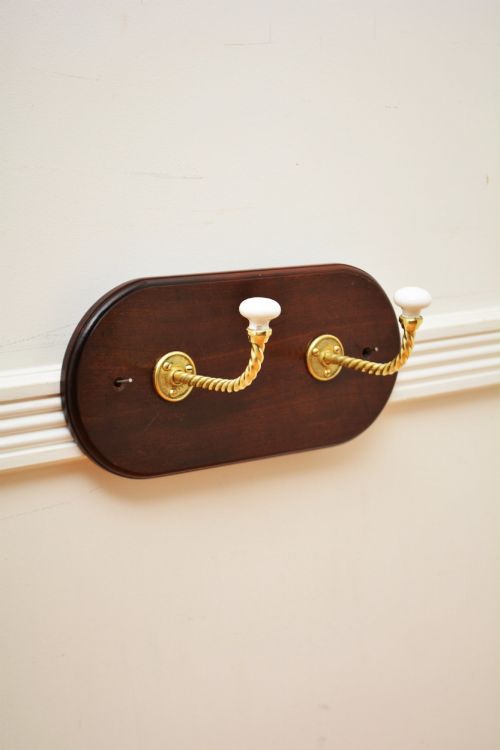
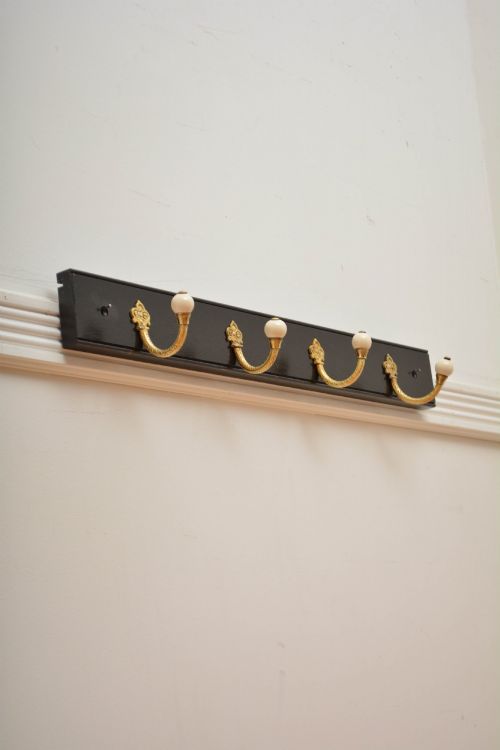
These victorian brass hooks bring dependable utility and period character to hallways, mounted singly or fixed to handsome timber backboards.
Victorian Brass Hooks
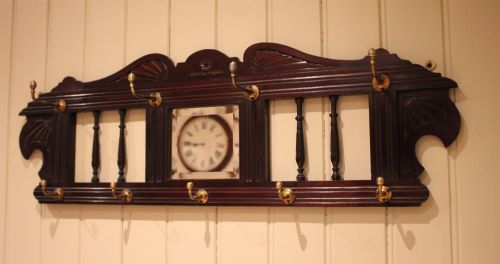
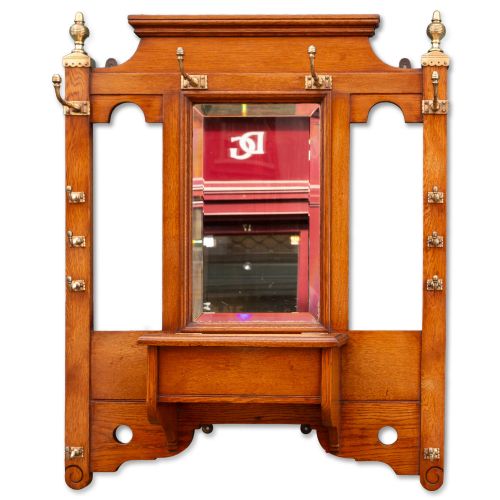
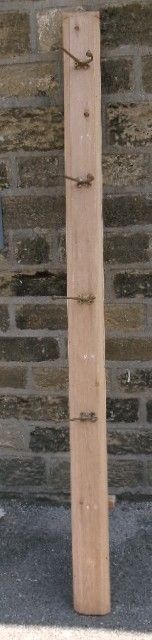
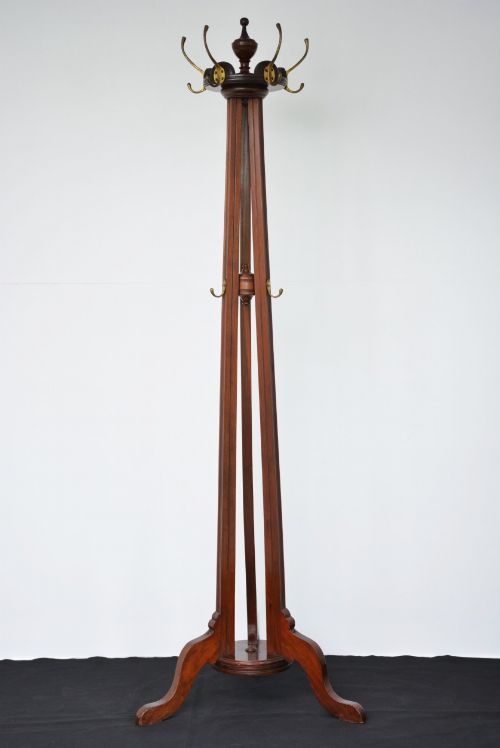
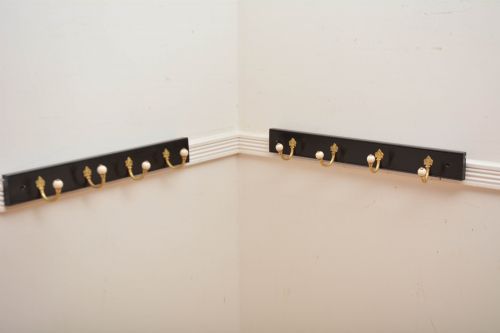
Victorian brass hooks appear across this page primarily as mounted hardware, wall racks, and hallway stands intended for coats, hats, and everyday garments. Buyers searching this phrase meet everything from single pairs to long sets attached to mahogany, oak, walnut, or pine backboards.
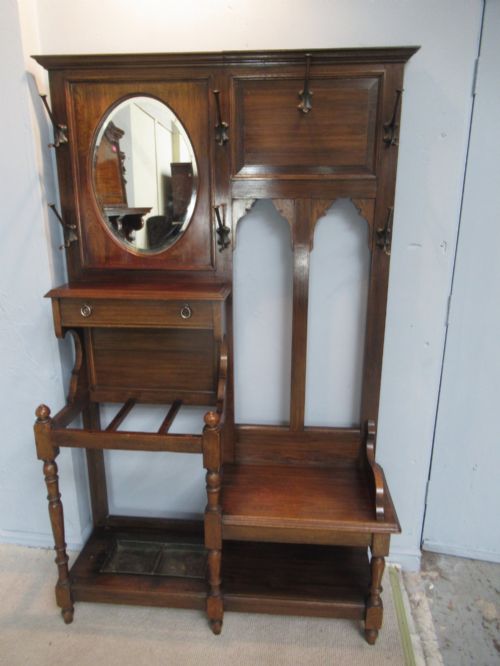
The domestic interior of the period relied heavily on these fixtures in entrance halls, bedrooms, and service areas. Alongside standard coat racks, the selection includes related fittings like curtain tiebacks, ceiling roses, and portmanteaus incorporating cast or chased metal.
Origin points span domestic British workshop production as well as continental pieces from France, notably involving ormolu and gilt bronze finishes. Dating stretches from the mid nineteenth century through the Edwardian years, with many examples originating around eighteen eighty.
Materials and construction
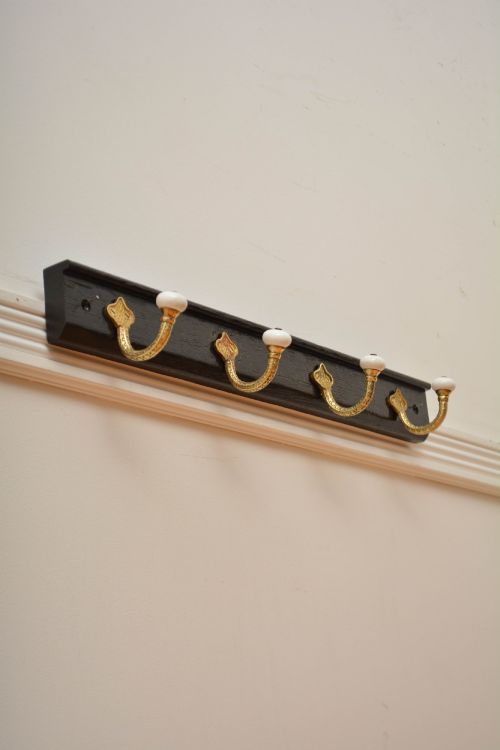
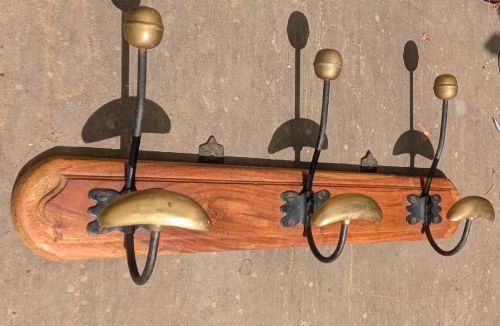
Metal components rely on cast brass, ormolu, and gilt bronze, often shaped with decorative mounts, scalloped edges, and chased details. Many hook designs incorporate contrasting porcelain, ceramic, or glass knobs to cushion garments.
Backboards and stands utilise dense native and imported timbers, including figured mahogany, solid oak, walnut, pine, and ebonised wood. Metalwork is typically secured to these wooden supports via original screws or integrated mounting plates.
Listings feature brass combined with mahogany, oak, walnut, pine, glass, ceramic, and ormolu across the nineteenth and early twentieth centuries.
Judging quality and character
Superior examples reveal themselves through substantial weight, crisp casting in the brass work, and purposeful design in the mounting plates. Heavy, gutsy construction and cleanly detailed chasing separate finer workshop output from simpler utilitarian items.
The relationship between the metal hooks and the supporting timber backboard dictates overall harmony. Figured mahogany or richly grained oak boards paired with well-matched ceramic knobs indicate a higher grade of domestic furnishing.
Jas. Shoolbred·Henri Picard
The Victorian Brass Hooks Glossary
- Ormolu
- Gilded bronze or brass applied to decorative hardware and mounts. This technique provided a bright, luxurious finish popular in French interior fittings.
- Portmanteau
- A combined wall-mounted rack featuring brackets and hooks for hats, coats, and accessories. These large pieces often incorporated mirrors or umbrella stands.
- Ebonised
- Wood treated with a dark stain or finish to imitate ebony. It created a stark, contrasting backdrop for polished brass hardware.
- Chased
- Metal decorated by hammering or punching patterns directly into the surface. This hand-worked detailing added texture to the backplates and hooks.
- Tieback
- A wall-fixed fixture used to hold drapery or curtains to the side of a window. Brass and ormolu versions often mirrored the decorative motifs of hallway hardware.
Victorian Brass Hooks: Frequently Asked Questions
How do I mount a wooden coat rack securely?
Check the spacing of the original screw holes in the timber backboard to align with wall studs where possible. Use appropriate wall plugs and screws matched to the weight of the timber and metal.
Ensure the fixings are tightened evenly across the length of the board to prevent warping when loaded with heavy winter garments.
Can I polish the brass hooks safely?
Light cleaning with a soft cloth removes dust without disturbing the aged patina that accumulates over decades. Avoid harsh chemical dips that strip the historic surface character entirely.
If polishing is desired, apply a mild brass cleaner sparingly with a cotton bud, shielding any surrounding wood or ceramic elements from contact.
How do I date an antique brass hook?
Examine the casting method and the style of the mounting plate, as Victorian and Edwardian hardware often displays distinct decorative revival motifs. The accompanying screw types, such as early slot-head screws with hand-finished threads, also offer clues.
Compare the metalwork to dated examples in oak and mahogany rack assemblies from the same period to narrow down the decade of manufacture.
Are these hooks strong enough for daily use?
Solid cast brass and bronze components possess high structural integrity suitable for supporting heavy coats and hats. Pieces mounted to sturdy hardwood backboards distribute weight effectively across the wall.
Inspect the seating of the screws into the wood to confirm the joints remain firm before hanging substantial items in a busy hallway.