


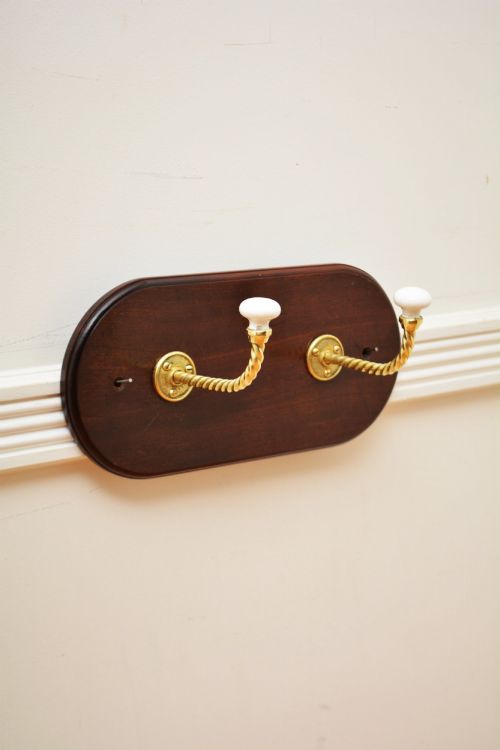


Mahogany Hat Hooks
Mahogany hat hooks combine rich warm timber with durable metal, offering a practical hallway fixture collectors prize for daily utility.
Mahogany Hat Hooks
When you search for mahogany hat hooks, you encounter wall-mounted rails, hall stands, and mirror-backed racks designed for entrance halls and cloakrooms. These functional pieces date primarily from the Victorian period through the early twentieth century, spanning decades such as the 1880s, 1890s, and 1910.
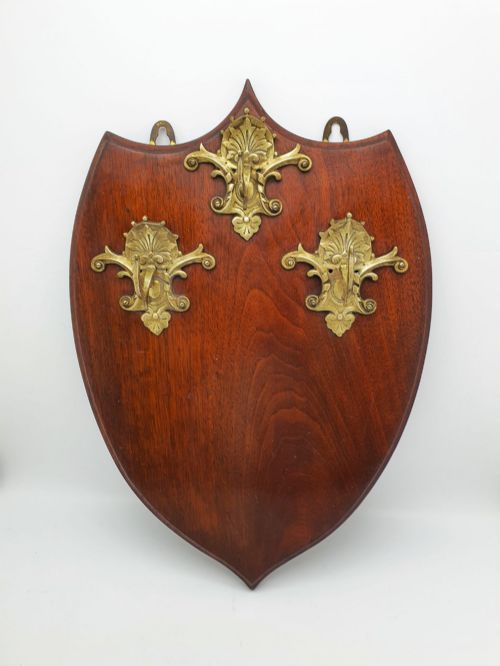
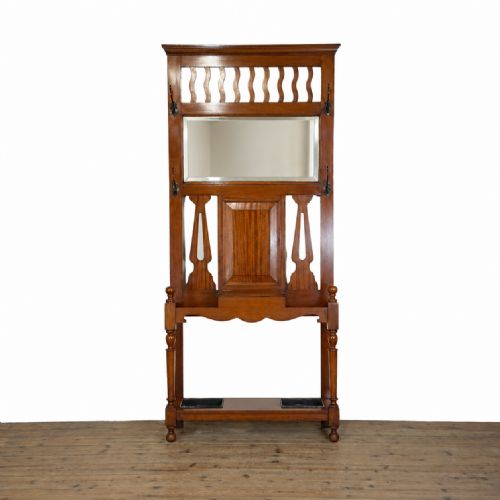
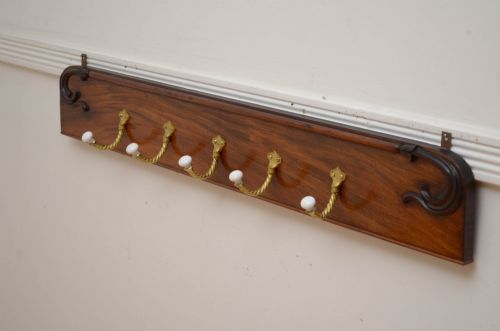
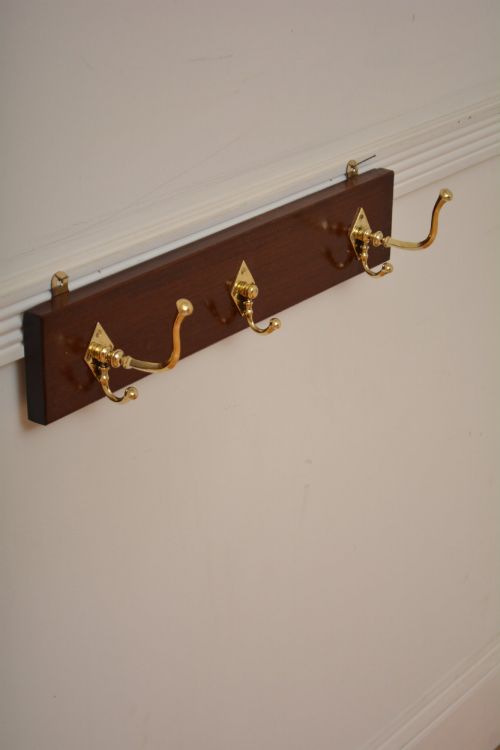
The versions you are most likely to meet on this page feature rectangular mahogany backboards fitted with brass, ceramic, or iron hooks. Some examples incorporate bentwood or beech elements, while others combine the timber with mirrors or tiled panels for domestic use.
Materials and construction
The primary material is mahogany, chosen for its deep grain and structural stability, often shaped into solid boards or curved bentwood forms. Workshops paired this dark wood with metal components, securing cast brass and iron hooks directly to the timber backplates.
Many designs incorporate contrasting details such as ceramic inserts on the hooks or deeply bevelled mirror plates set within the mahogany frames. Mounting plates frequently display cast decoration, uniting the metalwork firmly with the wooden structures.
Mahogany Hat Hooks Retail Price Guide 2026
Typical asking prices for mahogany hat hooks among the pieces listed under this phrase on Sellingantiques today, from the lower quarter to the upper quarter. They describe what is for sale here now, not the wider market.
Listings feature Victorian and Edwardian pieces, combining mahogany with brass, ceramic, iron, and bentwood.
Assessing quality
Quality rests in the substantial weight of the timber and the crisp casting of the associated metalwork. Superior pieces display heavier mahogany boards and robustly cast brass mounting plates rather than thin woods or stamped sheet metal.
Ellen E. Houghton of Minton
The Mahogany Hat Hooks Glossary
- Mahogany
- A durable tropical hardwood prized for its reddish-brown colour and fine grain. It provides a stable base for wall-mounted hanging hardware.
- Bentwood
- Wood softened by steam and bent into curved shapes. This technique creates rounded profiles suitable for hanging garments without snagging fabrics.
- Portmanteau
- A combined wall fixture featuring hooks, a shelf, and often a mirror. It served as an all-in-one storage unit for hats, coats, and accessories in period hallways.
- Aesthetic Movement
- A late nineteenth-century design style emphasising visual beauty over narrative subject matter. Pieces from this movement often feature refined joinery and artistic brasswork.
Mahogany Hat Hooks: Frequently Asked Questions
What are mahogany hat hooks?
Mahogany hat hooks are wall-mounted fixtures constructed from rich hardwood and fitted with metal prongs for hanging garments. They served domestic entryways and cloakrooms for organising outerwear.
Surviving examples range from simple wooden rails to elaborate mirror-backed hall stands produced during the Victorian and Edwardian eras.
How were they used originally?
Households mounted these pieces in entrance halls, reception rooms, and cloakrooms to receive hats, coats, and everyday walking accessories. They kept garments accessible near the main entrance.
Larger variations combined the hanging function with umbrella stands, mirrors, or small shelves for letters and calling cards.
How do I hang them securely?
These pieces require sturdy wall fixings that match the weight of the dense mahogany timber and the anticipated load of heavy winter coats. Using appropriate wall plugs and engaging structural studs ensures safe support.
Professional installation is recommended for larger mirror-backed hall racks to distribute the weight evenly across the mounting surface.
How do I date these pieces?
Dating relies on observing stylistic markers, construction techniques, and the materials used for the hooks and backboards. Victorian examples often display heavier timber sections and cast brass hardware.
Later pieces from around 1910 frequently incorporate simpler linear frames or lighter bentwood components reflecting Edwardian interior tastes.