



Antique Brass Hangers
These antique brass hangers are sturdy wall-mounted and freestanding fixtures designed to hold hats, garments, and coats with period character.
Antique Brass Hangers
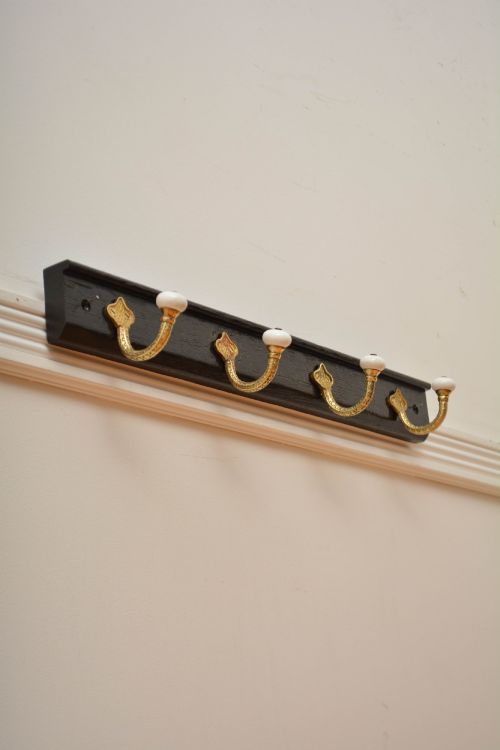
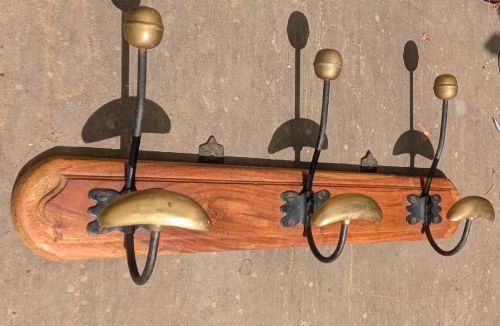
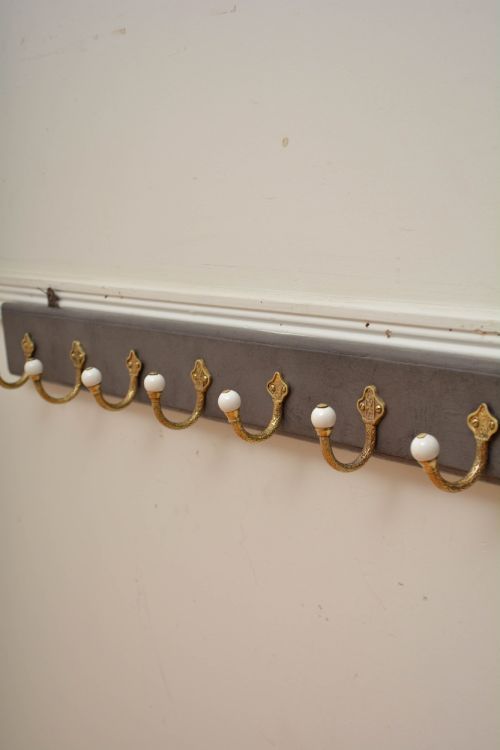
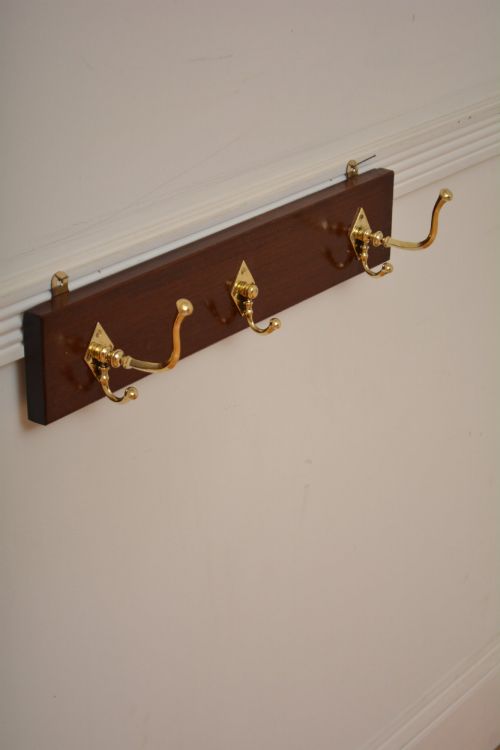
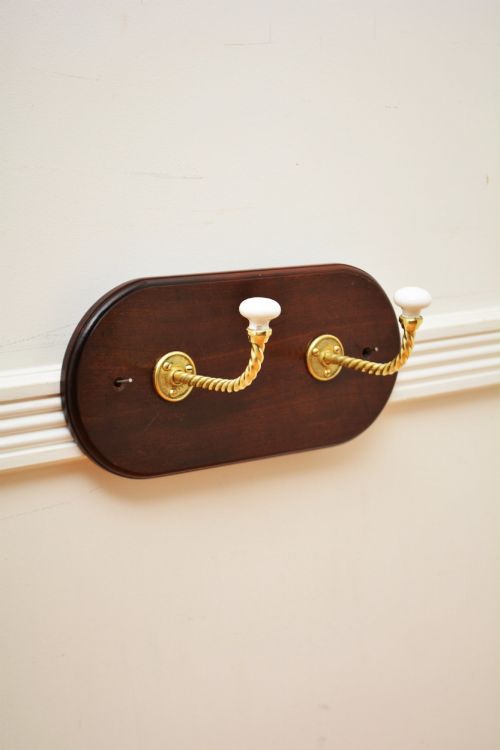
When you search for antique brass hangers, you find a collection of practical wall-mounted racks, coat stands, and individual hooks made largely during the Victorian, Edwardian, and Art Deco periods. The most common forms are timber backboards mounted with brass hooks, often paired with ceramic, porcelain, or glass knobs.
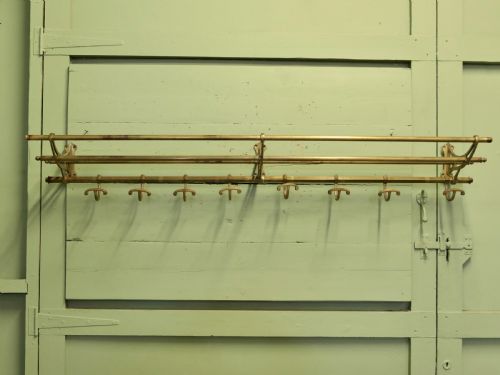
Beyond standard wall racks, the selection includes specialised pieces such as French hat and coat racks, bronze wall mounts, and hearth pot hangers from the Georgian era. These items served domestic functions in hallways, hotel receptions, and kitchens, translating utilitarian needs into decorative metalwork.
How they were made
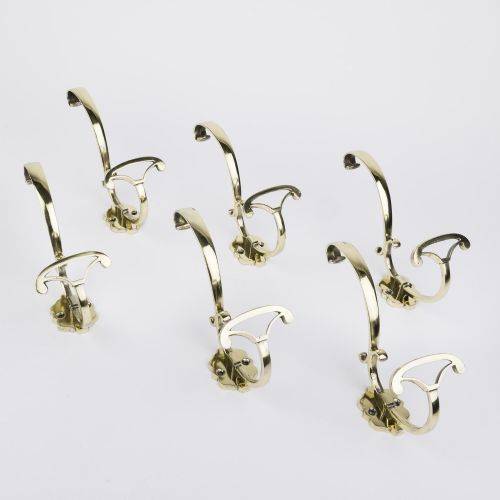
Makers utilised cast brass for mounting plates and hook bodies, often achieving intricate surface relief through chasing and moulding techniques. Timber backboards in oak, mahogany, pine, and ebonised wood provide structural support for the metalwork.
Many hooks incorporate contrasting materials such as porcelain knobs, ceramic inserts, and glass elements secured directly into the metal structure. French examples frequently employ bronze alongside brass, while wooden boards show turned details and shield shapes.
A sturdy Georgian hearth trammel proves that early brass hangers spent plenty of time hanging out near the stew pot.
What varies in quality
The sophistication of the brass casting dictates the visual appeal of each piece, distinguishing sharply detailed plates from mass-produced alternatives. Heavier gauge metalwork and substantial timber backboards indicate sturdier construction designed for daily use.
Original matching sets command attention over assembled groupings, particularly where ceramic or porcelain knobs remain intact and undamaged. The quality of the timber grain on mahogany and golden oak backboards further separates standard utility pieces from finer decorative examples.
James Gillespie·George Atkinson
The Antique Brass Hangers Glossary
- Backboard
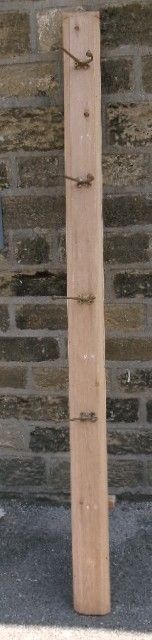
- The wooden plank or shield that supports a series of hooks, usually fashioned from oak, mahogany, or pine. It allows multiple hooks to be secured firmly to a wall as a single unit.
- Chased brass
- Metalwork decorated by hammering or indenting the surface from the front to create raised patterns and lines. This technique adds texture and detail to structural brass components.
- Ebonised wood
- Timber treated with a dark stain or finish to imitate expensive ebony. It appears frequently on Victorian and Aesthetic Movement backboards to create contrast with bright brass.
- Portmanteau
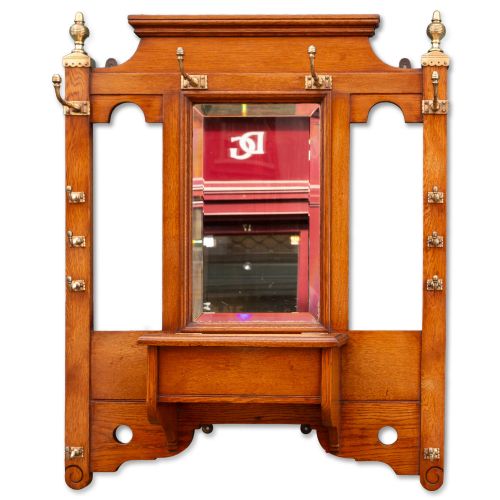
- A combination piece incorporating a mirror, umbrella stands, and coat hanging space. These large hall furniture items often feature extensive brass hooks and hardware.
- Trammel
- An adjustable metal hook used in Georgian hearths for suspending pots over an open fire. These wrought iron and brass devices allowed cooks to alter the height of cooking vessels easily.
Antique Brass Hangers: Frequently Asked Questions
How do I mount an antique coat rack safely?
Most wall-mounted racks utilise pre-drilled screw holes through the wooden backboard for secure installation into wall studs. Ensure you use appropriate fixings that match the weight of the timber and heavy brass hooks.
Because these pieces were built to bear the weight of heavy garments, anchoring them directly into solid masonry or timber studs prevents the fixings from pulling loose over time.
What is the difference between Victorian and Art Deco hangers?
Victorian hangers typically feature ornate cast brass, ceramic knobs, and rich dark timbers like mahogany or ebonised oak. They lean towards decorative traditional silhouettes and detailed mounting plates.
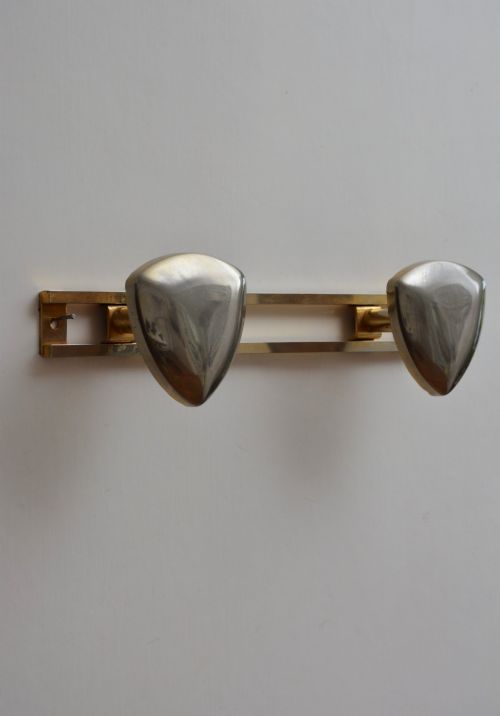
Art Deco examples embrace geometric lines, streamlined metal shapes, and lighter oak or shield-shaped metal backboards. They reflect a shift towards industrial simplicity while maintaining sturdy brass construction.
Can these hangers hold heavy winter coats?
Sturdy brass and iron construction ensures most antique racks and double hooks easily support heavy coats, hats, and umbrellas. The strength lies in the solidity of the backboard and how well it is fixed to the wall.
Individual single hooks attached directly to plaster without a backboard require careful placement if used for heavy garments.
How should I clean antique brass and wood?
Dust timber backboards gently with a dry cloth and apply occasional wax to nourish woods like oak and mahogany. Avoid harsh chemical cleaners on the wood to preserve its original finish.
Polish brass surfaces sparingly with a soft cloth if you wish to reduce tarnish, though many collectors prefer leaving the aged patina untouched.