







Victorian Brass Gallery Desk
When you want a victorian brass gallery desk, you are looking for a practical writing surface framed by a decorative metal rail.
Victorian Brass Gallery Desk
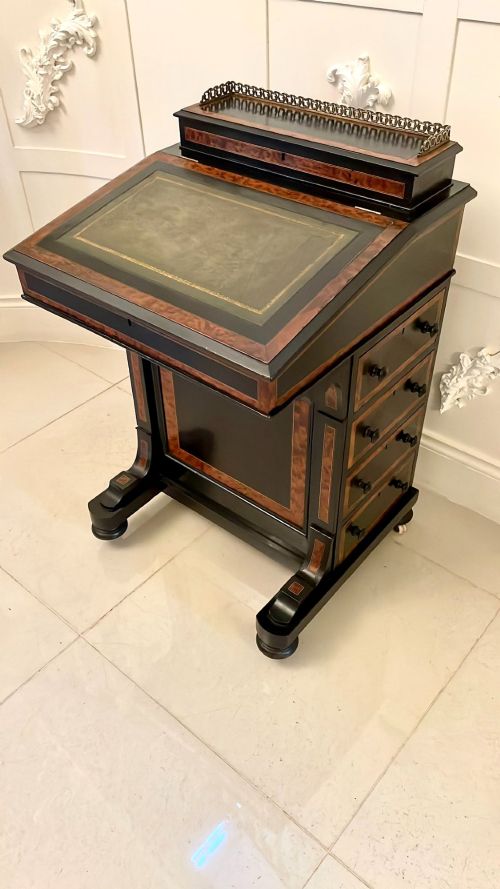
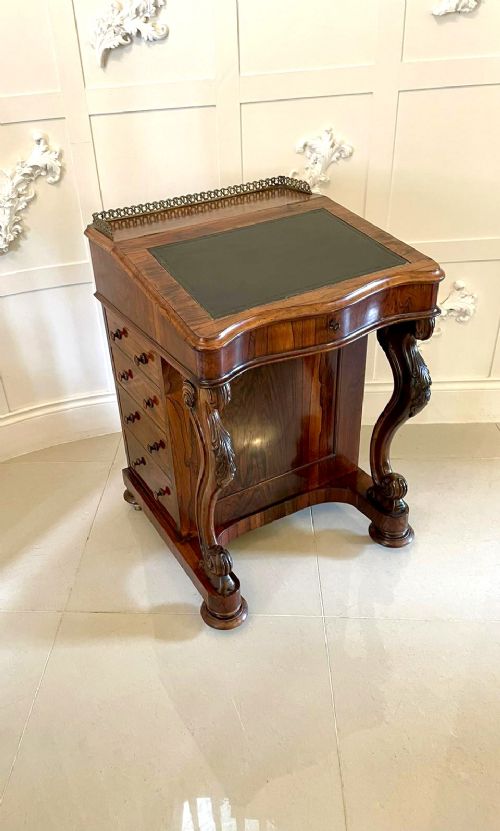
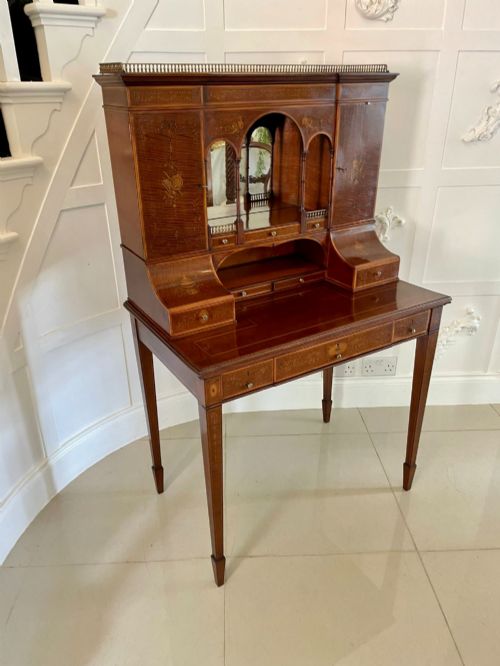
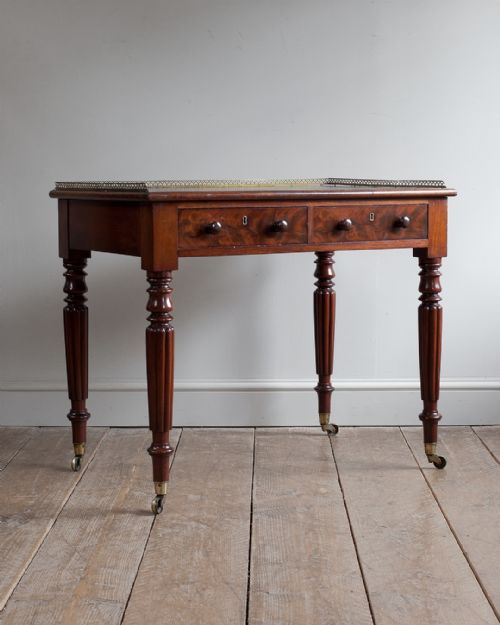
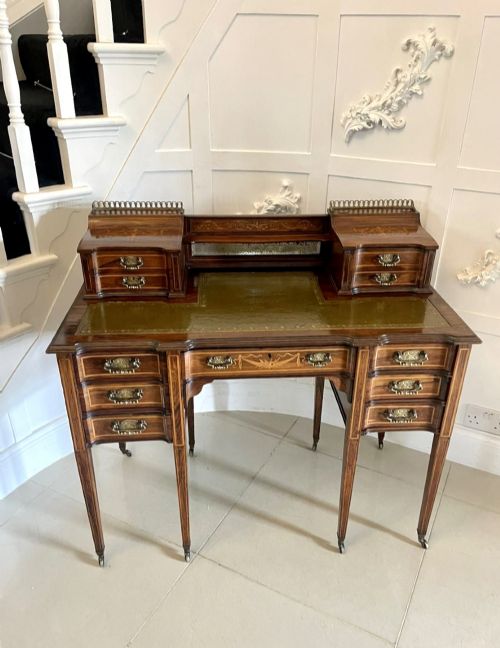
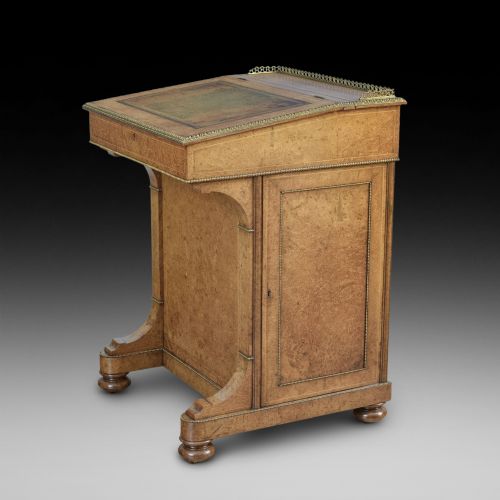
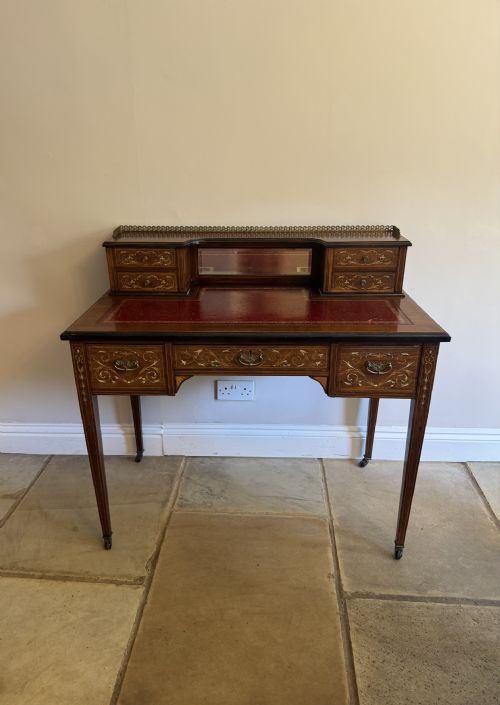
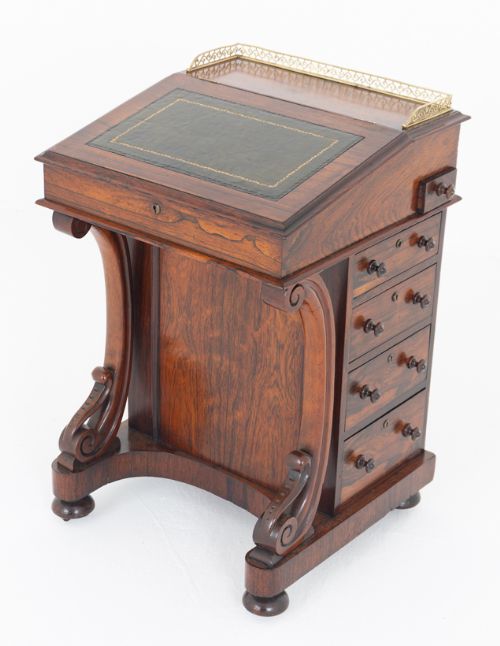
A victorian brass gallery desk combines a timber writing surface with an open or pierced metal rail fitted along the upper edge. These pieces appear in forms such as writing tables, Davenport desks, kidney-shaped tables, and pedestal desks originating across the nineteenth century.
The layout often includes fitted drawers, leather insets, or tiered compartments alongside the characteristic metal railing. Makers produced these items in mahogany, rosewood, burr walnut, and oak to serve as functional writing furniture in domestic studies and country houses.
Materials and Construction
Cabinet makers utilised dense hardwoods such as mahogany, rosewood, and burr walnut as the primary structural bodies, frequently incorporating satinwood, amboyna, or maple for contrasting veneers and marquetry inlay.
Brass formed the signature gallery rails, mounted either as cast pierced grilles or simple spindles around the desk top, often paired with matching drawer pulls and mounts.
Victorian Brass Gallery Desk Retail Price Guide 2026
Typical asking prices for victorian brass gallery desk among the pieces listed under this phrase on Sellingantiques today, from the lower quarter to the upper quarter. They describe what is for sale here now, not the wider market.
Recorded timber varieties span mahogany, rosewood, burr walnut, oak, amboyna, satinwood, and maple.
Assessing Quality and Execution
The refinement of the timber selection dictates the standing of a piece, with figured burr walnut, amboyna, and pollard oak representing the more ambitious commissions. Finely cast brass galleries and detailed marquetry inlay distinguish workshop productions from standard commercial output.
Structural integrity relies on the tightness of cabinet joints and the preservation of original secondary woods within the drawer linings. Pieces retaining their fitted desk accessories or matching keys hold greater cohesion.
Maple and Co·Gillow and Co·Edwards and Roberts·Morison of Edinburgh
The Victorian Brass Gallery Desk Glossary
- Brass gallery
- A low metal rail or fence fitted to the top of a desk to prevent papers or inkwells from sliding off. This feature defines the visual character of the category.
- Davenport
- A compact compact desk with a sloped writing lid and drawers opening to the side. It gained popularity during the nineteenth century.
- Marquetry
- Decorative patterns formed by fitting together thin veneers of different coloured woods. Cabinet makers applied this technique to drawer fronts and tops.
- Crossbanding
- A border of veneer laid around the edge of a tabletop so the grain runs at right angles to the central panel. It frames the primary wood.
- Pedestal desk
- A heavy writing table supported by two banks of drawers reaching down to the floor. These large pieces typically served libraries and estate offices.
Victorian Brass Gallery Desk: Frequently Asked Questions
What is a brass gallery?
A brass gallery is a decorative metal railing secured around the perimeter of a desk top. It served the practical purpose of keeping stationery and ink bottles from falling.
Craftsmen cast or pierced these rails into intricate patterns, turning a functional barrier into a prominent decorative feature.
How do I identify a Davenport desk?
A Davenport is a small, box-like writing desk featuring a sloping top inset with leather for writing. The main body contains a set of drawers that open to the side rather than the front.
Earlier examples often rest on casters and include hidden compartments for ink and pens beneath the sliding lid.
What woods were used in these desks?
Nineteenth-century cabinet makers built these pieces using mahogany, rosewood, and oak as sturdy carcase timbers. They applied decorative veneers of burr walnut, amboyna, and satinwood to the visible exterior surfaces.
Contrasting stringing and crossbanding frequently outline the primary wood panels to add visual depth.
Where were these desks placed?
Owners positioned these desks in drawing rooms, private libraries, and estate offices for daily correspondence and record keeping. Freestanding versions sat away from walls to display finished timber on all sides.
Smaller variants suited ladies' boudoirs for writing letters and managing household accounts.