
Victorian Brass Double Bedstead
When you search for a victorian brass double bedstead, you encounter substantial metal frames built for longevity and presence.
Victorian Brass Double Bedstead
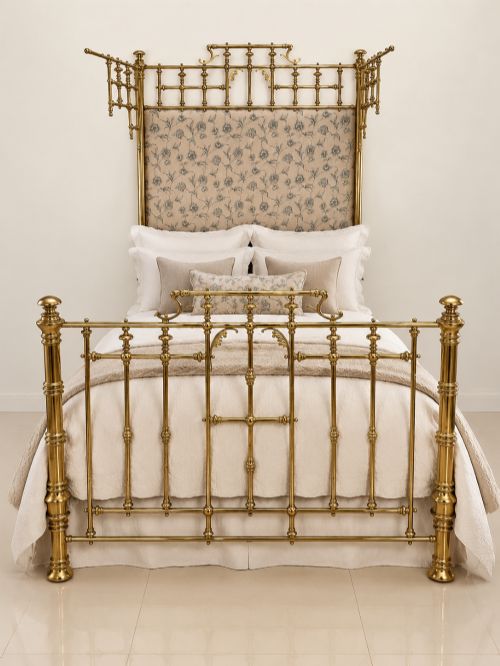
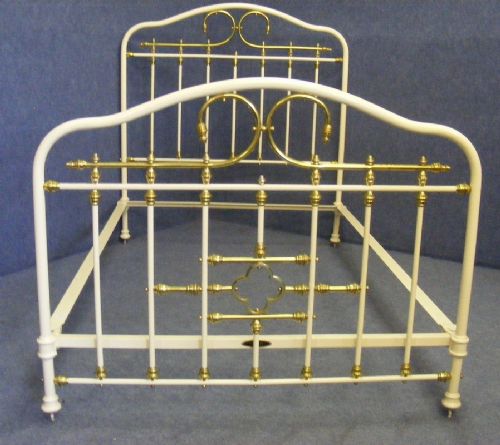
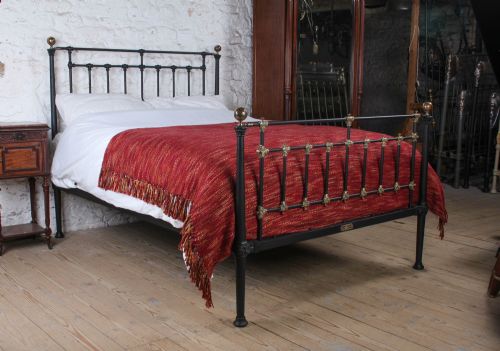
A victorian brass double bedstead brings substantial nineteenth-century metalwork into a contemporary bedroom, offering a standard double sleeping surface supported by sturdy metallic frames. Buyers typically encounter combinations of polished brass and painted iron rails, reflecting the robust manufacturing methods of the era.
The pieces appearing on this page span the Victorian period through to the early twentieth century, including Edwardian examples and French stylistic influences. Alongside standard double sizes, variations such as small doubles, king sizes and half tester configurations occasionally emerge.
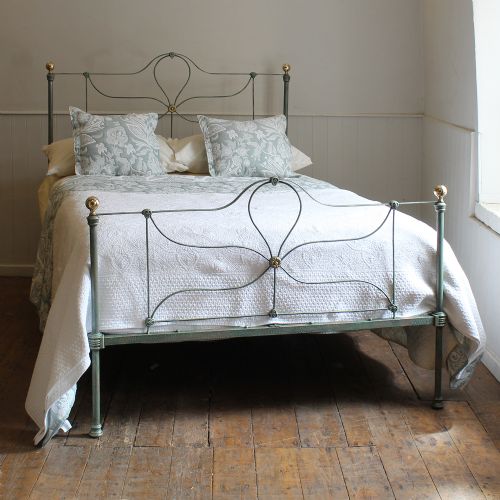
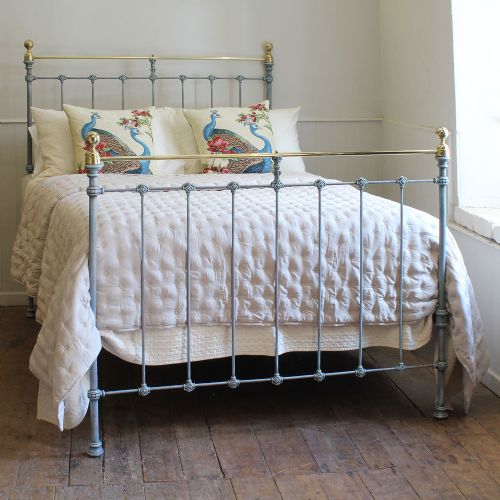
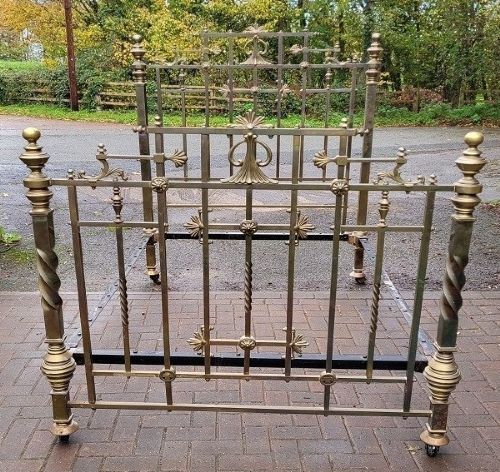
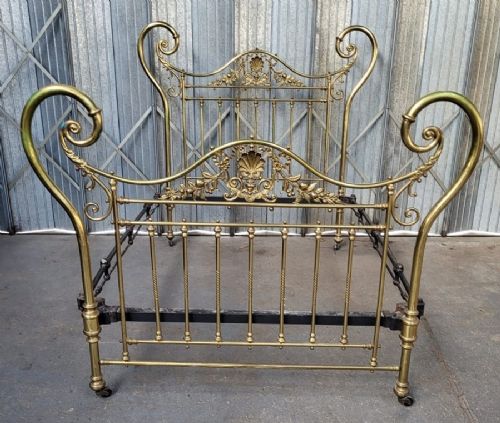
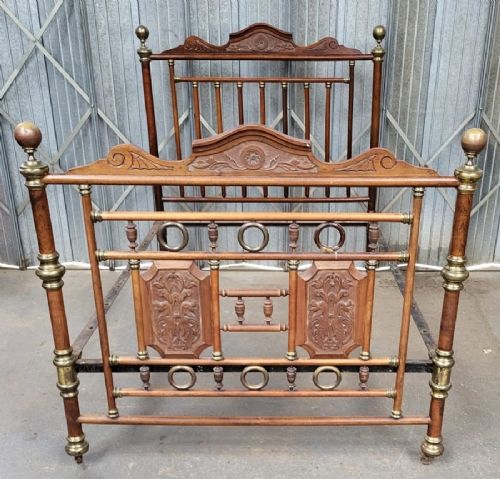
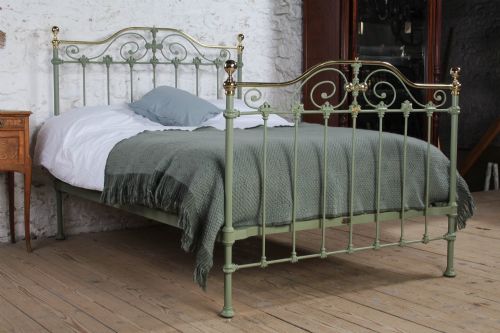
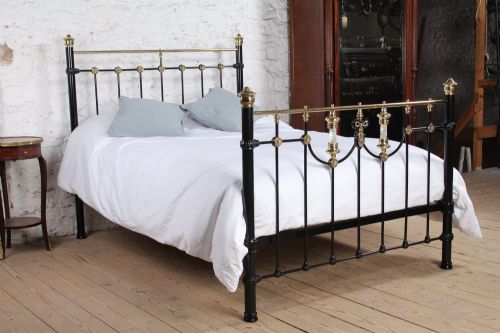
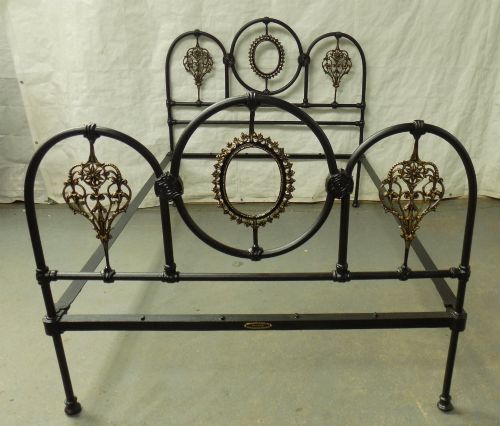
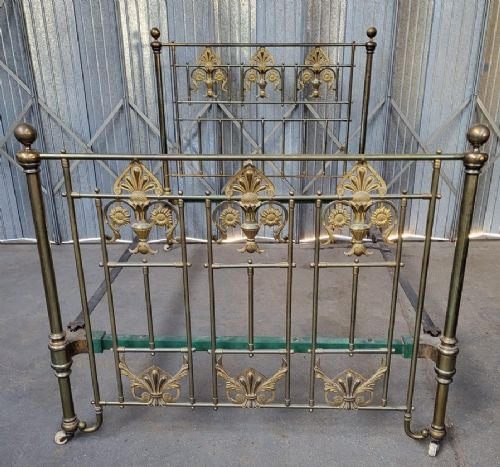
Many examples pair gleaming brass tubing and detailed castings with iron side rails designed to slot together securely. Certain pieces incorporate decorative elements like mother of pearl or carved walnut panels to elevate the utilitarian iron frame.
Construction and materials
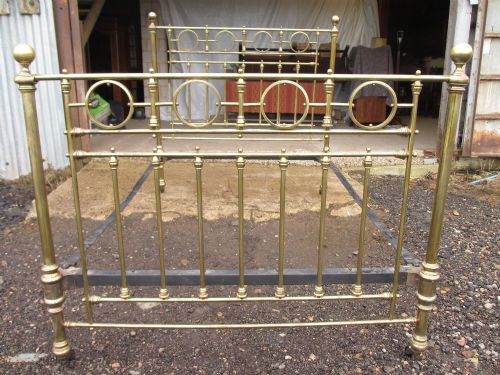
Makers constructed these frames using brass components alongside structural iron, casting decorative mounts and joint connections to secure the heavy metal tubing. Painted cast iron or wrought iron forms the internal slot-in frame and side rails, providing necessary rigidity while brass takes the visual prominence on the head and foot boards.
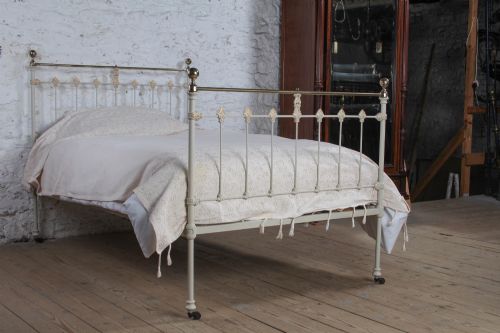
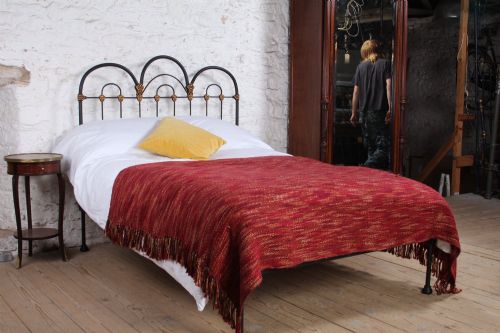
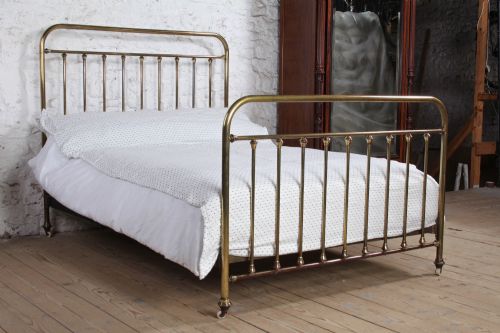
Surface finishes range from polished solid brass to black or green painted ironwork, frequently set upon original pot castors for mobility. Specialised variants integrate timber elements like carved walnut or decorative details such as mother of pearl inlay within the metallic structure.
Several beds arrive complete with original pot castors, ready to roll across the bedroom floor just as they did in the nineteenth century.
Assessing quality in metal bedframes
Quality in a victorian brass double bedstead rests upon the weight of the metal, the crispness of the brass castings, and the integrity of the structural joints. Superior examples feature heavier gauge brass tubing and intricate, well-defined decorative mounts rather than thin sheet metal coverings.
The completeness of original components, including functioning iron slot-in frames and authentic pot castors, distinguishes a superior survival. Finer pieces demonstrate careful attention to assembly details, such as robust corner brackets and substantial side rails that maintain rigidity.
RW Winfield·Maple & Co.·Harrods
The Victorian Brass Double Bedstead Glossary
- Bedstead
- A framework of a bed, consisting of headboard, footboard, and side rails designed to support a mattress.
- Half Tester
- A bed featuring a partial canopy extending from the headboard over the upper portion of the sleeping surface.
- Dip Rail
- A headboard or footboard rail curved downward in the centre, characteristic of certain nineteenth-century designs.
- Pot Castors
- Small wheel attachments, often ceramic or metal, fitted to the feet of furniture to permit easy movement.
- Slot-in Frame
- An interlocking metal rail system allowing the headboard and footboard to connect securely without complex fixings.
Victorian Brass Double Bedstead: Frequently Asked Questions
Will a standard modern mattress fit these antique frames?
Most victorian brass double bedstead designs accommodate standard double mattress dimensions, though historical sizing conventions varied slightly from contemporary measurements.
Buyers should verify the internal length and width between the iron side rails before acquiring a new mattress for daily use.
How do I assemble an antique metal bedstead?
These frames typically rely on an iron slot-in system where the side rails wedge directly into receiving brackets on the headboard and footboard posts.
Gravity and the weight of the mattress lock the components firmly into place without requiring traditional screws or bolts.
How should I clean and maintain polished brass?
Routine maintenance involves dusting the metal surfaces with a soft dry cloth to prevent the accumulation of airborne grime and moisture.
Avoid abrasive chemical cleaners that strip the protective patina, opting instead for gentle metal care products specifically formulated for antique brass.