


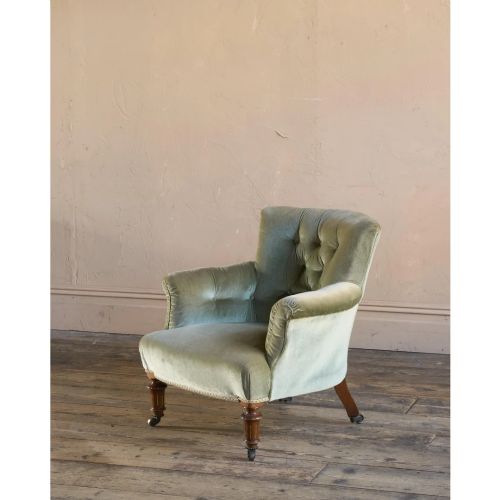
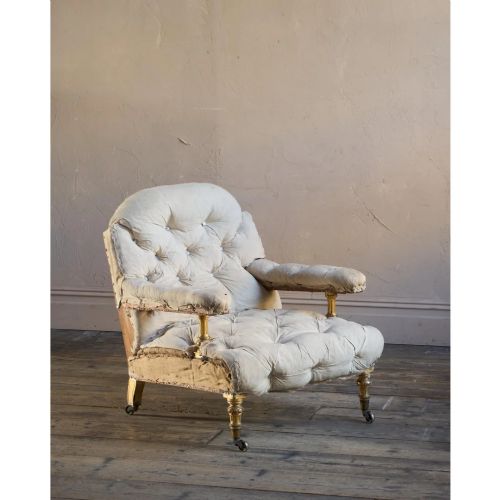
Victorian Brass Castor Chairs
Victorian brass castor chairs are substantial seated furniture offering deep comfort, and buyers seek them for their traditional craftsmanship and enduring presence.
Victorian Brass Castor Chairs
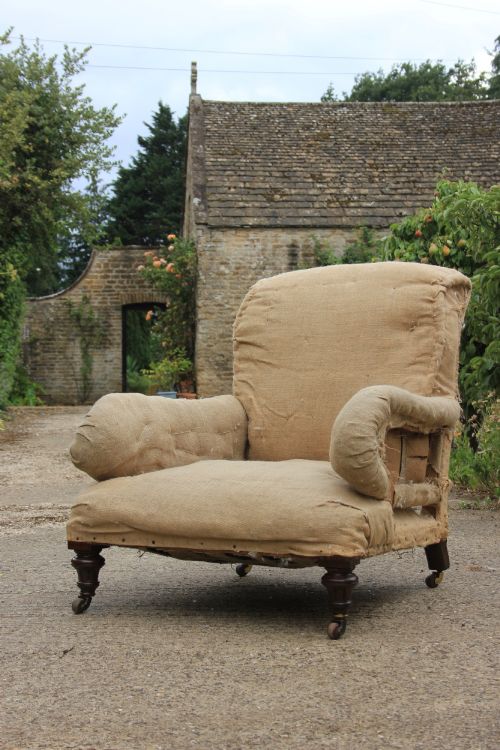
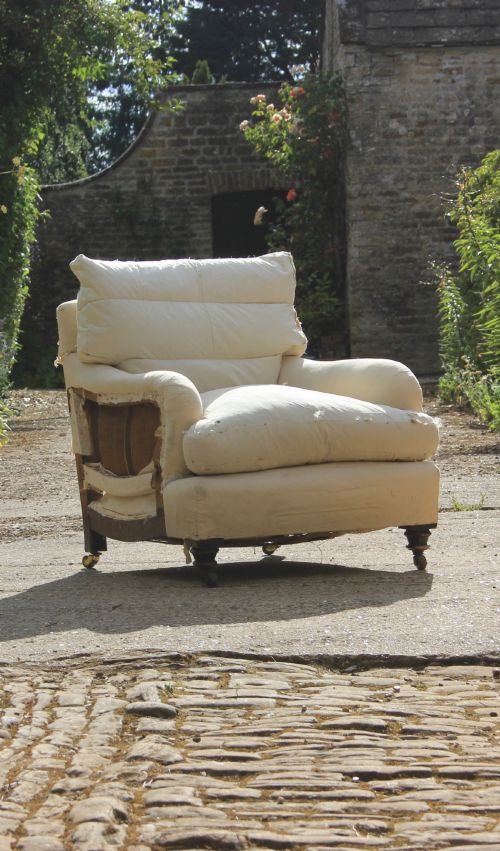
Victorian brass castor chairs encompass armchairs, library chairs, and occasional seating designed for domestic comfort during the nineteenth century. The examples found here span periods from the Regency era through to Edwardian times, alongside pieces attributed to specific nineteenth-century cabinet makers.
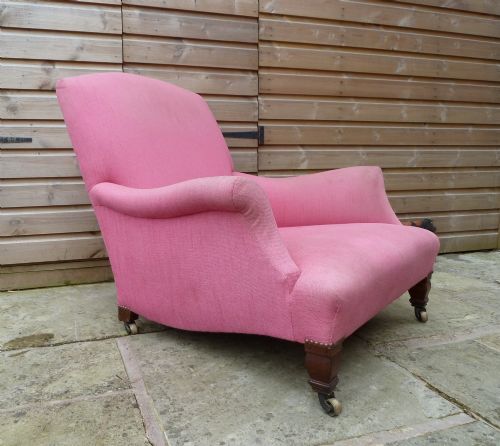
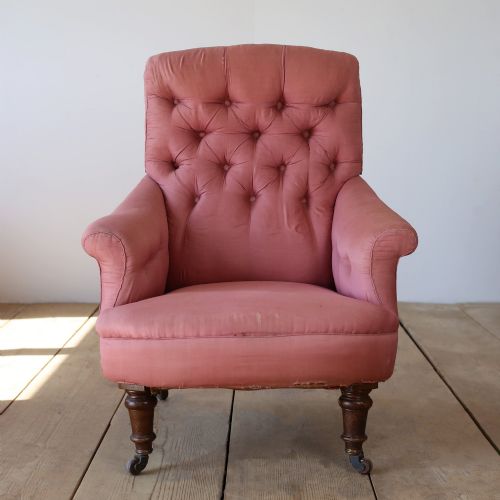
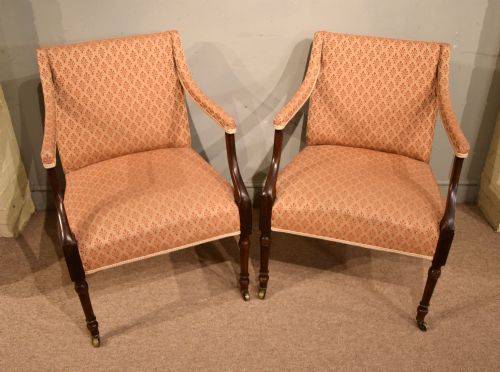
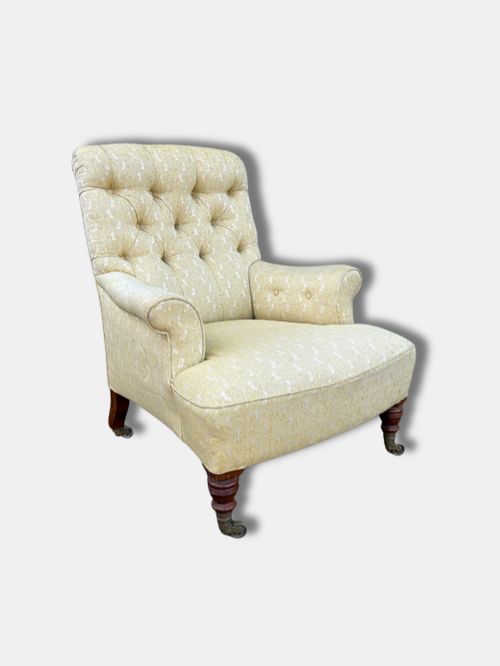
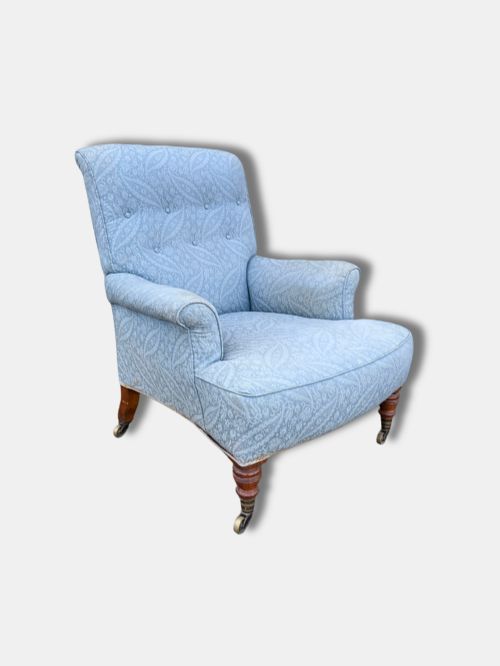
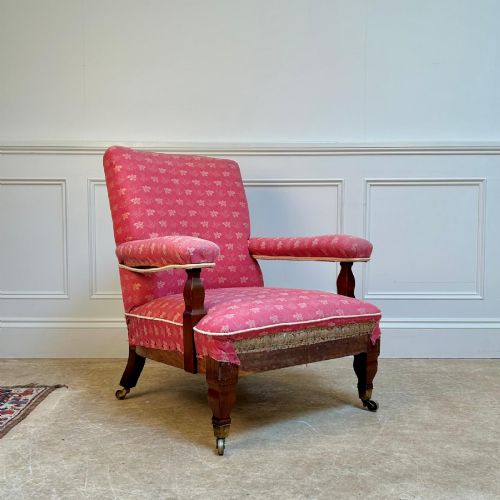
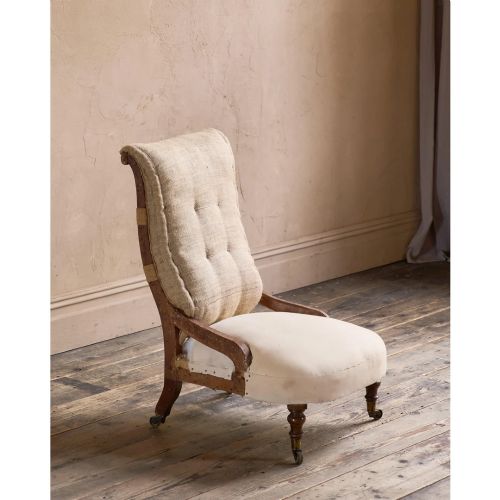
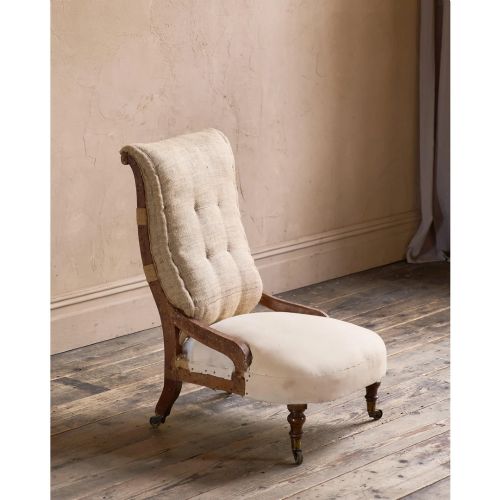
Armchairs dominate the selection, often taking the form of deep club chairs, button-backed designs, or Howard style seating intended for country houses. Side chairs and chaise longues also appear, providing diverse seating options for period interiors.
The materials visible across these pieces include mahogany, walnut, and hardwood frames supporting upholstered bodies. Fabrics range from velvet and calico to hessian and patterned textiles.
Construction and materials
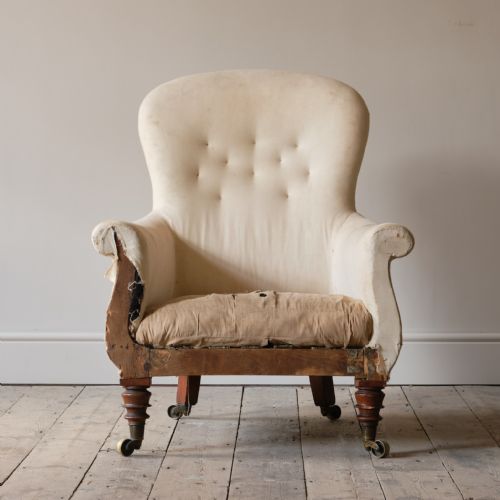
Makers built the foundational frames using dense hardwoods such as mahogany and walnut, ensuring structural integrity for heavy upholstered forms. These wooden frames were then fitted with brass castors on the feet to allow smooth movement across carpets and floors.
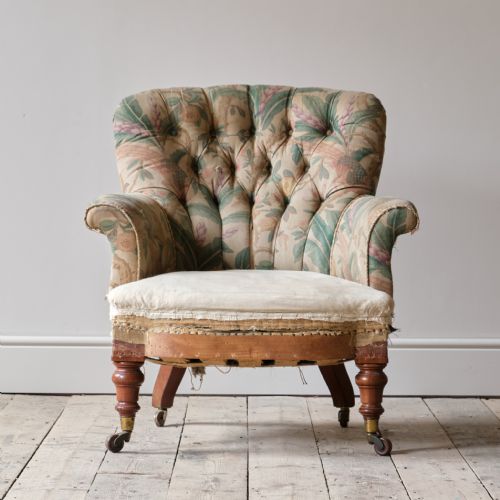
Upholstery techniques involved stuffing the interior with traditional materials and securing them beneath outer layers of fabric, velvet, calico, or hessian. Button-backed detailing and reeded woodwork frequently completed the decorative execution of the piece.
Even stately library chairs appreciate a gentle roll across the carpet every now and then.
Evaluating quality and proportion
Quality rests upon the structural integrity of the hardwood frame and the integrity of the joinery concealed beneath the upholstery. Pieces bearing attribution or marks from notable workshops command greater attention due to documented standards of design.
The refinement of the woodwork, from plain mahogany legs to detailed barley twist turnings or reeded libraries, distinguishes standard production from finer commissions. Furthermore, the proportion and balance of the armchair shape dictate its visual weight within a room.
Howard and Sons·Gillows·Hindley and Sons·Hampton and Sons·Holland and Sons·Morris and Co
The Victorian Brass Castor Chairs Glossary
- Castor
- A small wheel mounted on a swivel assembly attached to the foot of a chair. This mechanism allows heavy seated furniture to be repositioned easily across a room.
- Button back
- An upholstery style where depressions are formed in the padding by stitching through to the frame, secured with fabric-covered buttons. This method keeps the internal stuffing evenly distributed.
- Reeded
- A decorative moulding consisting of parallel convex strips carved directly into the timber. It is frequently found on the legs and arms of library chairs.
Victorian Brass Castor Chairs: Frequently Asked Questions
What defines a Victorian brass castor chair?
These pieces are nineteenth-century seated furniture featuring concealed or visible metal wheels attached to the base of the legs for mobility.
They primarily take the form of armchairs and library chairs designed for domestic comfort and ease of movement.
Where were these chairs used originally?
They were commonly placed in libraries, drawing rooms, and country house interiors where heavy furniture needed occasional repositioning.
Their substantial frames provided comfortable seating for long periods of reading or conversation.
How should I live with upholstered period chairs?
Position them away from direct sunlight to protect fabrics like velvet and cotton from fading over time.
Regular gentle vacuuming helps prevent dust accumulation within the deep buttoning and textured upholstery.
How do I distinguish different periods of chairs?
Examine the timber frame and turning details, as Regency and William IV pieces often display heavier classical influences compared to later Victorian designs.
Maker stamps or labels on the wooden frame or castors can also provide a clear indication of origin and date.