

Victorian Blue White Ceramics
Victorian blue white ceramics comprise domestic wares and display pieces shaped by nineteenth-century tastes for transfer printing and cobalt decoration.
Victorian Blue White Ceramics
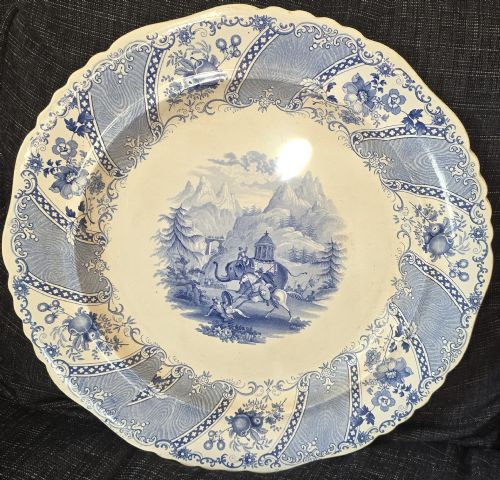
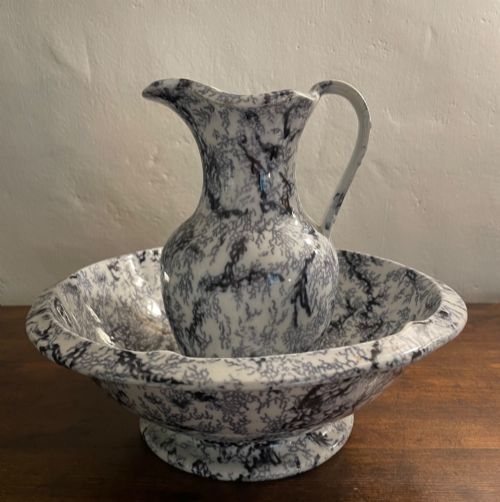
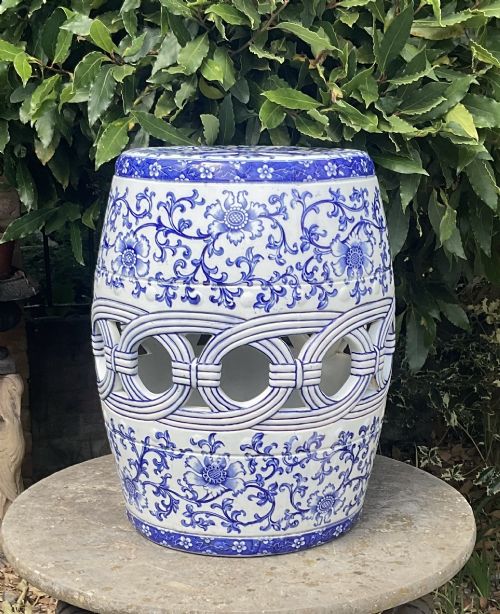
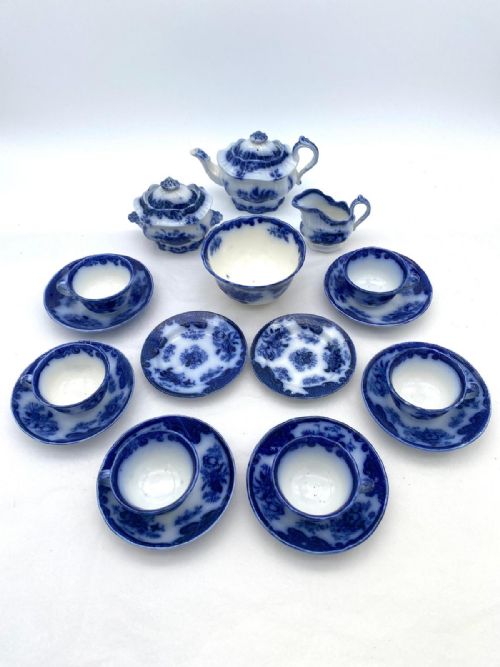
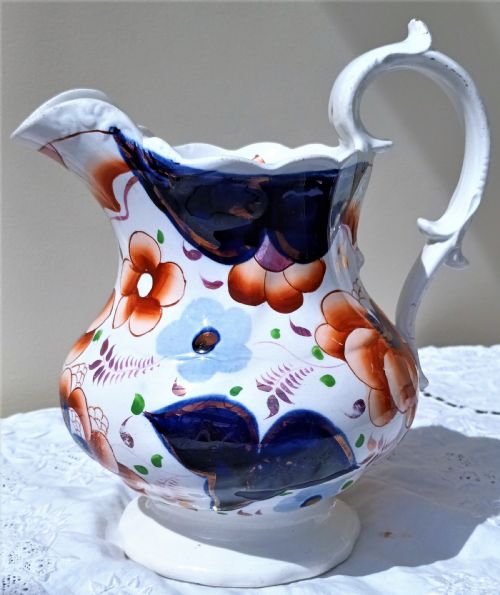
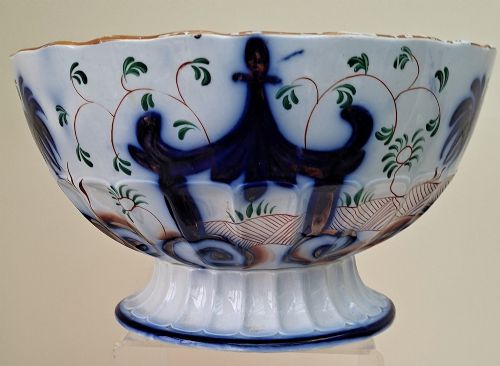
Victorian blue white ceramics encompass utilitarian items and decorative objects produced across the nineteenth century, ranging from large footbaths and meat platters to child's tea services and garden seats.
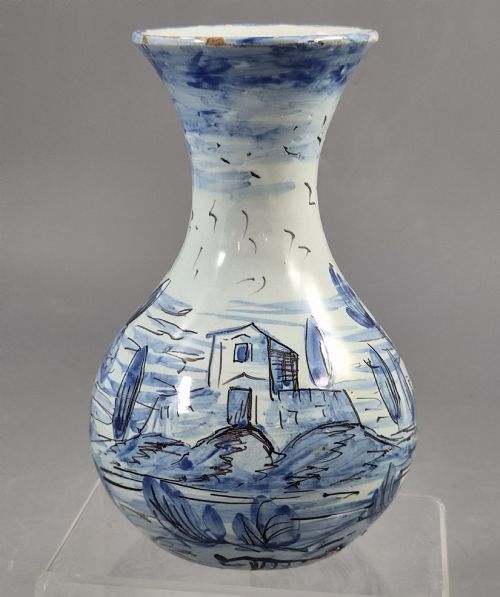
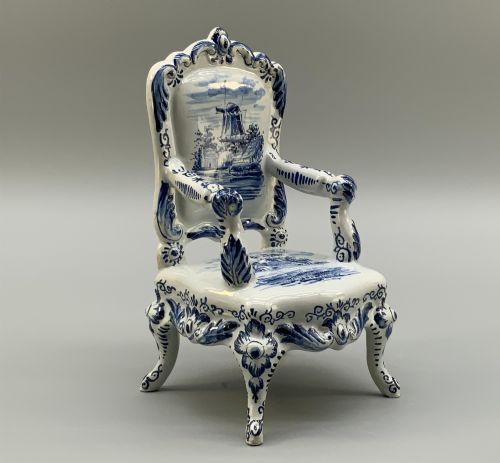
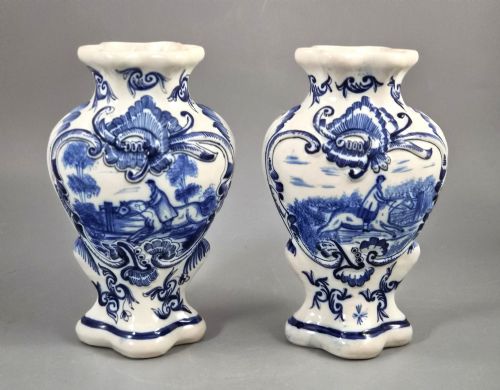
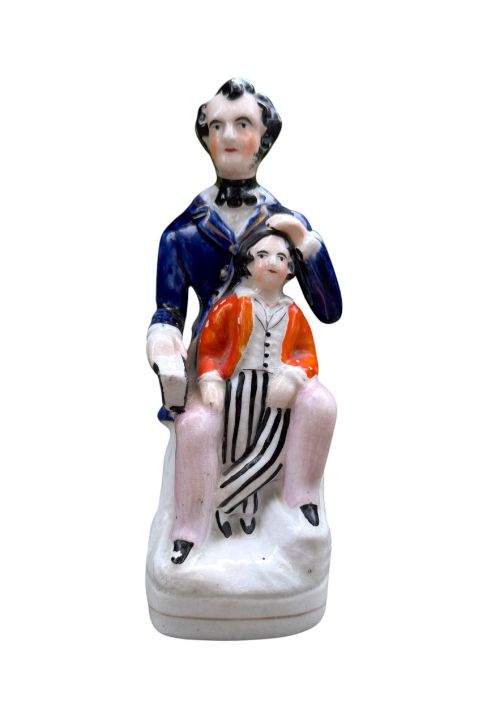
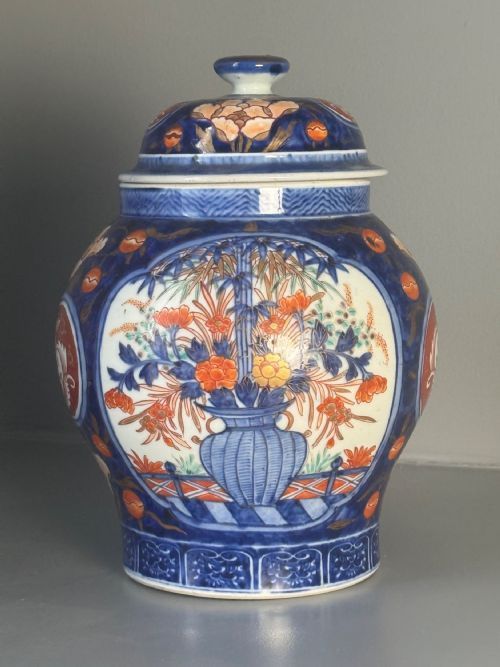
The selection on this page centres primarily on earthenware and ironstone pieces decorated with blue transfer-printed patterns, alongside porcelain figures, majolica vases, and specialised domestic vessels.
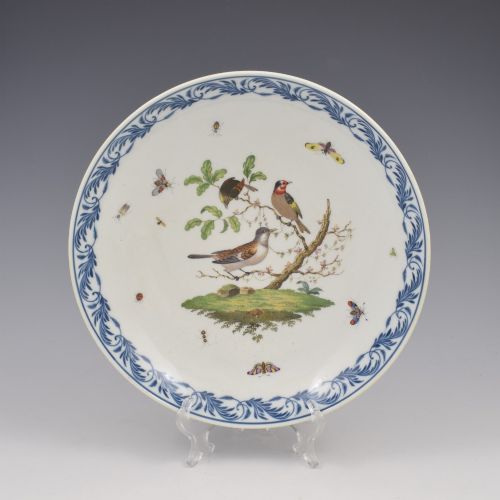
Makers and potteries from English production centres such as Staffordshire feature prominently, accompanied by continental European works and Delftware interpretations spanning the decades from the 1840s to the turn of the twentieth century.
Materials and methods
Potters utilised earthenware, ironstone, and porcelain bodies shaped by hand or in moulds, applying cobalt oxide pigments directly beneath or over the glaze before firing.
Transfer printing involved engraving a copper plate, inking it with blue pigment, taking an impression on tissue paper, and pressing it onto the ceramic surface prior to glazing and kiln firing.
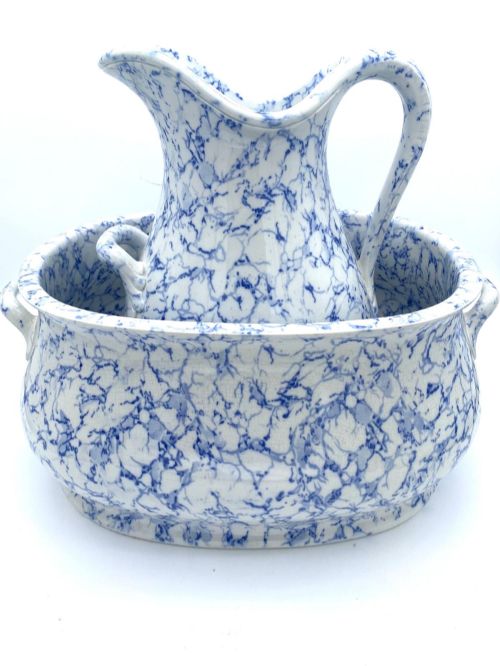
Victorian households utilised heavy ceramic footbaths as indoor bathtubs before modern plumbing brought running water into bedrooms.
Quality and execution
Quality reveals itself in the crispness of the transfer-printed lines and the evenness of the glaze, where superior examples maintain sharp pictorial detail without blurring or pooling of the cobalt pigment.
The sophistication of the ceramic body and the ambition of the form dictate value, distinguishing standard utilitarian tableware from intricately modelled figures, large footbaths, and specialised exhibition pieces.
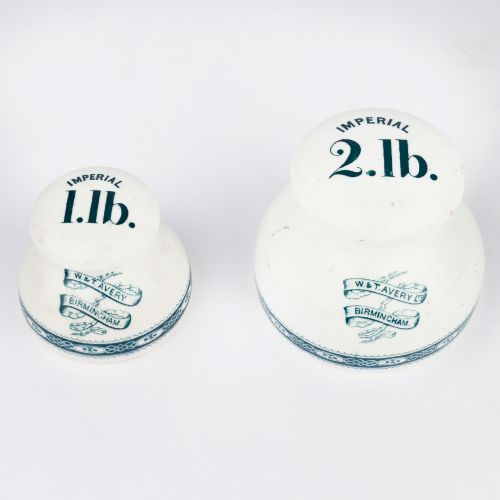
W & T Avery·Minton·Fourmaintraux-Courquin·Royal Bonn·Meissen·James Wallace and Co·William Adams and Sons·Copeland·Doulton Burslem·Day and Millward
The Victorian Blue White Ceramics Glossary
- Transfer print
- A decorative technique where an engraved copper plate transfers a design onto paper and then onto the ceramic body before glazing. This method allowed intricate pictorial scenes to be replicated rapidly across mass production.
- Flow blue
- A style of cobalt decoration where the blue colour intentionally bleeds into the surrounding white glaze during the kiln firing. This effect creates a soft, hazy appearance favoured on mid-nineteenth-century tableware.
- Ironstone
- A dense, durable type of earthenware patented in the nineteenth century to imitate Chinese porcelain. It provides a robust body for large serving platters, jugs, and footbaths.
- Majolica
- A glazed earthenware type developed during the nineteenth-century revival periods, known for brightly coloured enamel glazes applied over an opaque tin or lead glaze.
- Jasper ware
- A fine-grained, unglazed stoneware developed with coloured silicate bodies and applied white relief ornaments. It remains closely associated with neoclassical revival designs of the period.
Victorian Blue White Ceramics: Frequently Asked Questions
What is flow blue pottery?
Flow blue is a specific style of nineteenth-century ceramic where the cobalt blue pigment intentionally bleeds into the white glaze during firing. This chemical reaction creates a hazy, atmospheric depth on plates, jugs, and tea services.
The technique was achieved by introducing volatile chlorides into the kiln atmosphere. Potters embraced the blurring effect as an artistic asset rather than a fault.
How are these ceramics dated?
Dating relies on maker marks, registry stamps, stylistic shifts, and technical markers stamped or printed on the base of the ceramic. Transfer-printed patterns often bear specific registry diamonds that pinpoint the exact year and month of design registration.
Comparison with documented factory output helps narrow down the production period. Unmarked pieces are judged by body composition, glaze characteristics, and the evolution of nineteenth-century shapes.
Were these pieces used daily?
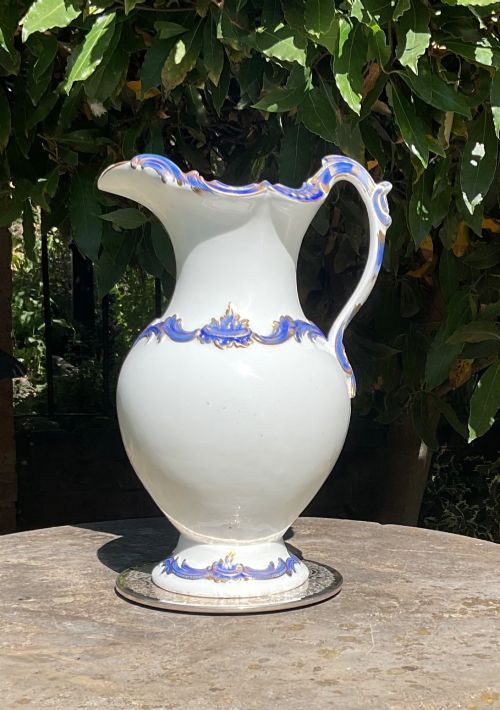
Many items, including meat platters, footbaths, and vegetable tureens, served active roles in nineteenth-century households for dining, hygiene, and domestic service. Hard-wearing ironstone and dense earthenware bodies were specifically chosen to withstand frequent handling.
Display items like cabinet vases, chargers, and figures remained in parlours. Their survival in good condition often depends on whether they transitioned from functional pantry use to ornamental display.
How do I display heavy platters?
Large meat platters and footbaths require stable, deep surfaces or dedicated wall mounting systems designed to support significant ceramic weight. Ensuring the centre of gravity is balanced prevents tipping on shelves or tables.
Keeping them away from high-traffic edges protects both the earthenware body and the glaze surface. Proper support preserves the structural integrity of heavy nineteenth-century ironstone.