



Victorian Blue Pendant
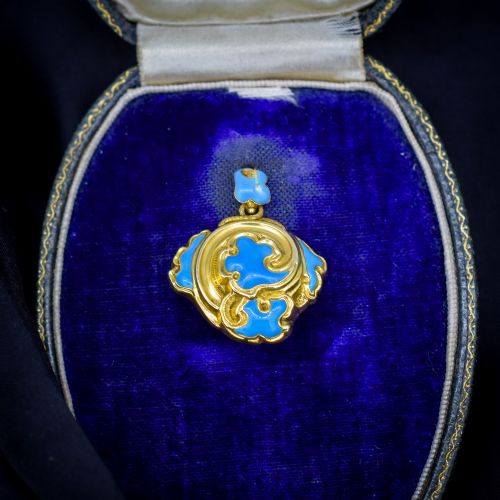
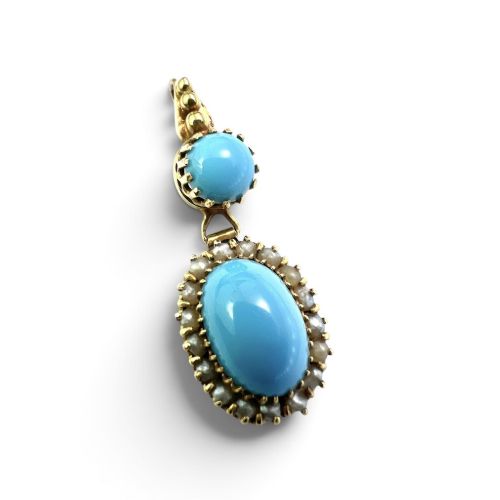
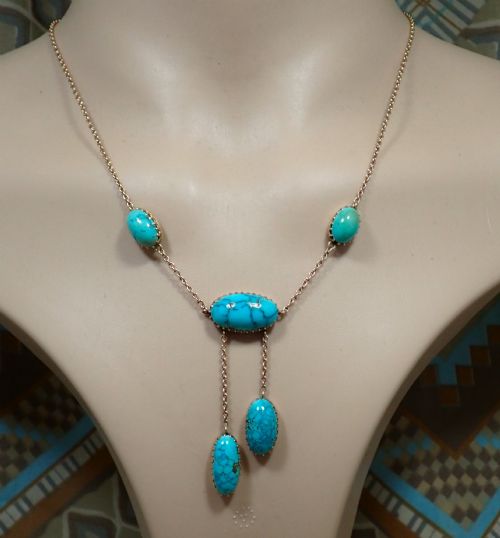
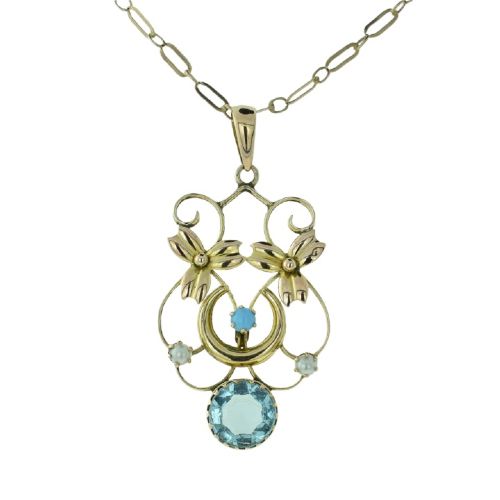
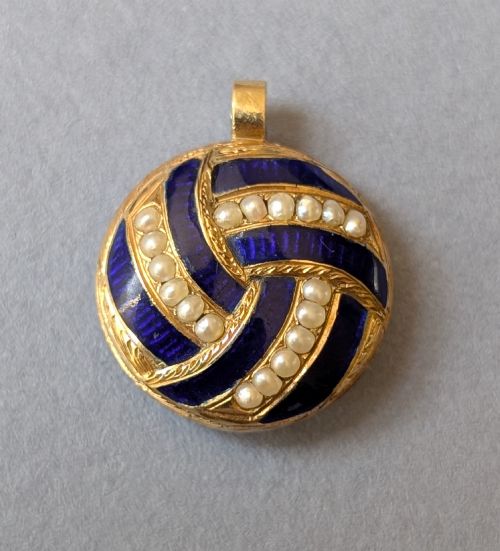
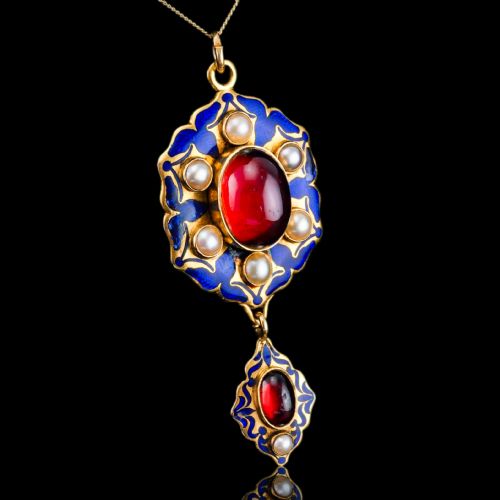
A victorian blue pendant brings together deep enamel work, glowing turquoise and bright sapphires set in high-carat gold.
Victorian Blue Pendant
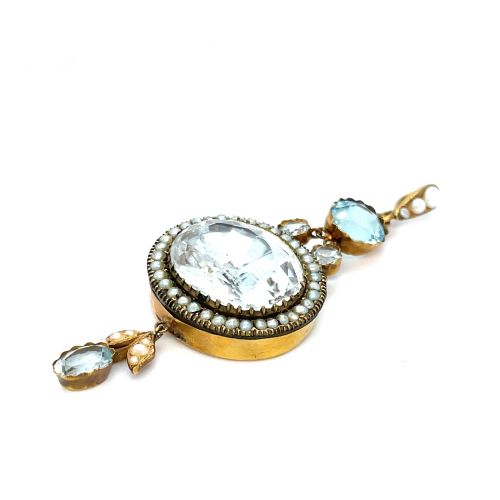
A victorian blue pendant encompasses a range of drop ornaments, lockets and crosses worked in rich blue enamel, turquoise, and sapphire alongside diamonds and pearls.
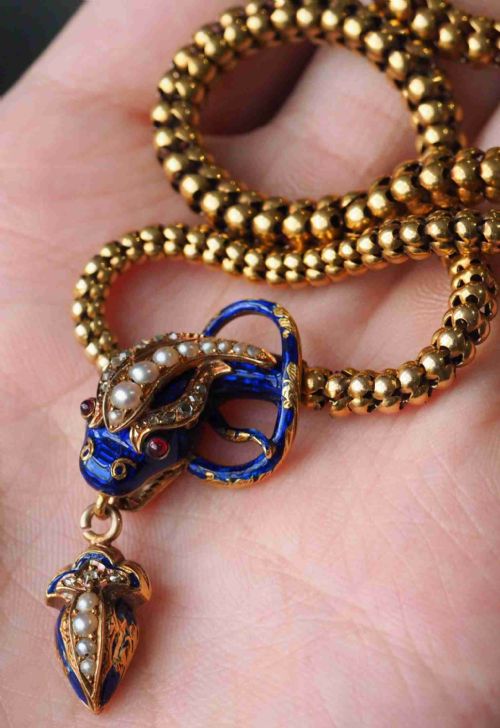
The selections encountered here span the Victorian era into the Edwardian period, often taking the form of puffy hearts, serpent motifs, or foliate lockets.
Makers utilised high-carat gold, silver, and rolled gold to frame these cool-toned stones and vitreous enamels, creating pieces meant to sit close to the skin.
How they were made
Goldsmiths fashioned these pieces using 15ct and 18ct yellow and rose gold, frequently pairing them with silver settings to enhance the fire of rose-cut and table-cut diamonds.
Vitreous enamel, particularly guilloche and blue translucent variants, required skilled hand-firing onto metal bases to achieve rich colour depth.
Pearls, turquoise cabochons, and seed pearls were meticulously sewn with wire or flush-set into foliate and star motifs.
The period scope extends from mid Victorian snake necklaces to Edwardian negligee styles.
What varies in quality
The finesse of the guilloche engine-turning beneath translucent blue enamel dictates much of the visual weight, with finer lines creating superior light play.
The integrity of the gold work, from chased foliate borders to articulated snake links, distinguishes standard production from exceptional bench-made items.
The natural matching of seed pearls and the saturation of sapphires or turquoise determine the harmony of the finished jewel.
The Victorian Blue Pendant Glossary
- Guilloche
- A decorative engraving technique producing intricate geometric patterns beneath a transparent layer of enamel.
- Puffy heart
- A three-dimensional hollow pendant formed of two stamped gold halves soldered together, popular for sentimental jewellery.
- Mourning locket
- A hinged pendant designed to hold a lock of hair or a miniature portrait, often faced with black or blue enamel.
- Rose-cut
- An antique diamond cut featuring a flat base and a domed crown with triangular facets.
- Seed pearl
- A very small, naturally occurring pearl, often drilled and set en masse in floral or star arrangements.
Victorian Blue Pendant: Frequently Asked Questions
What is a Victorian blue pendant?
These items are neck ornaments fashioned during the nineteenth and early twentieth centuries, incorporating blue enamel, turquoise, or sapphire.
They appear as lockets, crosses, hearts, and drop pendants mounted in yellow gold or silver.
How do I wear a antique locket?
Original pieces were suspended from fine gold chains or silk ribbons, worn close to the breast.
Today, they suit modern chains of compatible carat weight, though hinges and glass compartments require gentle handling.
How do I date a blue enamel pendant?
Dating relies on stylistic clues like serpent coils, Renaissance Revival motifs, or specific hallmarks found on the bail or rim.
Enamel colours and box clasps also point toward the late Victorian or Edwardian eras.
Were these pendants used for mourning?
Many blue enamel and pearl pieces served as remembrance or mourning jewels to honour loved ones.
The blue tone signified loyalty and <b>remembrance</b>, whilst interior compartments often preserved hair work.