

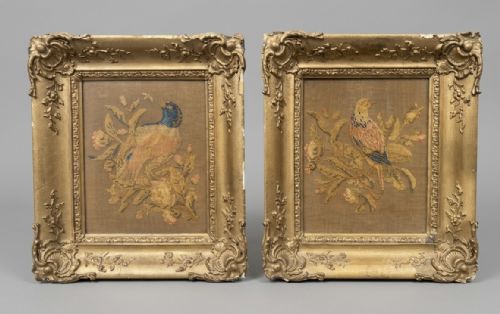


Victorian Bird Pictures
Victorian bird pictures capture ornithological study and domestic sentiment through delicate watercolours, needlework, and taxidermy.
Victorian Bird Pictures
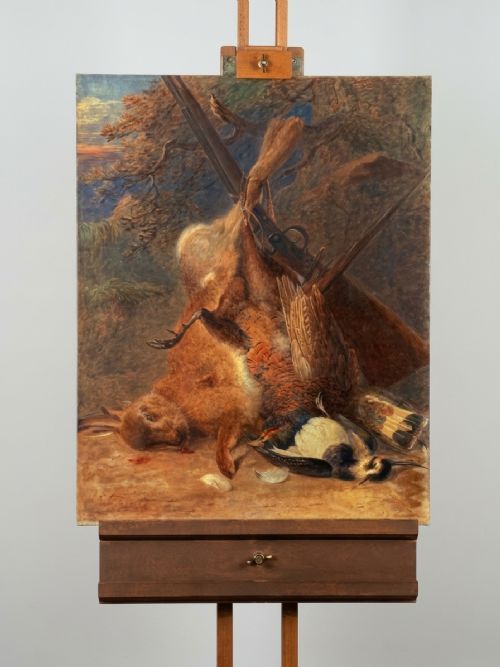
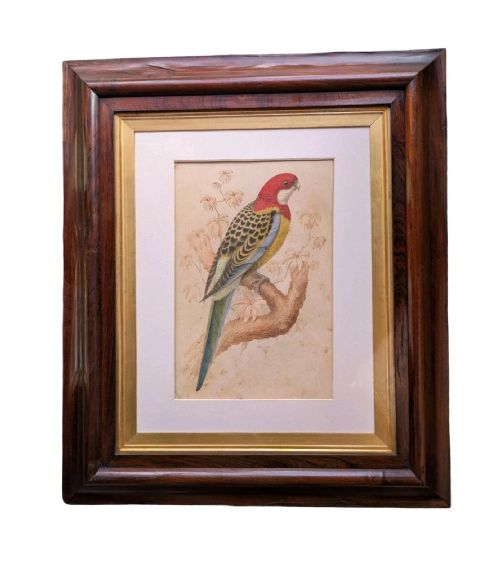
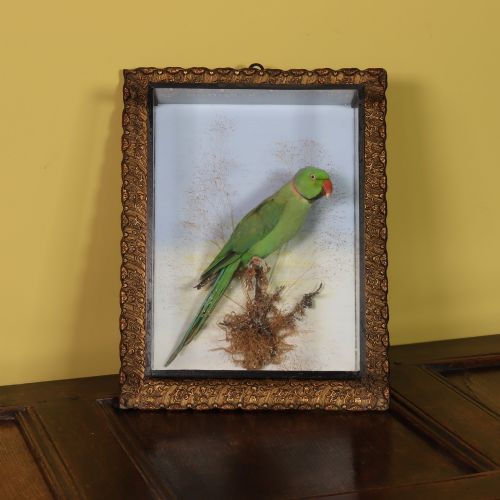
Victorian bird pictures comprise a varied group of framed works celebrating avian subjects through painting, printmaking, and textile arts. These pieces range from scientific watercolours and lithographs to decorative wool work and taxidermy picture frame cases.
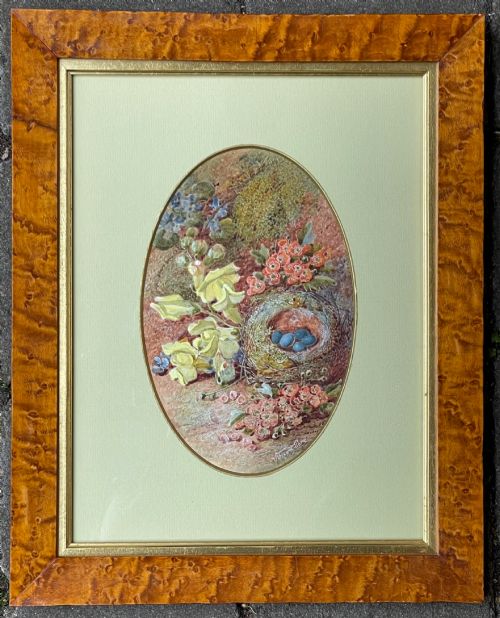
A buyer is most likely to encounter hand-coloured prints, detailed watercolours, and needlework studies on this page. Subjects span familiar British wildlife alongside exotic parrots, pheasants, and game birds.
The selection reflects both natural history observation and domestic interior decoration of the nineteenth century. Makers utilised diverse media to bring the natural world inside the Victorian home, resulting in works that function as wall art, miniature portraits, and framed textiles.
Materials and Techniques
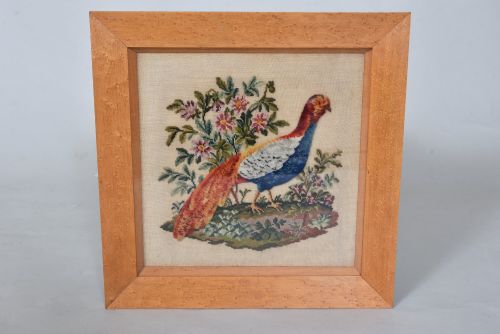
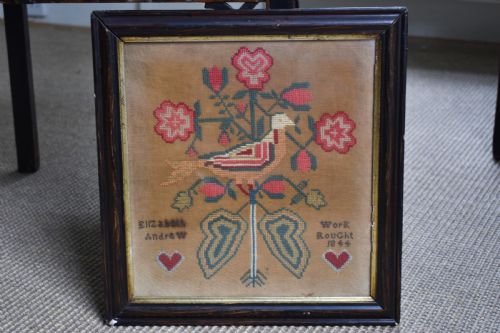
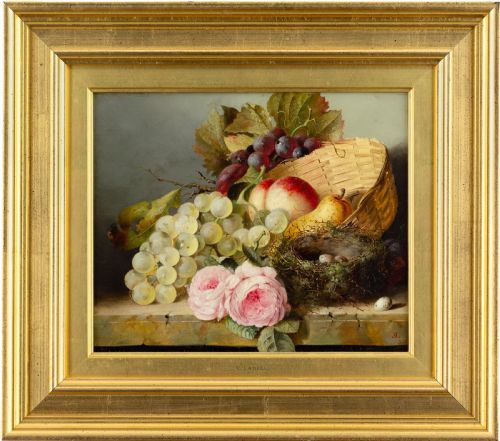
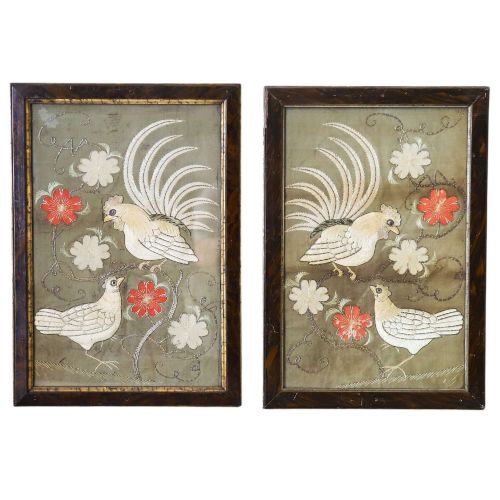
Makers produced these works using paper, watercolour, bodycolour, and engraving ink, frequently applying hand-colouring to printed plates. Canvas and wood panel supported oil paintings, while textiles employed wool and silk threads for tactile plushwork and embroidery.
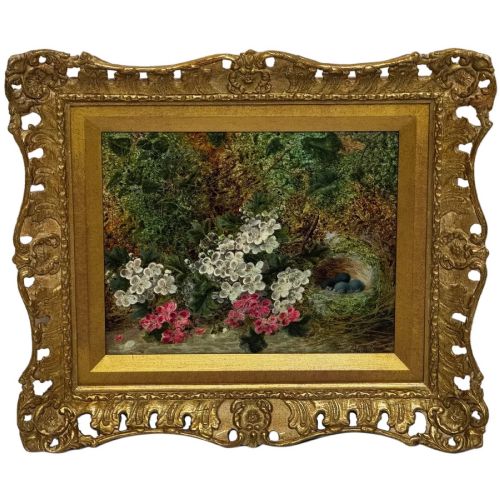
Framing played an integral role in presentation, incorporating gilt wood, ebonised timber, burr maple, and faux tortoiseshell. Advanced pieces integrated specialised techniques such as taxidermy mounting within deep cases and reverse painting on glass.
Nineteenth-century sailors doubled as textile artists, stitching woolie embroideries of birds while navigating the seas.
Factors of Quality
Quality rests upon the precision of the draughtsmanship and the fidelity of the natural rendering. Hand-painted watercolours and signed oil paintings by accomplished artists stand apart from mass-produced decorative prints.
The integrity of the framing and the preservation of delicate materials dictate the overall standing of a piece. Original gilt mounts, undisturbed taxidermy displays, and clean paper surfaces elevate the status of surviving examples.
Oliver Clare·Vincent Clare·Edward Ladell·Harry Bright·William Swainson
The Victorian Bird Pictures Glossary
- Bodycolour
- An opaque watercolour medium containing white pigment, used to create dense highlights and solid areas of colour. This technique gave nineteenth-century bird paintings greater opacity and depth.
- Plushwork
- A raised embroidery technique using looped stitches that were often cut to resemble velvet or fur. In avian art, this method rendered the textured plumage of pheasants and game birds.
- Micromosaic
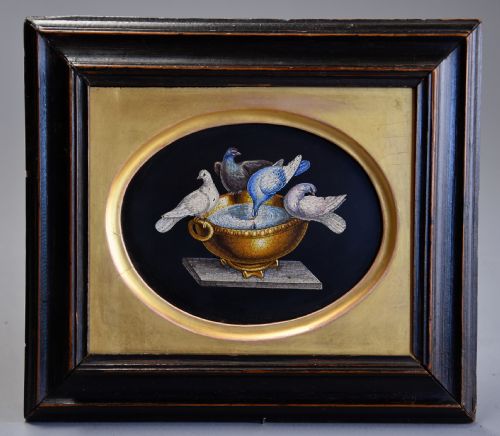
- An intricate decorative technique formed from tiny coloured glass tesserae fused together to create pictorial scenes. These panels were frequently set into frames to depict subjects like doves.
- Lithograph
- A printmaking process based on the repulsion of oil and water on a limestone slab. Many nineteenth-century ornithological plates utilised this method before receiving hand-applied watercolour washes.
- Woolie
- A colloquial term for sailors' wool work embroideries created by nineteenth-century mariners. These tactile textile pictures often depicted ships or birds using multi-coloured wool threads.
Victorian Bird Pictures: Frequently Asked Questions
What types of birds appear in these works?
The subjects include native British wildlife, game birds like pheasants, and exotic species such as parakeets and parrots.
Artists also depicted waterfowl and raptors, reflecting both scientific interest and sporting traditions of the period.
How were these framed originally?
Frames typically match the aesthetic tastes of the nineteenth century, utilising gilt wood, ebonised mouldings, and burr maple veneers.
Deep shadow boxes and specialised picture frame cases house three-dimensional elements like taxidermy and feather work.
Are these pieces hand painted or printed?
The inventory includes both unique hand-painted watercolours and oils alongside engraved or lithographic prints.
Many printed plates received subsequent hand-colouring to enhance their visual appeal and scientific accuracy.
How do I care for textile and paper bird art?
Paper works, watercolours, and textiles require protection from direct sunlight to prevent fading of pigments and threads.
Maintaining stable indoor humidity levels ensures that wood frames and organic materials remain preserved over time.