




Victorian Beach Seascape Art
Victorian beach seascape art captures the rugged shores and coastal life of the nineteenth century through enduring oils and watercolours.
Victorian Beach Seascape Art
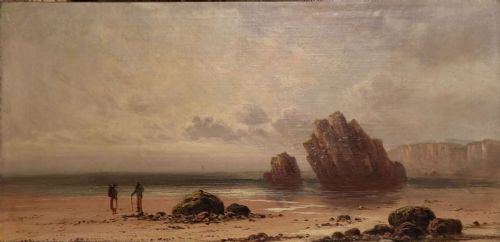
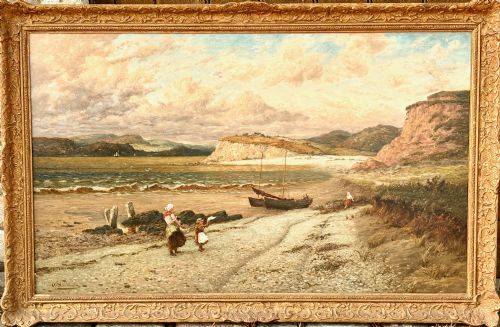
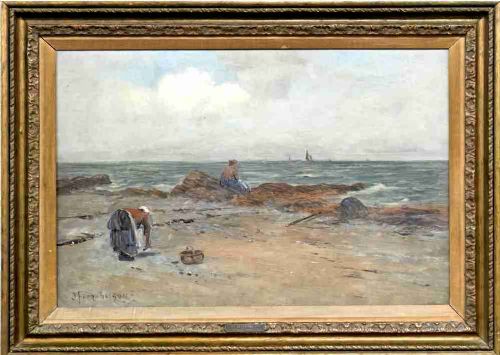
Victorian beach seascape art depicts coastal scenes, harbours, and shores populated by figures such as fisher folk, children, and seaweed gatherers. These works place the viewer directly on the sands of locations like Hastings, Whitby, and St Ives, recording maritime activity and dramatic sea stacks.
The pieces on this page are predominantly watercolours and oil paintings on canvas, originating from the nineteenth century and extending into the early twentieth century. Painters of this era focused heavily on naturalistic coastal lighting, low tides, and the daily toil of coastal communities.
Subjects range from tranquil beach gatherings to shipwreck scenes near castles and lighthouses. Buyers encounter both intimate watercolours in polychrome frames and substantial oil paintings that record the changing moods of the British coastline.
Materials and Technique
Artists painted primarily with oil paint on canvas or watercolour on paper, frequently mounting works within giltwood and gesso frames. The handling of medium defines the visual character, with watercolours offering delicate washes of light and oil paint allowing for heavier, textured impasto.
Canvases stretched over wooden supports received layers of oil pigment to capture the luminous atmosphere of sea spray and coastal sunsets. Watercolour works often incorporated pencil or ink underdrawing before the application of transparent pigments.
Artists frequently captured seaweed gatherers knee-deep in brine long before coastal walks became a leisure pastime.
Variations in Quality
Quality rests upon the artist's ability to render atmospheric light and convincing movement in both water and figures. Superior works demonstrate confident brushwork and precise topographical detail, whereas weaker examples rely on formulaic compositions.
The depth of the artist's engagement with the coastal subject separates standard topographical records from compelling artistic statements. Stronger paintings convey the specific weather, salt air, and human activity of the shore with immediate clarity.
James Orrock·William Banks Fortescue·Joseph Farquharson·James Webb·Frederick William Hattersley·Kate E Booth·Julian Drummond·Robert Macaulay Stevenson·G B Cullen·William Edward Webb·Samuel Edward Kelly·George Smith·GM de L'Aubiniere·Daniel Sherrin·William Shayer·Thomas Bush Hardy·J De Breanski·George Marks
The Victorian Beach Seascape Art Glossary
- Gesso
- A plaster-like material applied to wood frames before gilding. It provides a smooth base for intricate moulding and gold leaf application.
- Impressionism
- A style of painting emphasising light and unblended brush strokes. It captures the fleeting visual impressions of a coastal scene.
- Watercolour
- A painting method using pigment suspended in water-soluble binders on paper. Artists use it to achieve translucent washes of colour.
- Giltwood
- Wood carved and coated with thin gold leaf or gold powder. It forms the traditional ornate framing for nineteenth-century paintings.
- Impasto
- Paint applied thickly to a canvas so that it stands out from the surface. This technique adds tactile texture to crashing waves and sandy shores.
Victorian Beach Seascape Art: Frequently Asked Questions
What subjects appear in these seascapes?
These works typically show coastal scenes with fishing boats, sandy beaches, chalk cliffs, and harbours. Figures such as fishermen, children, and gatherers often populate the foreground.
Artists drew inspiration from specific British and European locations, recording local landmarks, shipwrecks, and daily maritime labour.
How do watercolours differ from oil paintings here?
Watercolour paintings use transparent pigments on paper, creating bright, luminous effects that suit detailed coastal views. They are generally displayed under glass within frames.
Oil paintings utilise heavier pigments on stretched canvas, allowing for richer textures, deeper tones, and greater durability over time.
How should I display these paintings at home?
Keep these artworks away from direct sunlight and damp environments to protect the paper, canvas, and original giltwood frames. Proper wall placement ensures the pigments do not fade.
Pairing a nineteenth-century oil or watercolour with traditional or transitional interiors allows the rich tones of the coastal scene to anchor the room.
How can I tell the period of a painting?
Examining the stretcher bars, canvas weave, paper type, and framing materials often reveals the age of the piece. Signatures, dates, and monograms left by the artist provide definitive chronological markers.
The clothing styles of the figures and the painting techniques characteristic of nineteenth-century realism or impressionism also help date the work.