



Victorian Banjo Barometer
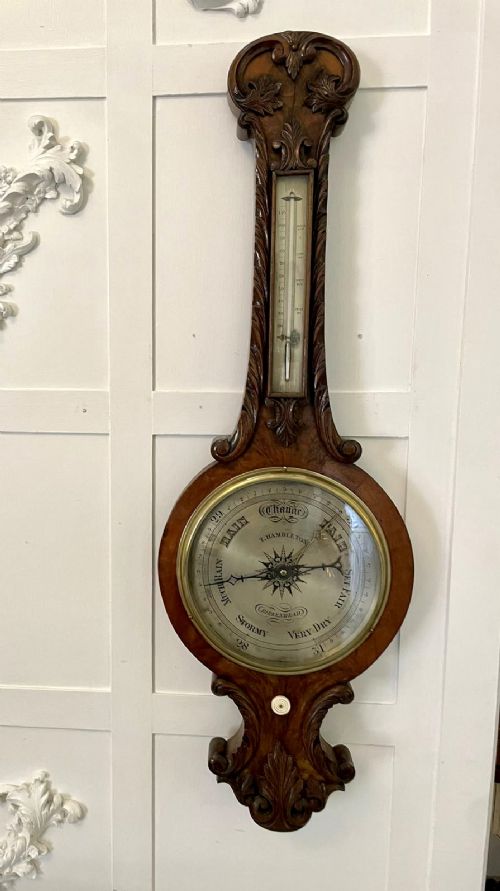
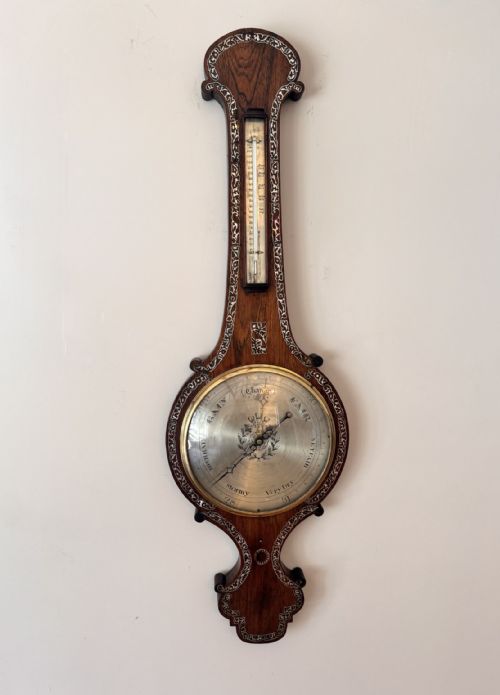
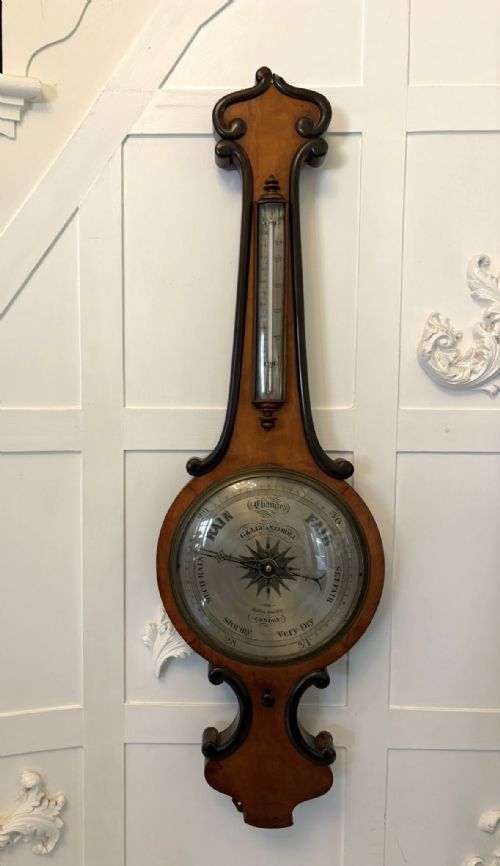
A victorian banjo barometer combines domestic utility with decorative wall presence, housed in a distinctive shaped wooden case.
Victorian Banjo Barometer
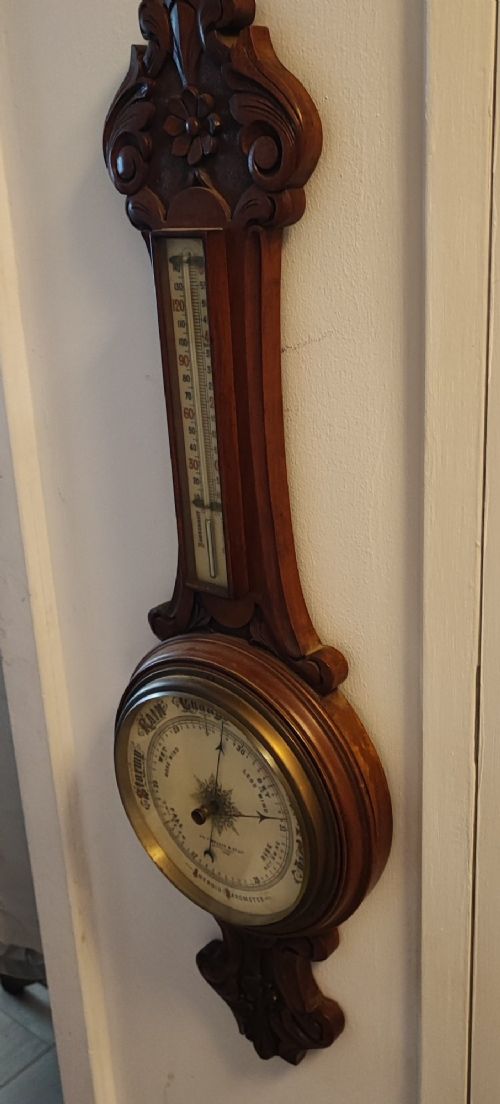
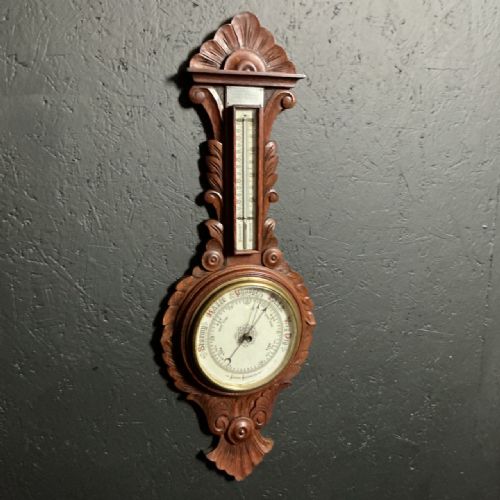
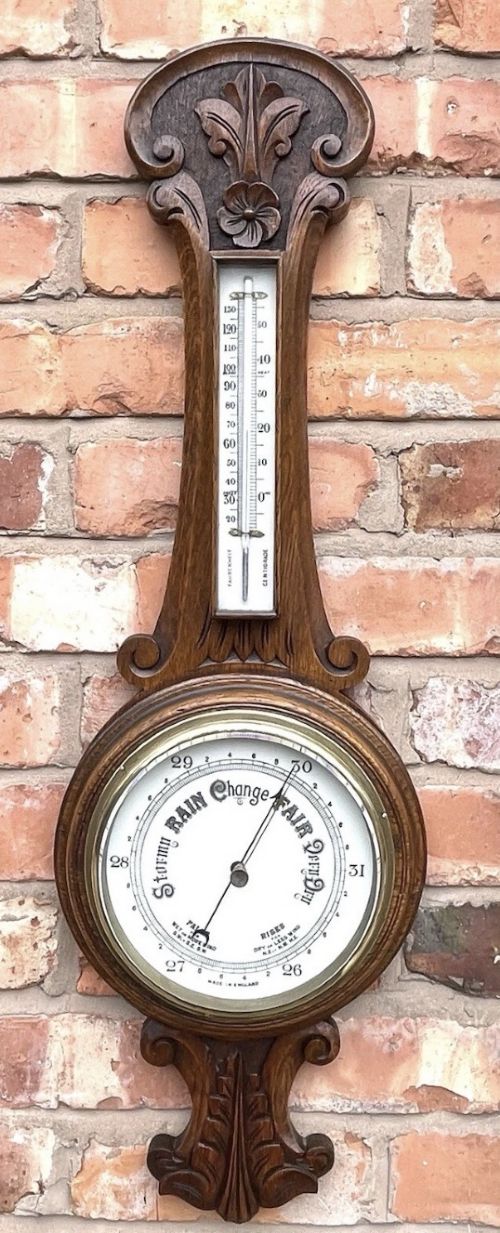
A victorian banjo barometer takes its name from the characteristic stringed-instrument silhouette, featuring a circular dial head above a tapering trunk. You will encounter these pieces most frequently in rich dark woods spanning the nineteenth century, often equipped with integrated thermometers or hygrometers.
The form developed from earlier wheel barometers into sturdy wall-hanging pieces that served as both meteorological instruments and polished hall furniture. Examples range from compact domestic versions in carved oak to large exhibition pieces with elaborate marquetry.
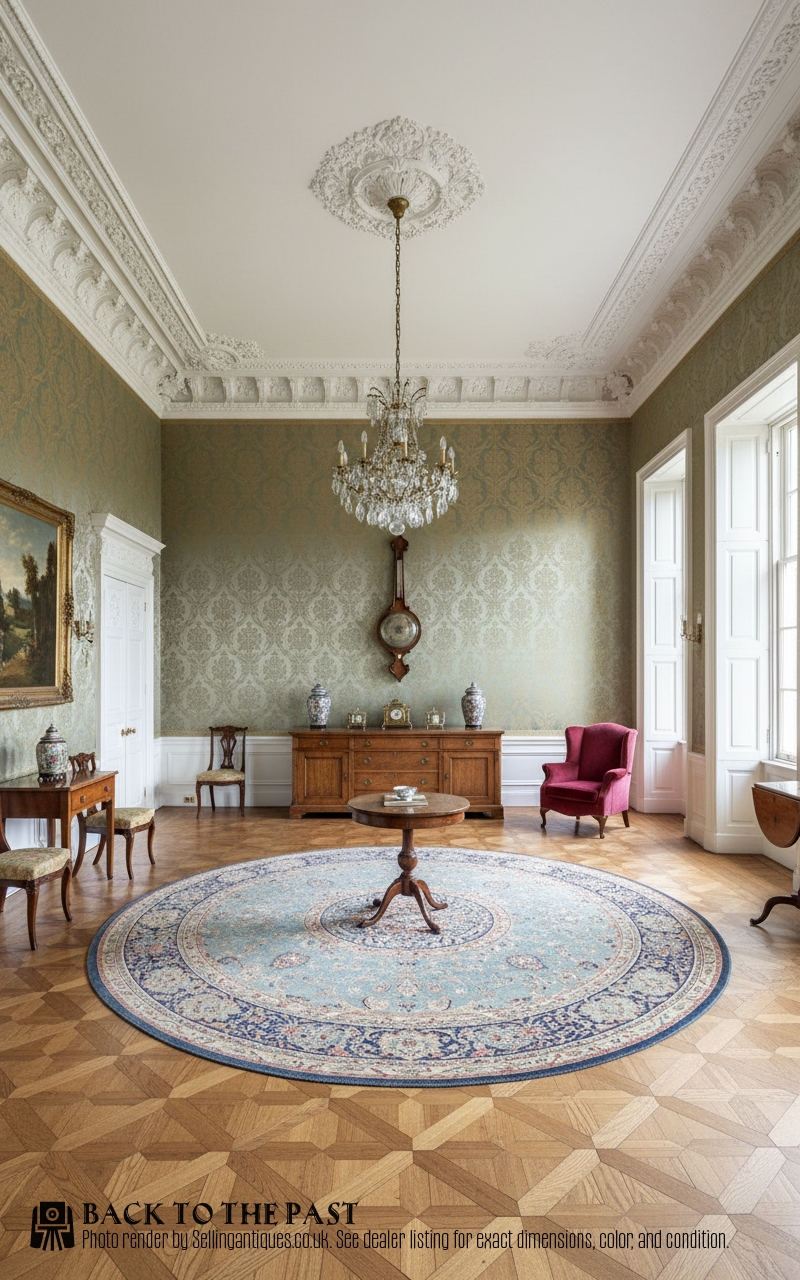
Makers housed these mechanisms in cases designed to complement contemporary domestic interiors, utilising the curved trunk to display mercury tubes or aneroid dials clearly. Surviving pieces demonstrate the enduring popularity of this silhouette across the Victorian era and into the Edwardian period.
Materials and construction
Cabinetmakers shaped dense hardwoods such as mahogany, rosewood, walnut, and oak into the characteristic curved silhouette, frequently incorporating burr veneers or carved foliage. These wooden cases often feature delicate stringing or inlaid mother of pearl to accent the perimeter.
The meteorological data was displayed on silvered metal dials, porcelain faces, or glass-covered plates, protected by cast brass bezels. Artisans mounted sensitive mercury tubes or aneroid mechanisms within the wooden trunk to record atmospheric pressure.
Victorian Banjo Barometer Retail Price Guide 2026
Typical asking prices for victorian banjo barometer among the pieces listed under this phrase on Sellingantiques today, from the lower quarter to the upper quarter. They describe what is for sale here now, not the wider market.
Case materials recorded in the archive include mahogany, oak, rosewood, walnut, and exotic burr veneers.
Distinguishing finer examples
The standard of carving and the selection of cabinet timber dictate the distinction between workshop output and finer retail pieces. Denser grain patterns in the walnut or rosewood, coupled with crisp relief carving on the oak cases, indicate superior craftsmanship.
Signed dials from established opticians and instrument makers elevate a piece beyond standard domestic production. The delicacy of the brass work and the precision of the mother of pearl inlay further separate standard instruments from exceptional commissions.
G & L Guanziroli·W Watson & Sons·Maple & Co·L Casatelli of Liverpool·James H Kelly of Glasgow·W.E. Pain of Cambridge·Joseph Somalvico & Co·Negretti & Zambra
The Victorian Banjo Barometer Glossary
- Aneroid barometer
- A sealed metal capsule expands and contracts with atmospheric pressure changes, moving a mechanical pointer without using liquid mercury.
- Wheel barometer
- A mercurial instrument where a float on the open end of the tube turns a pulley wheel connected to the visible dial pointer.
- Silvered metal
- A brass dial plate treated with a silver compound to create a matte white metallic surface for engraved graduations.
- Mother of pearl
- Iridescent inner shell material used by artisans to create floral or geometric inlays across the wooden case.
- Onion top
- A rounded, bulbous upper pediment shape found on specific Victorian mahogany barometer case designs.
- Marquetry
- Fitted wood veneer pieces assembled to form decorative pictures or geometric patterns on the instrument body.
Victorian Banjo Barometer: Frequently Asked Questions
How do I read the dial?
The pointer indicates barometric pressure changes, moving toward stormy or fair conditions depending on atmospheric shifts. Many instruments include a secondary manual pointer to track movement over the course of a day.
Combined thermometer scales mounted on the trunk allow you to read ambient room temperature alongside atmospheric pressure.
Where should I hang it?
Select an interior wall away from direct sunlight, radiators, or excessive drafts to protect the sensitive internal mechanics and wood case. Hallways and studies provide stable environments that suit the traditional placement of these instruments.
Ensure you use a secure wall fixing suited to the weight of the dense hardwood case.
How do I date the piece?
Examine the style of the wood case, dial layout, and any maker signatures engraved on the metal face. Mid-century examples often favour rosewood and mahogany, while later decades embraced heavily carved oak.
Maker directories help link specific trading addresses on the dial to active partnership dates.
Are mercury barometers safe?
Enclosed glass tubes contain the liquid securely during normal wall hanging and standard domestic handling. The mercury remains sealed behind the glass face and brass bezel.
Take care only if moving or transporting the instrument, keeping the case upright to prevent damage to the glass tube.