


Victorian Bamboo Cabinet
These victorian bamboo cabinet examples bring the exotic charm of the Aesthetic Movement directly into modern interiors through lightweight construction and decorative lacquer panels.
Victorian Bamboo Cabinet
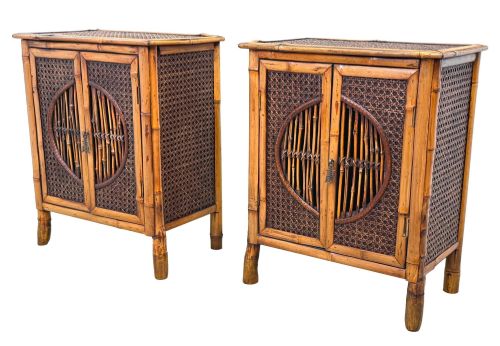
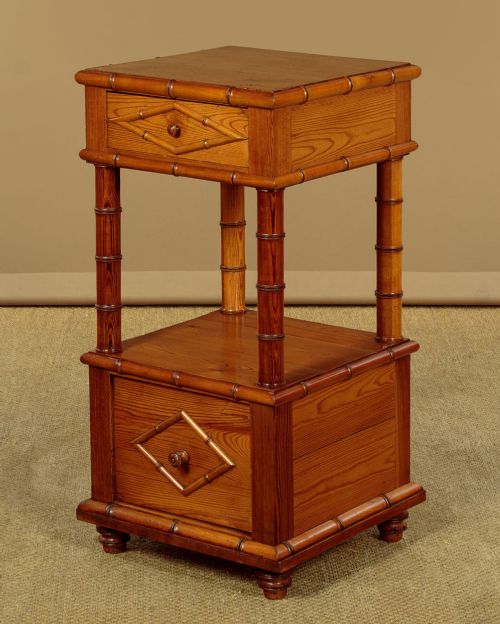
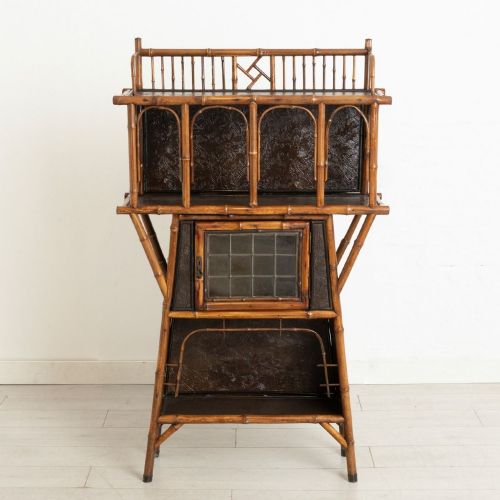
When you search for a victorian bamboo cabinet, you encounter versatile nineteenth-century furnishings spanning bedside tables, glazed bookcases, and miniature table-top cupboards. These pieces reflect late nineteenth-century tastes influenced by Japanese and Chinese design.
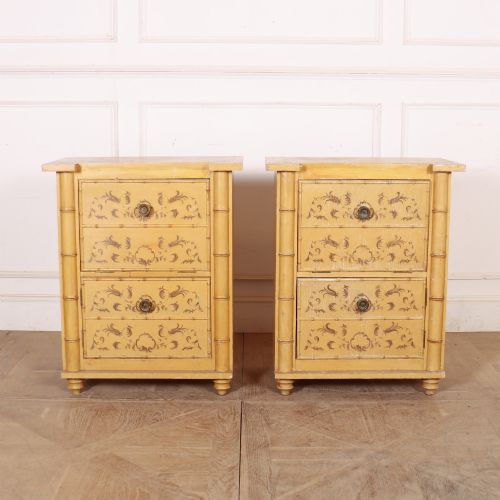
The version you are most likely to meet on this page is a glazed display cabinet or a compact bedside unit dating from the 1880s to 1900. Makers constructed these items using natural bamboo or painted wood simulating bamboo stalks.
Originating primarily within Victorian and Edwardian Britain alongside French interpretations, these cabinets combine functional storage with decorative display shelves and panelled doors.
What separates the finest examples
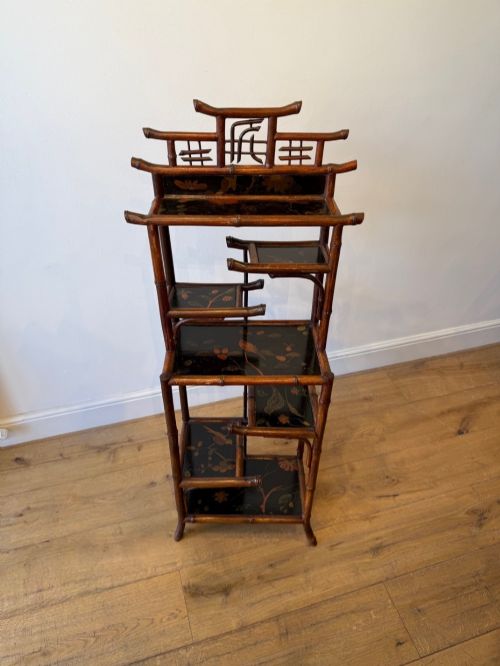
The distinction between standard utility items and superior pieces rests on the complexity of the internal arrangement and the artistry of the lacquer work. Cabinets featuring intricate pagoda tops, original glass, and detailed Japanese-style panels occupy the upper tier of the range.
Quality also depends on the structural integrity of the bamboo stalks and cane bindings, where uniform heat-bending and secure joinery distinguish skilled workshop production from simpler mass-market outputs.
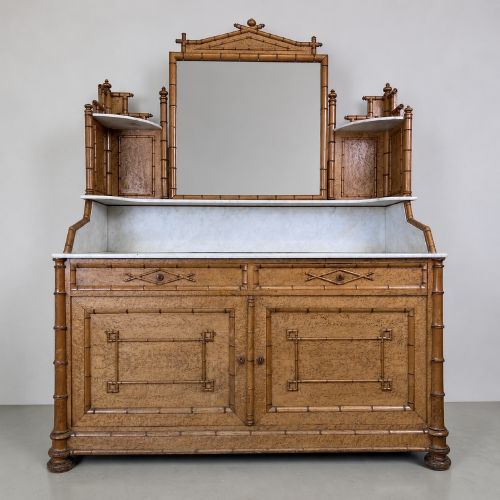
Listings feature natural bamboo, tiger bamboo, pine, and bird's-eye maple combined with lacquer, glass, marble, and brass.
Leonard Wyburd·Liberty and Co
The Victorian Bamboo Cabinet Glossary
- Aesthetic Movement
- A late nineteenth-century design style emphasising visual beauty over narrative content, heavily influenced by Japanese art. This movement popularised the use of bamboo and lacquer in British furniture.
- Tiger bamboo
- A variety of bamboo featuring distinctive dark mottled markings naturally occurring on the cane. Cabinets utilising this material display unique patterned surfaces.
- Chinoiserie
- European interpretations of Chinese artistic traditions applied to furniture decoration. These motifs appear on lacquer panels within late nineteenth-century cabinets.
- Bijouterie table
- A glass-topped display table or cabinet designed for showcasing small valuable objects. Examples from the period integrate bamboo frames with glazed compartments.
Victorian Bamboo Cabinet: Frequently Asked Questions
What periods do these cabinets come from?
The listings on this page originate primarily from the late nineteenth century, specifically spanning the 1870s through to Edwardian examples around 1900. Victorian production forms the core of the available selection.
Craftsmen produced these furnishings during the height of the Aesthetic Movement when imported Japanese and Chinese design motifs strongly influenced British domestic interiors.
How were these cabinets used originally?
Original uses varied widely depending on the specific form of the cabinet, ranging from bedside storage to housing small libraries and music collections. Glazed bookcases and display shelves held precious ceramics and decorative objects.
Smaller table-top cupboards and escritoires provided compact spaces for writing or storing treasured trinkets in parlours and bedrooms.
What is the difference between natural and faux bamboo?
Natural bamboo utilises genuine harvested cane stalks bound together to form the structural frame of the cabinet. This material offers a lightweight and flexible framework characteristic of imported Oriental furniture.
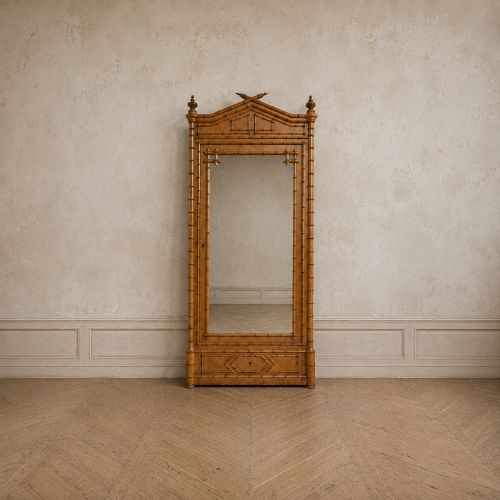
Faux bamboo consists of wood, such as pine or bird's-eye maple, turned and painted by hand to mimic the segmented appearance and texture of real bamboo stalks.
Where did the Aesthetic Movement influence these designs?
The Aesthetic Movement originated in Britain during the late nineteenth century, promoting art for art's sake and integrating Japanese decorative principles into household goods. Makers combined natural bamboo with lacquer panels to capture this exotic aesthetic.
French workshops also adopted these styles, producing variations that incorporated marble tops and mirrored armoires alongside British cabinet-making traditions.
How do I care for a bamboo cabinet?
Maintaining a nineteenth-century bamboo piece requires gentle dusting with a dry cloth to protect the delicate cane bindings and lacquered surfaces. Avoid placing the furniture in direct sunlight or areas with fluctuating humidity.
Keep the natural bamboo and wood conditioned appropriately to prevent the cane from drying out or splitting over time.