
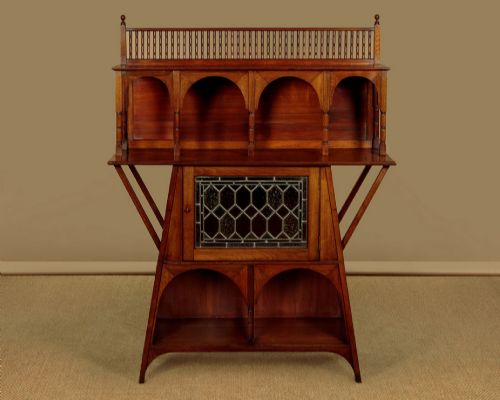
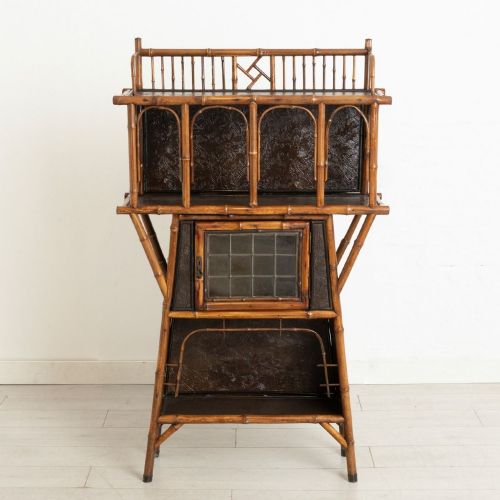
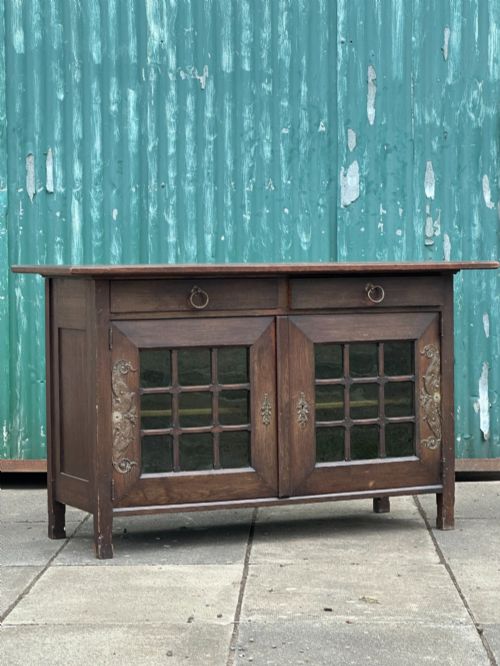


Liberty and Co Cabinet
These liberty and co cabinet pieces bring authentic Arts and Crafts and Aesthetic movement character into a room.
Liberty and Co Cabinet
A liberty and co cabinet brings the distinctive spirit of the firm's London house into domestic spaces, drawing on Arts and Crafts, Aesthetic movement, and Anglo-Moorish styles. Buyers searching this phrase encounter practical storage forms including display cabinets, side cabinets, sideboards, dressers, bureaux, and corner cabinets.
The pieces appearing here span the late nineteenth century into the Edwardian period, often reflecting the aesthetic vision associated with designers like Leonard Wyburd. Oak is the primary wood met on these pieces, alongside occasional examples in walnut, mahogany, and bamboo.
Form follows function in these sturdy domestic pieces, which range from compact corner units to substantial sideboards and bureau bookcases. Every piece carries the hallmarks of British design reform, valuing honest construction and considered decorative detail.
Materials and construction
Cabinet makers relied primarily on solid oak, working the timber to highlight its natural grain within Arts and Crafts designs. Alternative materials such as bamboo, walnut, and mahogany appear alongside contrasting metalwork in brass and copper.
Glazing and leaded glass provide transparency for display sections, whilst embossed paper occasionally introduces pattern and texture to surface areas. Construction techniques prioritise robust joinery suited to daily use in domestic interiors.
The pieces span four decades of production, covering the 1890s, 1900, 1910, and the Edwardian period.
Judging the pieces
Quality rests in the harmony of proportion and the integrity of the timber selection, where figured oak or rich walnut elevates a design. The refinement of decorative metal fittings, from brass hinges to copper backplates, distinguishes finer examples from standard production.
Attribution to specific designers or documented lines adds historical weight, while the precision of joinery and the survival of original glass or leadwork determine the overall standard of preservation.
Liberty and Co·Leonard Wyburd
The Liberty and Co Cabinet Glossary
- Arts and Crafts
- A design movement valuing handcraft, traditional materials, and simple utility over mass production. This style dominates the cabinet forms seen in this collection.
- Aesthetic Movement
- A late nineteenth-century design phase emphasising visual beauty above narrative or moral content. It encouraged eclectic influences including Anglo-Moorish elements.
- Anglo-Moorish
- A decorative style blending British furniture forms with Moorish geometric patterns and lattice work. It frequently appeared in Liberty catalogues through exotic occasional and corner furniture.
- Bureau Bookcase
- A dual-purpose form combining a sloping writing desk with shelving above. These pieces offer practical enclosed storage alongside display space.
- Display Cabinet
- A glazed piece designed to showcase collections of ceramics or curiosities. The glass panels protect objects whilst maintaining clear visibility from the room.
Liberty and Co Cabinet: Frequently Asked Questions
What periods do these cabinets come from?
The pieces span from the late nineteenth century through the Edwardian era, primarily covering the 1890s up to about 1910.
This timeframe captures the height of the Arts and Crafts movement and the commercial ascendancy of Liberty's London furnishing department.
How do I identify an authentic piece?
Look for characteristic construction methods, typical timber choices like solid oak, and stylistic markers associated with the firm's known designers.
Proportions, joinery quality, and specific hardware such as copper or brass handles also provide strong indicators of origin.
Were these items used for dining rooms?
Many forms, particularly the sideboards and dressers, served primarily in dining rooms for storing tableware and serving food.
Smaller cabinets, corner units, and display pieces were typically placed in drawing rooms or hallways to display decorative objects.
What woods were commonly used?
Solid oak remains the most frequently encountered timber across these designs, celebrated for its durability and suitability for Arts and Crafts furniture.
Walnut, mahogany, and bamboo also appear in specific pieces, reflecting the varied aesthetic influences embraced by the firm.