
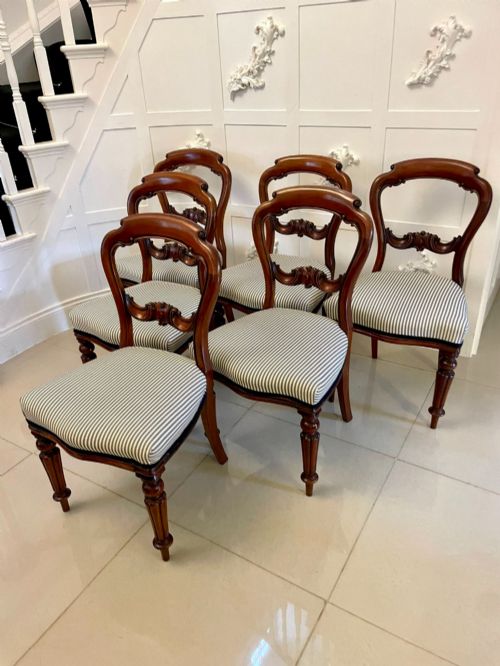
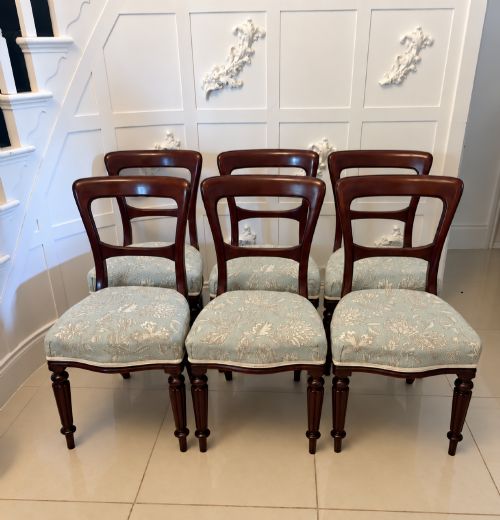
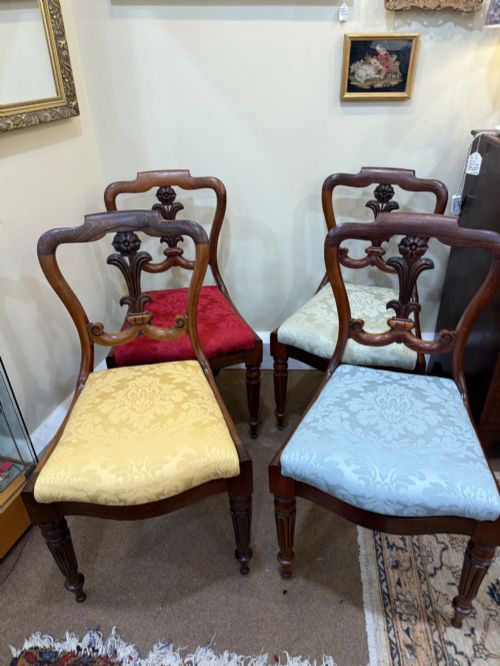
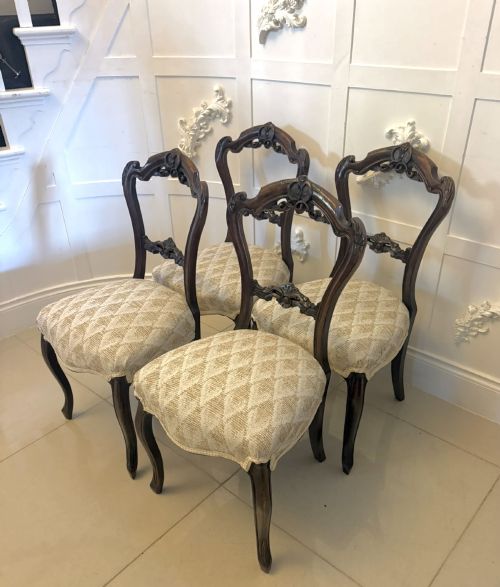
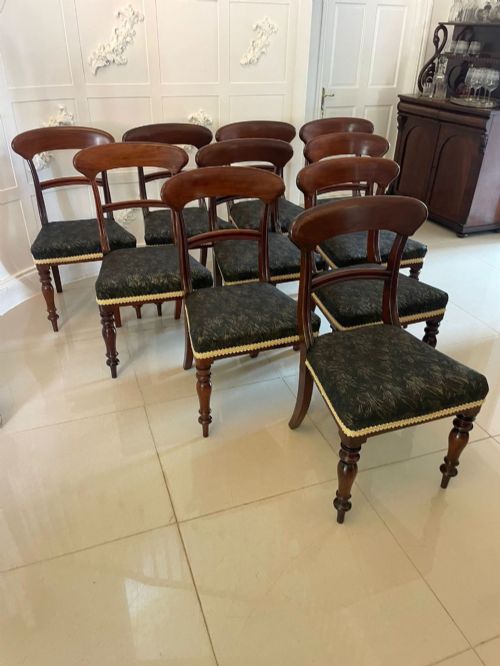
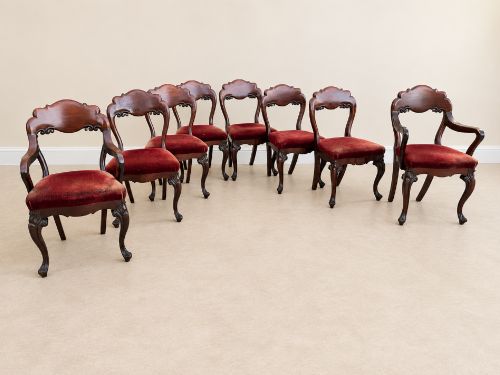
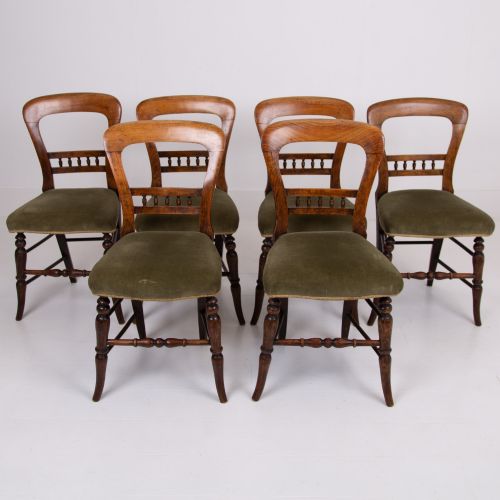
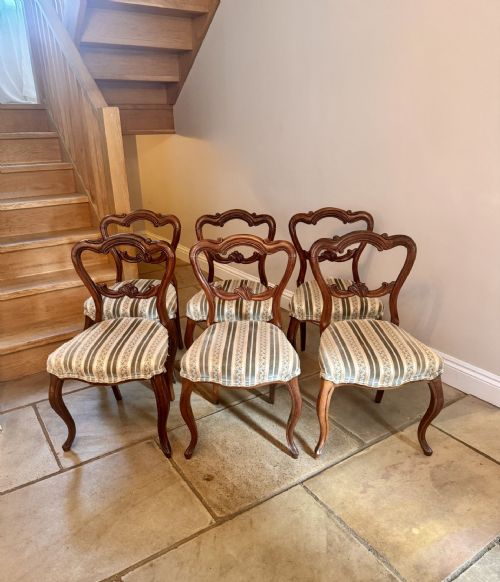
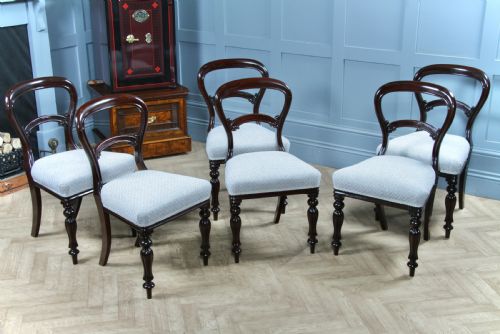
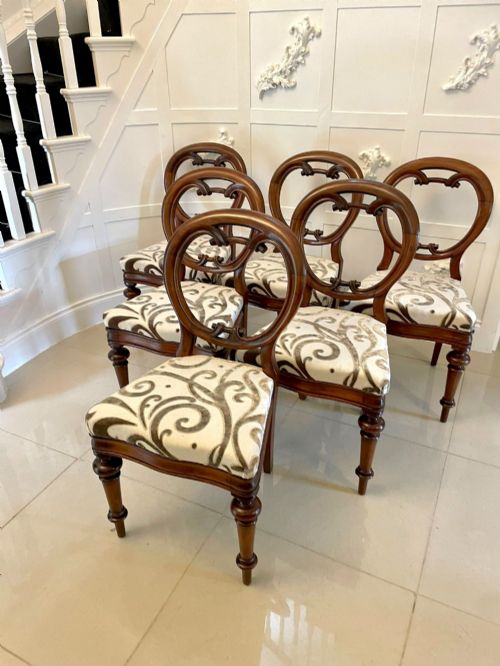
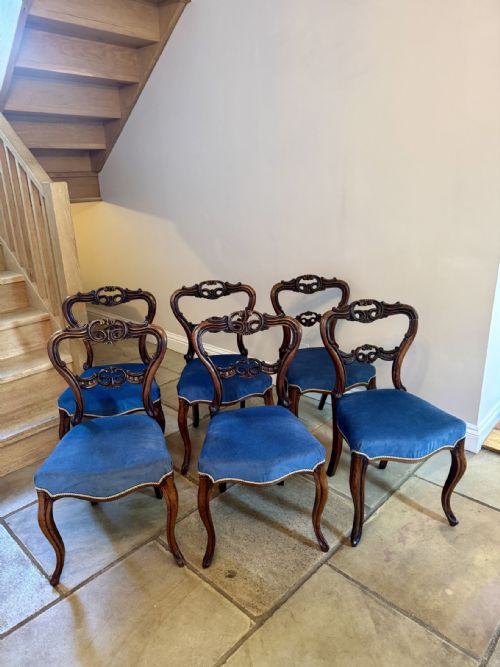
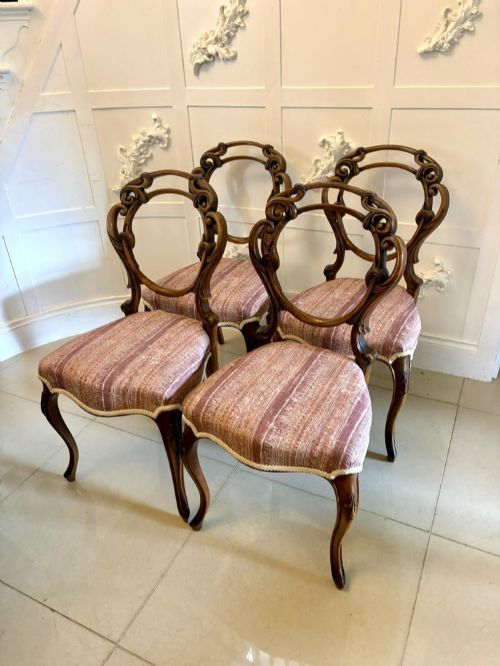
Victorian Balloon Back Chair Set
A victorian balloon back chair set brings curving timber and polished elegance to a dining room, offering sturdy seating formed by masters of nineteenth-century design.
Victorian Balloon Back Chair Set
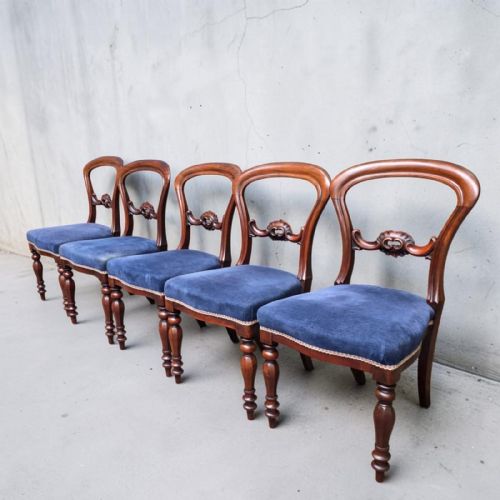
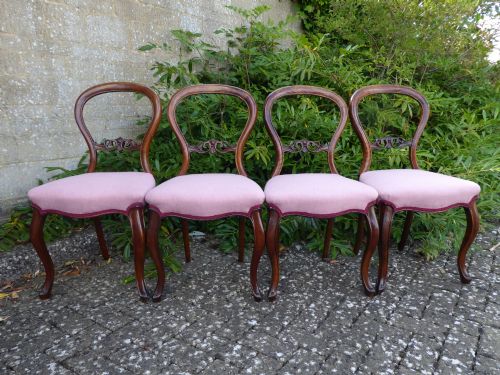
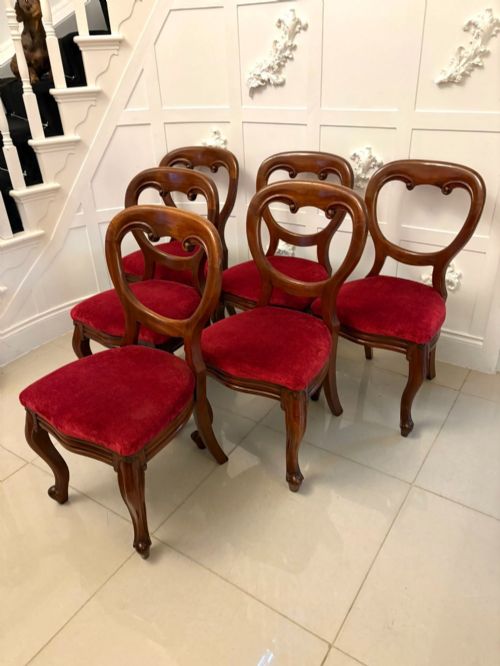
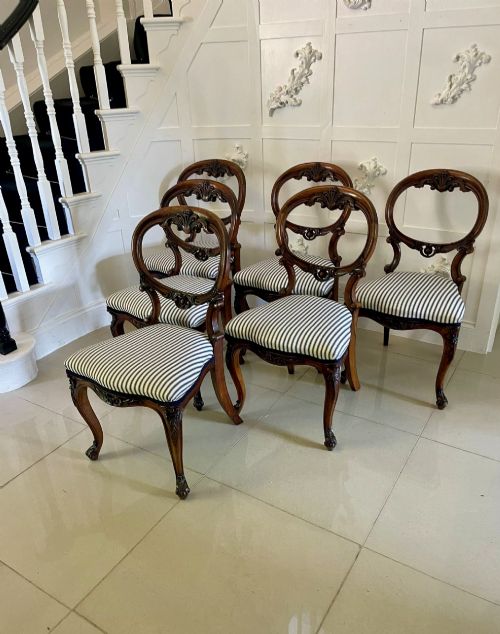
A victorian balloon back chair set consists of dining chairs and side chairs shaped by the distinctive curved backrest resembling an inflated balloon. These assemblies appear most frequently as sets of four, six, eight, or ten pieces dating from the middle decades of the nineteenth century.
Makers produced these dining furniture sets across multiple decades spanning the Victorian era, alongside related examples from the William IV period and Regency transitions. Walnut and mahogany predominate, often formed into matched groups designed to surround a formal dining table.
Materials and Construction
Cabinetmakers constructed these frames using dense hardwoods like mahogany, walnut, and rosewood, which allowed the timber to be steamed and bent into the characteristic continuous loop of the backrest. Carved details were frequently applied by hand to the central splat or frame.
Upholstery fabric, velvet, and textile coverings were secured over padded seats using traditional stuffing techniques, sometimes finished with brass tacks. Brass fittings also reinforced structural joints where necessary.
Materials recorded across these dining sets include solid mahogany, walnut, and rosewood, paired with various upholstery fabrics and brass elements.
Judgments of Quality
Quality rests in the crispness of the carved ornament on the central splat and the structural integrity of the curved back frame where the timber sustains the greatest stress. Superior examples maintain a uniform grain and colour across every piece in the set.
Larger sets of ten or twelve demonstrate greater initial investment and consistency than smaller groups of four. The refinement of the timber preparation and the fidelity of the period stylistic revival further elevate certain sets above standard domestic dining seating.
The Victorian Balloon Back Chair Set Glossary
- Balloon back
- A chair back shaped in a continuous oval curve resembling an inflated balloon. This silhouette defined mid-nineteenth-century dining seating.
- Splat
- The vertical strip of wood rising from the centre of the chair seat to the top rail. In these pieces, the splat often receives elaborate carved decoration.
- Mahogany
- A durable tropical hardwood prized for its reddish-brown tone and resistance to warping. It served as a primary material for Victorian dining furniture.
- Rococo Revival
- A nineteenth-century design movement favouring asymmetrical scrollwork, naturalistic floral carving, and exuberant curves. It heavily influenced Victorian chair ornamentation.
Victorian Balloon Back Chair Set: Frequently Asked Questions
How many chairs come in a typical set?
Sets commonly comprise four or six chairs suitable for standard dining tables. Larger configurations of eight, ten, or twelve pieces also appear for grander dining rooms.
Buyers often select larger groups to accommodate extended tables, though smaller sets remain practical for daily dining.
Were these chairs used only for dining?
While primarily manufactured as dining chairs, these pieces functioned as occasional or side seating in drawing rooms and parlours. Their formal appearance suited public rooms of the Victorian home.
They stood around dining tables for meals and were positioned against walls when floor space was required for entertaining.
How do I distinguish walnut from mahogany?
Mahogany displays a deep reddish-brown hue with a fine, straight grain that takes a high polish. Walnut offers a richer, darker brown colour often marked by distinctive swirling grain patterns.
Both timbers were heavily utilised by nineteenth-century cabinetmakers for high-status dining sets.
What is the difference between Victorian and William IV styles?
William IV furniture represents a transitional phase occurring immediately before the Victorian era, featuring heavier proportions and robust architectural details. Victorian designs developed lighter, more curvilinear forms like the balloon back.
Both periods relied on dense hardwoods, but the later Victorian pieces leaned towards elaborate scrollwork and revived rococo motifs.