



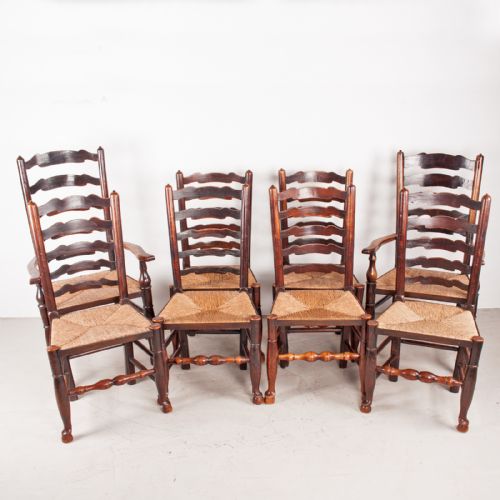


Victorian Ash Kitchen Chairs
When you search for victorian ash kitchen chairs, you find sturdy vernacular seating built for hard domestic use.
Victorian Ash Kitchen Chairs
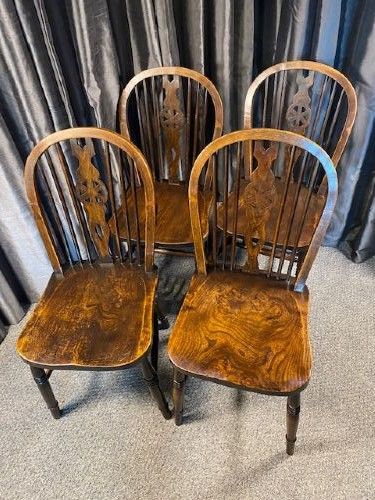
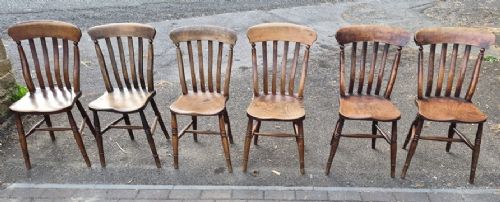
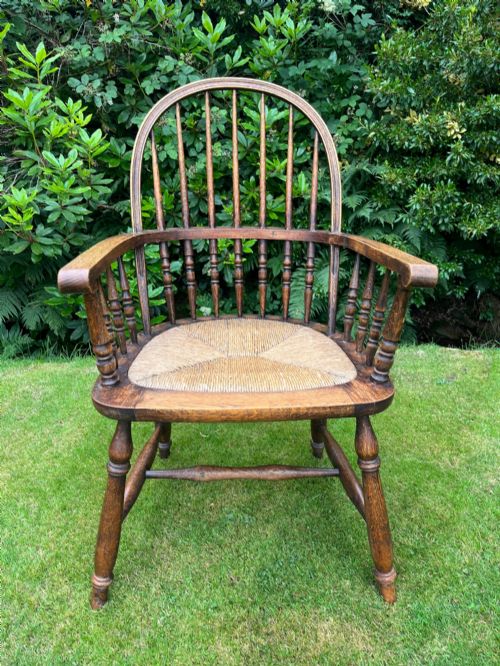
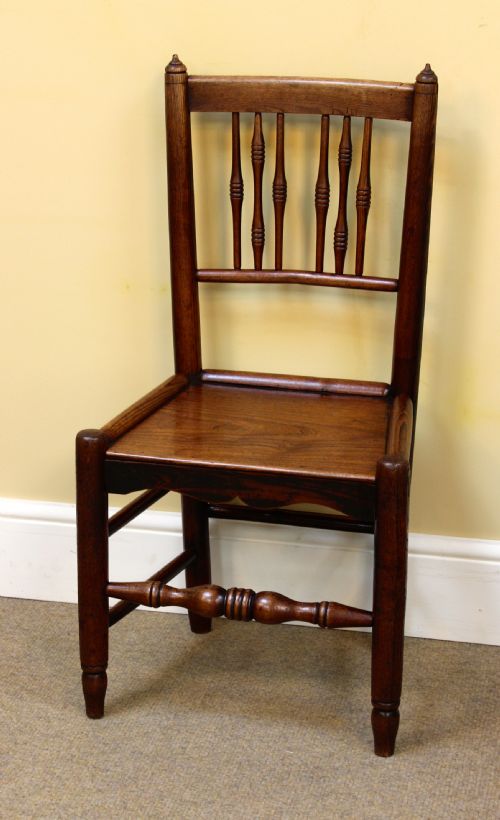
Victorian ash kitchen chairs comprise vernacular dining chairs, carvers and low back armchairs produced across the nineteenth century and into the early twentieth century. These rustic farmhouse seats were designed for heavy daily use in domestic kitchens, dairies and country houses.
The pieces on this page appear predominantly as matched sets or single items combining ash frames with elm seats, often following Windsor, ladderback or stick back traditions. Forms range from simple low back stick backs to broad arm Windsors and wheel back dining chairs.
Origins trace largely to English country workshops, with Thames Valley examples appearing alongside regional variants from Lancashire and the West Country. Buyers encounter everything from single carvers to large sets numbering up to sixteen matching chairs.
Materials and Construction
Traditional makers selected ash for its remarkable tensile strength and flexibility, employing it primarily for turned spindle backs, legs and bowed frames. Elm was universally chosen for the saddle-shaped seats because its interlocking grain resisted splitting under heavy downward pressure.
Makers occasionally introduced beech for turned components or framing members alongside occasional rush for woven seating surfaces. Component parts were typically turned on foot-powered lathes and assembled using traditional wedged tenon joints.
Victorian Ash Kitchen Chairs Retail Price Guide 2026
Typical asking prices for victorian ash kitchen chairs among the pieces listed under this phrase on Sellingantiques today, from the lower quarter to the upper quarter. They describe what is for sale here now, not the wider market.
Current listings demonstrate a prevalence of nineteenth century ash and elm Windsor forms, alongside ladderback and stick back variations from English country workshops.
Evaluating Quality
The hierarchy of quality in these chairs rests on the harmony of timber selection, the crispness of the original turning and the integrity of the underlying construction. Superior examples retain matching grain patterns across the ash spindles and show deep, well-carved elm saddles shaped for comfort.
Greater value attaches to untouched surfaces displaying natural patination rather than stripped or heavily refinished timber. Sets that maintain uniform proportions and original wedged joints command higher regard than assembled groups compiled at later dates.
The Victorian Ash Kitchen Chairs Glossary
- Windsor
- A traditional wooden chair built with a thick solid timber seat into which the legs and back spindles are separately tenoned. This construction method provides exceptional rigidity.
- Elm saddle
- A wooden seat base scooped and hollowed into a shallow contour for ergonomic comfort. Makers relied on elm for this component because its dense, interwoven grain prevented cracking.
- Stick back
- A chair design featuring simple vertical spindles inserted directly into the seat. These functional country pieces rely on minimal framing for structural support.
- Wheel back
- A Windsor chair variation featuring a pierced central splat carved in the shape of a spoked carriage wheel. This decorative motif became popular during the middle and late nineteenth century.
- Carver
- An armchair designed with low wooden arms, traditionally placed at the heads of a dining table. These pieces match the smaller side chairs in a larger dining set.
Victorian Ash Kitchen Chairs: Frequently Asked Questions
How do I spot a matched set?
Look closely at the turned details on the front legs and the height of the hoop backs across the group. Subtle variations in timber colour or spindle thickness often reveal whether chairs started life together.
Larger dining sets frequently represent assembled groups rather than original factory pairs. Checking the underside of the elm seats for maker marks or identical tool scoring helps confirm a unified origin.
Were these chairs used only in kitchens?
While named for domestic food preparation areas, these robust seats saw service throughout nineteenth-century farmhouses, cottages and rural institutions. Their durable construction suited dairies, pantries and everyday dining rooms alike.
As country furniture gained popularity among collectors, many migrated into formal living spaces. Their utilitarian origins remain visible in the heavy wear patterns found on the footrests and arm terminals.
How do I care for ash and elm wood?
Keep these chairs away from direct heat sources and rapid temperature swings to prevent the ash spindles from drying and loosening. Applying a neutral beeswax polish periodically helps nourish the dry nineteenth-century timber.
Avoid modern liquid silicone sprays which can penetrate open grain pores and degrade the original surface patina. Gentle dusting with a dry cloth is sufficient for regular maintenance.
What is a harlequin set?
A harlequin set is a collection of chairs sharing a general style, period or regional origin without being identical in every detail. These groupings typically feature matching timbers and construction methods while varying slightly in back design or turning.
Such sets reflect historical country house furnishing practices where chairs were gathered over time rather than purchased all at once. They offer a flexible option for buyers seeking larger seating arrangements.
How do I date a Windsor chair?
Dating relies on examining the construction methods used for the arm supports, the thickness of the hoop and the shaping of the seat. Earlier examples from the mid-nineteenth century often feature broader saddle seats and thicker turned undercarriages.
Later Victorian and Edwardian productions tended towards lighter proportions and mass-produced components. Comparing the joinery style against dated regional exemplars provides the most reliable guide.