

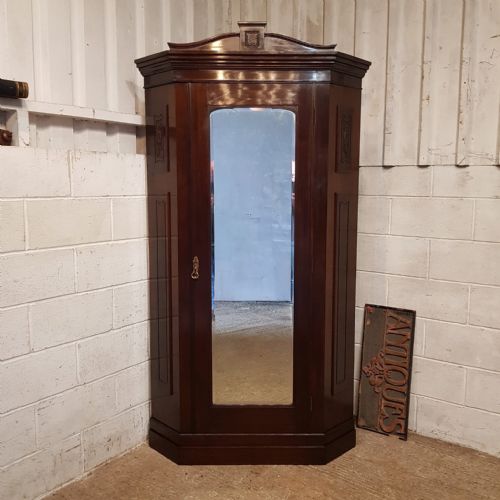


Victorian Armoire Mirrored Door
A victorian armoire mirrored door brings grand scale and reflective depth to a bedroom, offering substantial hanging storage framed in rich nineteenth-century timber.

Victorian Armoire Mirrored Door
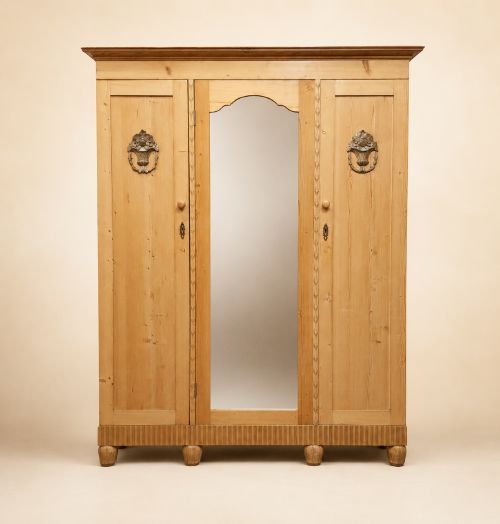
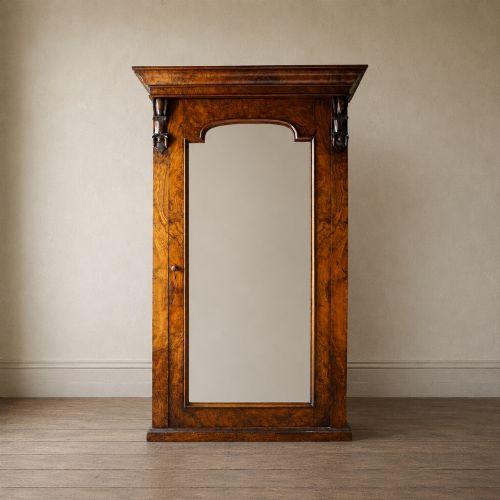
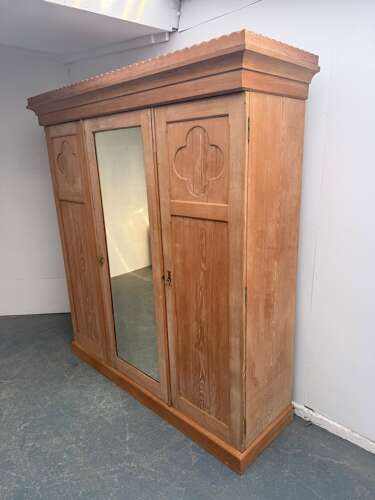
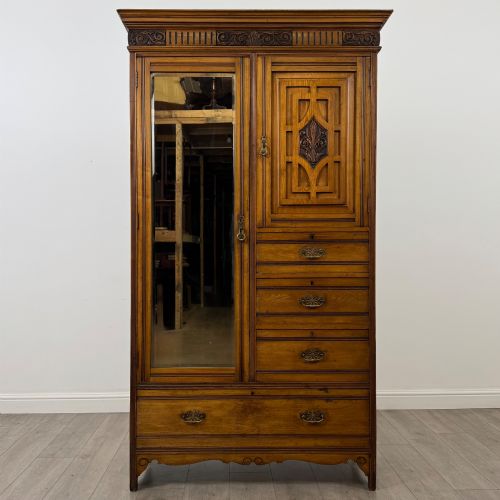
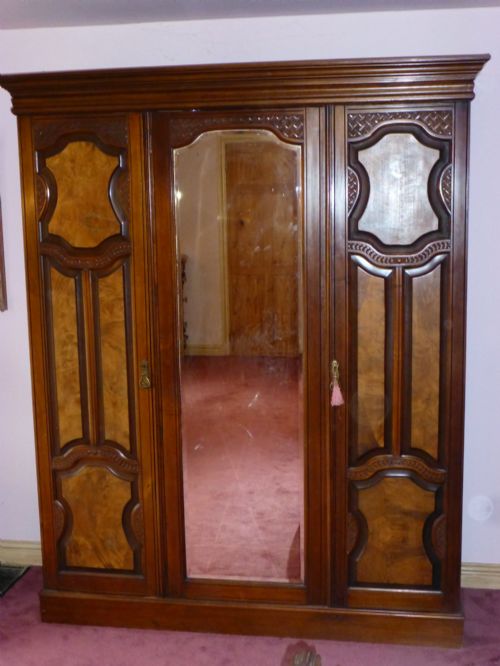
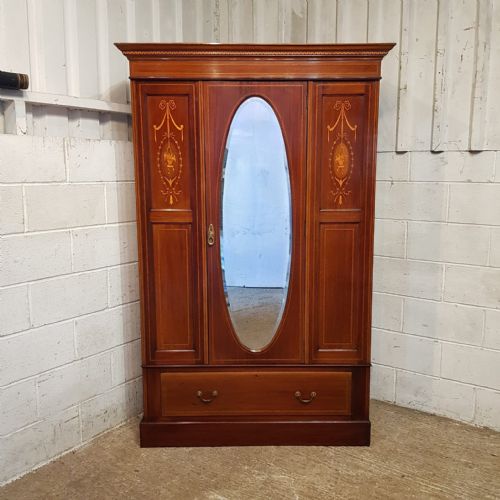
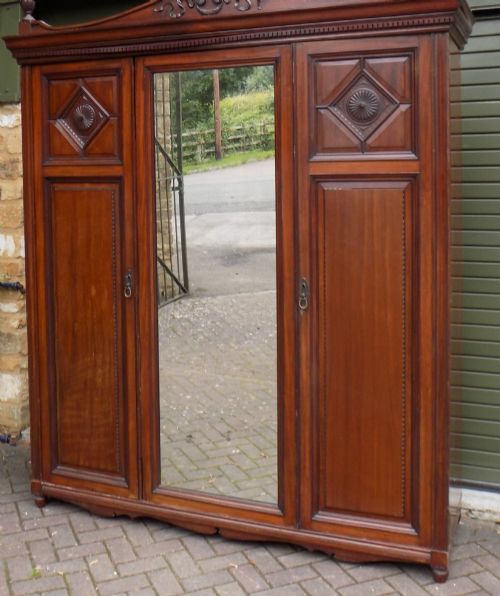
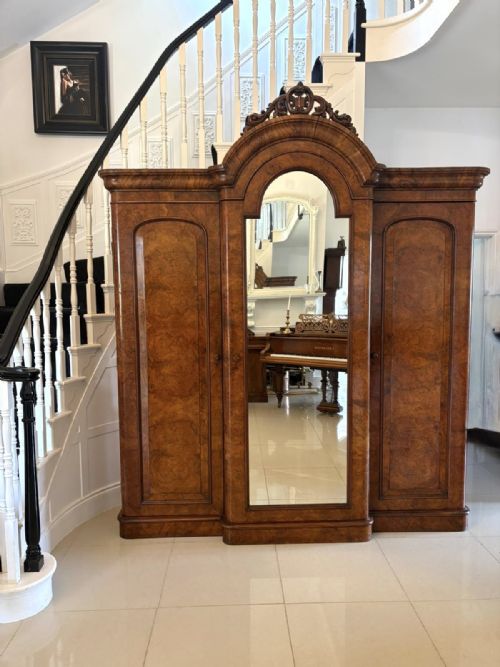
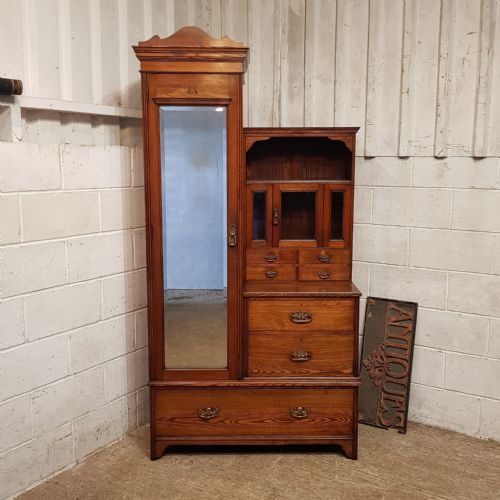
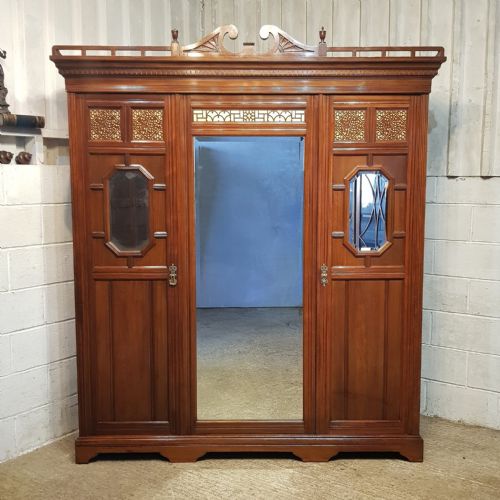
A victorian armoire mirrored door primarily takes the form of a wardrobe, varying from single-door units to expansive triple and quadruple configurations. These pieces emerge chiefly from the nineteenth century, spanning periods from the eighteen-sixties through to Edwardian years, alongside styles such as Aesthetic Movement and Arts and Crafts.
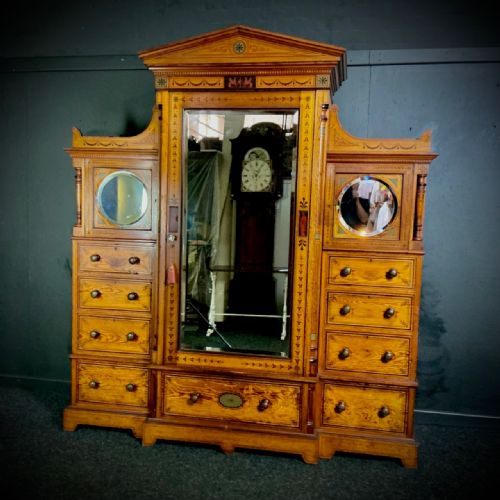
Buyers encounter single mirrored wardrobes designed for compact spaces alongside large breakfront and combination compactum wardrobes fitted with drawers and compartments. Materials range from mahogany and burr walnut to ash, pine, oak, and satinwood, occasionally appearing in miniature furniture forms.
Materials and Construction Techniques
Cabinet makers utilised solid timbers and decorative veneers, applying burr walnut, mahogany, ash, and pollard oak over sturdy carcases of pine or oak. Glass forms the central mirrored doors, while brass provides hardware for handles, hooks, and hanging rails.
Joinery techniques include frame and panel construction for large wardrobe doors, alongside marquetry inlay and carved ornamentation found in Aesthetic Movement and late nineteenth-century pieces.
One tiny oak compactum wardrobe stands ready to house miniature garments.
Distinctions in Quality and Craftsmanship
The distinction between standard examples and the finest pieces rests upon timber selection and the ambition of the design, such as figured burr walnut veneers or complex breakfront configurations. Master workshops executed precise marquetry inlay and carved details that elevate the piece beyond simple utility.
Proportion and structural integrity separate robustly built combination compactums from simpler single wardrobes, with high-quality brasswork and heavy bevelled mirror glass indicating superior manufacture.
Holland and Sons·Gillows of Lancaster·Shapland and Petter
The Victorian Armoire Mirrored Door Glossary
- Compactum
- A multi-compartment wardrobe combining hanging space with internal drawers, shelves, and linen presses. This form maximises storage within a single footprint.
- Breakfront
- A piece of furniture where the central section projects forward from the flanking outer wings. It creates architectural depth on large multi-door wardrobes.
- Aesthetic Movement
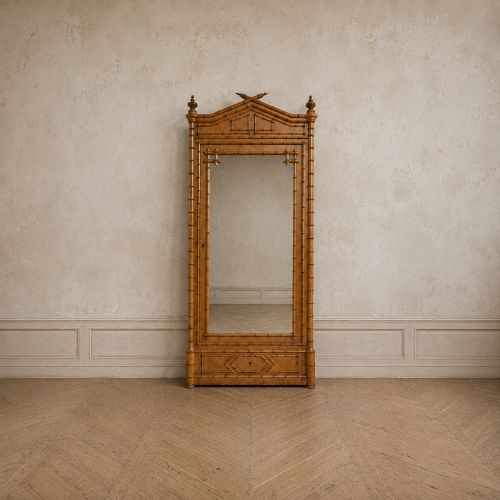
- A late nineteenth-century design style focusing on artistic reform, simplicity, and refined surface decoration rather than heavy historicism. It often utilised exotic woods and stylised carving.
- Faux Bamboo
- Carved wood shaped to imitate the segmented stalks of natural bamboo. This technique gained popularity during the French and British Aesthetic periods.
- Pollard Oak
- Timber taken from trees that were pollarded, resulting in timber with a dense, highly figured cluster of knots and rings. It produces a rich, mottled grain pattern.
Victorian Armoire Mirrored Door: Frequently Asked Questions
How do I fit a large wardrobe in a modern bedroom?
Many nineteenth-century wardrobes were constructed to dismantle into sections for transport and installation in upper rooms.
Checking the modular construction of base, cornice, and side sections allows buyers to negotiate low ceilings and narrow stairways during placement.
What is the difference between a wardrobe and an armoire?
While modern usage often treats the terms interchangeably, nineteenth-century pieces described as armoires frequently reflect continental or French design influences.
Wardrobes in British cabinetry tended toward architectural breakfronts and fitted compactum interiors with designated spaces for gentleman's attire.
How should I care for antique wood and mirror glass?
Timber surfaces require occasional treatment with natural waxes to maintain the lustre of mahogany, walnut, and ash without building up heavy chemical layers.
Mirror glass benefits from gentle cleaning with non-ammonia solutions to protect both the silver backing and the surrounding wooden rebate.
Can I dismantle a triple wardrobe for moving?
Most large nineteenth-century multi-door wardrobes and compactums use pegged or bolted knock-down construction designed specifically for movement between rooms.
Marking internal components during disassembly ensures correct alignment of doors, cornices, and internal shelving upon reassembly.