

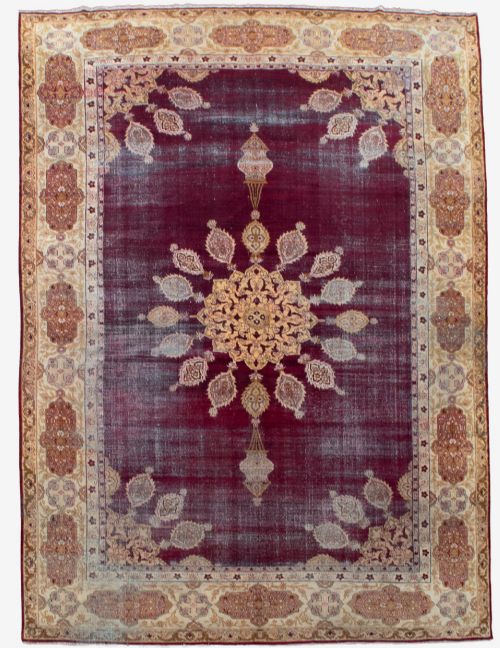
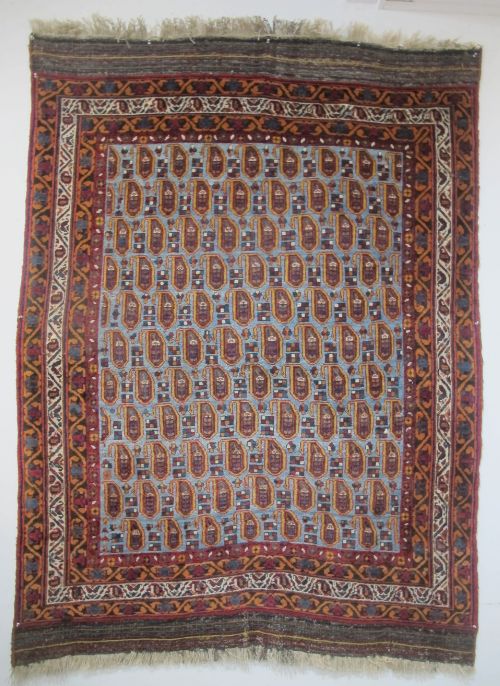
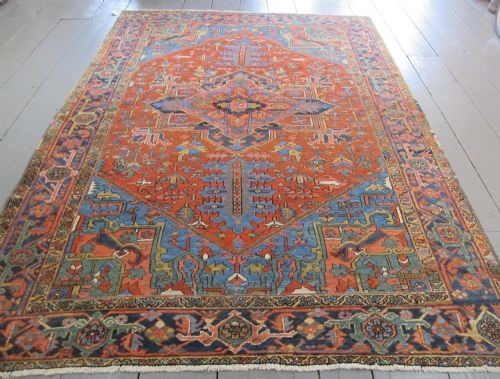


Victorian Area Rug
When choosing a Victorian area rug, you are selecting a floor covering that bridges nineteenth-century European interiors with traditional weaving traditions.
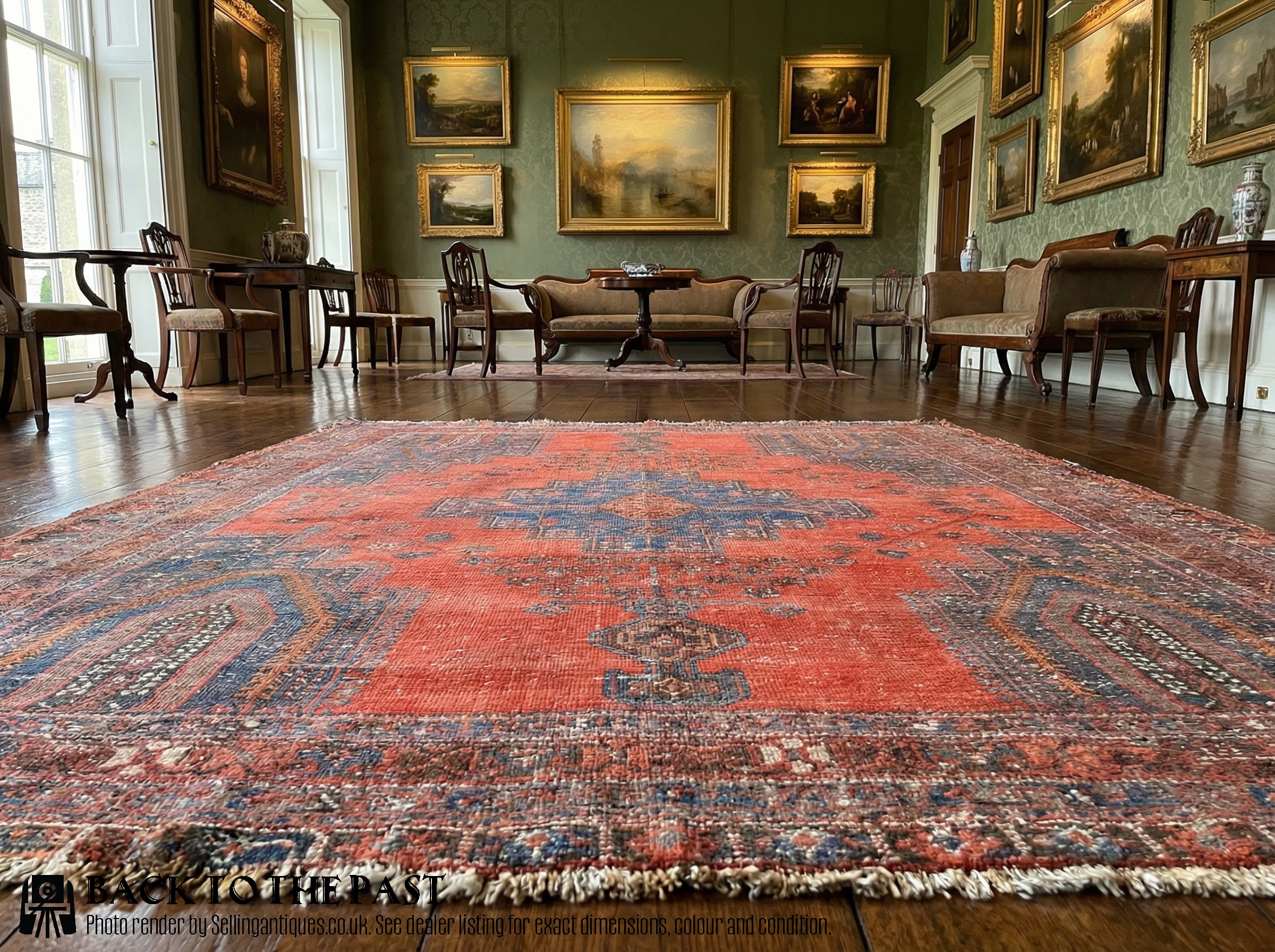
Victorian Area Rug
A victorian area rug encompasses hand-knotted and woven carpets originating from nineteenth-century production centres in Persia, India, the Caucasus, and Anatolia, alongside domestic English needlepoint examples.
The pieces available here lean heavily toward Persian village and city workshops, including Heriz, Sultanabad, Fereghan, and tabular tribal pieces from Baluch and Afshar groups.
Makers and weavers of this era produced substantial room-size carpets as well as smaller scatter rugs, utilising traditional floral, geometric, and medallion layouts to satisfy both European trade demands and local regional tastes.
Materials and construction
The foundation of these floor coverings typically relies on spun wool for the pile, supported by cotton warps andwefts, or occasionally cotton canvas for specific needlepoint structures.
Natural dyes provide the palette, yielding rich reds, indigos, ivories, and earth tones that weather with depth across decades of use.
Weavers employed asymmetric or symmetric knots depending on the regional tradition, anchoring the pile firmly into the cotton framework to create a durable textile suitable for heavy domestic foot traffic.
Victorian Area Rug Retail Price Guide 2026
Typical asking prices for victorian area rug among the pieces listed under this phrase on Sellingantiques today, from the lower quarter to the upper quarter. They describe what is for sale here now, not the wider market.
Listings feature nineteenth-century textiles employing wool pile on cotton foundations, representing workshops across Persia, India, Anatolia, and the Caucasus.
Evaluating the weaving
Knot density and structural integrity dictate the distinction between standard utilitarian floor coverings and finer workshop productions.
The clarity of the design and the consistency of the natural dye saturation reveal the skill of the weaver and the quality of the wool employed.
Original edge bindings, complete borders, and minimal pile loss preserve the proportional balance intended by the nineteenth-century designer.
The Victorian Area Rug Glossary
- Medallion
- A central ornamental motif dominating the field of the rug. This geometric or floral centrepiece draws the eye and structures the surrounding design.
- Warp
- The vertical threads stretched tightly on the loom before weaving begins. The pile knots are tied around these stationary foundation lines.
- Weft
- The horizontal threads passed alternately over and under the warp threads after each row of knots. This locks the structure in place.
- Pile
- The dense upright surface of yarn formed by the ends of the knots. Its height and density determine the texture and weight of the textile.
- Natural Dyes
- Colourants extracted from plants, insects, and minerals before the widespread adoption of synthetic alternatives. They produce complex, harmonious patination over time.
Victorian Area Rug: Frequently Asked Questions
How do I clean an old wool rug?
Gentle surface vacuuming without a rotating brush removes embedded dust without straining the historic cotton and wool fibres. Professional antique textile washing is necessary for deeper cleaning to prevent dye bleeding.
Avoid harsh chemical detergents and excessive moisture, which weaken the natural structure. Proper maintenance preserves the integrity of the weave for continued domestic placement.
Where were these carpets originally used?
Nineteenth-century consumers placed these textiles in substantial drawing rooms, libraries, and country house reception spaces. European merchants commissioned specific dimensions and palettes from Persian and Indian workshops to suit Victorian interior design.
Smaller tribal and village pieces served nomadic or regional domestic functions before entering the export market. Today, they transition easily into modern living rooms and studies as anchoring floor elements.
How do I distinguish regional styles?
Geographic origin reveals itself through specific structural habits, colour combinations, and motif vocabularies. For instance, Heriz carpets often display bold geometric medallions, while Fereghan and Sultanabad pieces favour intricate all-over floral repeats.
Examining the selvedge, fringe construction, and knot type clarifies whether a piece originates from northwest Persia, the Caucasus, or central Asia.
Are these floor coverings suitable for heavy foot traffic?
Wool pile possesses natural resilience and lanolin content that resists dirt and stands up well to regular walking. Placing a quality underlay beneath the textile prevents slipping and reduces fibre friction against hard flooring.
Rotating the piece periodically ensures even wear patterns across areas exposed to direct sunlight or heavier daily use.