


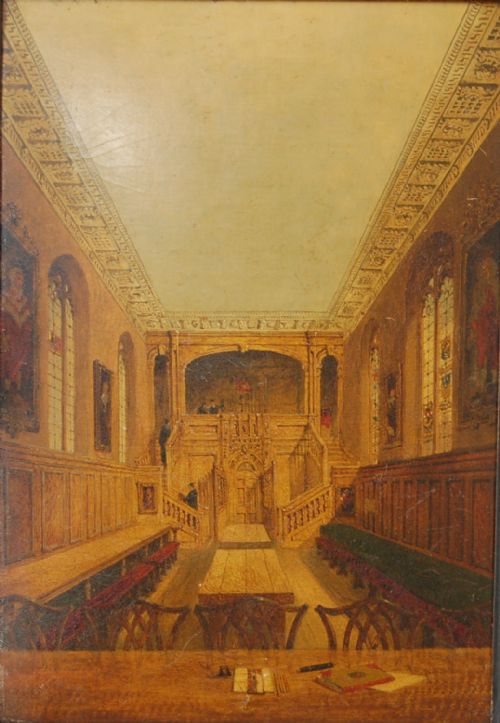


Victorian Architectural Oil Painting
A victorian architectural oil painting captures stone facades, street scenes and grand interiors with the rich depth of nineteenth century pigment.
Victorian Architectural Oil Painting
A victorian architectural oil painting focuses upon buildings, townscapes, castles and interior rooms, recording the masonry and perspective of the period. These works encompass street scenes, cathedral facades and historic castles rendered by artists across the nineteenth century.
The selection ranges from naive depictions of figures in architectural settings to formal townscapes of Dutch and continental streets. Buyers encounter canvases depicting British landmarks alongside grand European views signed by period artists.
How they were made
Artists utilised oil paint applied to canvas, board or panel, building up pigments to achieve depth in stone and shadow. Many of these works retain their original gesso and giltwood frames, which complement the scale of the composition.
The technique relies upon precise brushwork to delineate architectural details such as gothic arches, castle stonework and town facades. Prepared canvas and wooden boards served as the primary supports for these nineteenth century pigments.
Victorian Architectural Oil Painting Retail Price Guide 2026
Typical asking prices for victorian architectural oil painting among the pieces listed under this phrase on Sellingantiques today, from the lower quarter to the upper quarter. They describe what is for sale here now, not the wider market.
A saintly procession winds its way past medieval brickwork, reminding us that nineteenth century town planners also had to dodge holy traffic.
What varies in quality
The distinction rests in the handling of perspective, the precision of the architectural draughtsmanship and the atmosphere achieved within the street or interior. Stronger examples demonstrate confident brushwork in rendering stone textures and human figures.
Framing forms another division, as period giltwood and gesso frames matching the age of the canvas elevate the presentation. The reputation of the painter and the specificity of the historic location further distinguish individual works.
Cornelis Christian Dommersen·Frederick Tully Lott·William George Meadows·Lewis J Wood·Karl Herrle·Samuel Sidley·Alfred Pollentine·Henry Schafer·Joseph Murray Ince
The Victorian Architectural Oil Painting Glossary
- Oil on canvas
- Pigment mixed with drying oil applied to a woven fabric support stretched over a wooden frame. This surface allowed artists to create rich textures and layered tones for architectural facades.
- Giltwood
- Wood carved and covered with a thin layer of gold leaf, often applied over a prepared gesso base. These frames surround nineteenth century paintings to accent the composition.
- Naive art
- A style produced by artists without formal academic training, characterised by flattened perspective and direct charm. In architectural subjects, this approach yields unique interpretations of buildings and figures.
- Townscape
- A painting depicting urban architecture, streets, town squares and historic buildings. These views document nineteenth century town planning and street life.
Victorian Architectural Oil Painting: Frequently Asked Questions
What subjects do these paintings show?
These works depict historic castles, continental street scenes, cathedrals and formal interior rooms from the nineteenth century.
Many pieces record specific locations such as Windsor Castle, Venice, Bruges and various Welsh and English country houses.
How should I hang a framed oil painting?
Select a wall away from direct sunlight and steady heat sources to protect the canvas and the giltwood frame.
Ensure the hanging fixings match the weight of the frame and the construction of your wall.
How do I identify the period?
Examine the style of the architecture depicted, the clothing of any figures, and the materials of the canvas and stretcher.
Signatures, dates and framing details also provide clear indicators of nineteenth century execution.
Are these paintings signed by artists?
Several pieces feature signatures, monograms or contemporary inscriptions identifying the painter or the historic view.
Unsigned works rely on stylistic comparisons, subject matter and framing to indicate their nineteenth century origins.