


Victorian Architectural Bracket Shelf
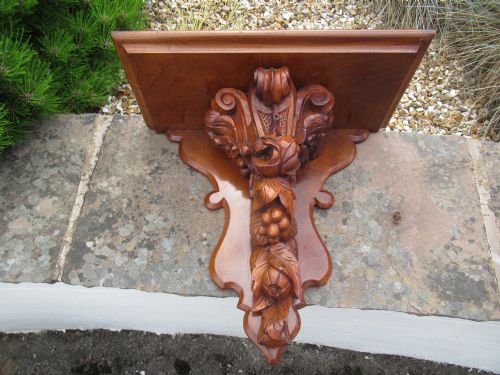
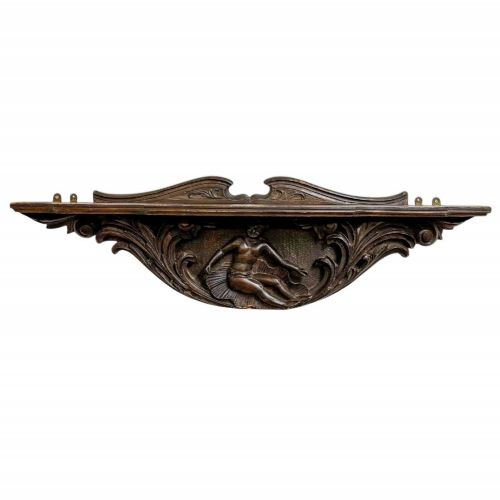
These victorian architectural bracket shelf examples bring solid timber, cast metal and terracotta projection into rooms that need character on the walls.
Victorian Architectural Bracket Shelf
A victorian architectural bracket shelf serves both structural and decorative purposes, projecting outward from the wall to support objects or simply framing a space. Most examples found on this page date from the nineteenth century, spanning various revivals and industrial forms.
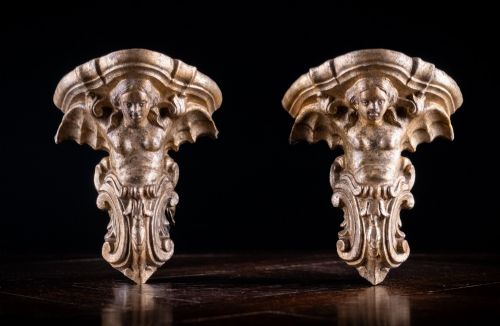
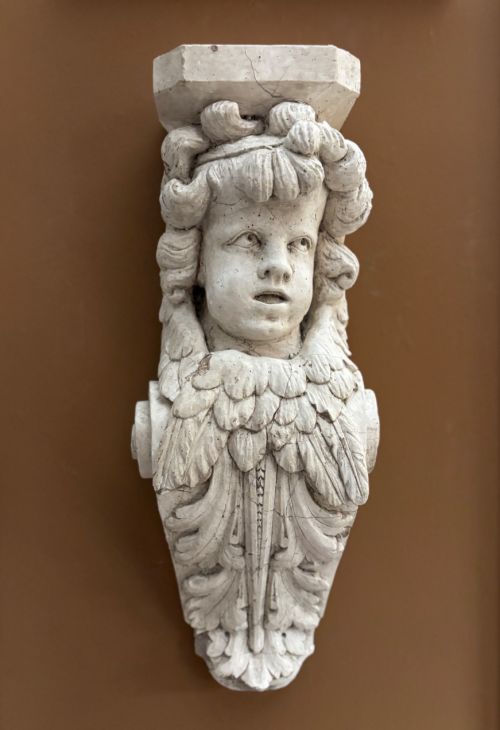
The selection here encompasses carved timber brackets, heavy cast iron shelf supports, and terracotta wall ornaments. Wall display brackets and corbels dominate the available forms, reflecting the period taste for ornamental projection.
Origins stretch across the Victorian era into the early twentieth century, taking in Gothic Revival, Neoclassical and industrial aesthetics. These fixtures emerge from domestic and architectural salvage contexts alike.
How they were made
Makers shaped these objects using dense hardwoods like walnut, oak and rosewood, alongside softer carved pine. Woodcarvers worked by hand to create intricate foliate details, figures and geometric profiles.
Metal versions rely on cast iron, bronze and brass, often utilising industrial foundry techniques for heavy shelf brackets and sink supports. Gilding and ebonising finish certain surfaces, while terracotta elements introduce moulded clay shaped into figures and sirens.
At least one winged siren and a putto manage to keep watch from the walls without ever flying away.
What varies in quality
Depth of carving and sharpness of cast detail separate ordinary utility brackets from finer decorative works. Hand-carved timber pieces show crisp undercutting and deliberate tool marks, whereas lesser items rely on mechanical repetition or soft moulding.
Material choice dictates both weight and longevity, with solid walnut and heavy bronze sitting at the upper end of the scale. Surviving original finishes, such as period gilt or patinated iron, hold greater appeal than stripped or heavily altered surfaces.
The Victorian Architectural Bracket Shelf Glossary
- Corbel
- A structural piece of stone, wood or metal jutting from a wall to carry a superincumbent weight. In these listings, they appear as decorative wall supports.
- Gothic Revival
- An architectural style that drew inspiration from medieval design, featuring pointed arches and heavy ornamentation. This style heavily influences many nineteenth-century brackets.
- Fusee
- A conical pulley used in clock movements to maintain equal power as the mainspring unwinds. Several bracket clocks on this page feature this mechanism.
- Ebonised
- Wood finished with a dark stain or polish to imitate ebony. This treatment was common during the aesthetic movement of the late nineteenth century.
- Pediment
- A triangular or curved architectural crown placed above doors, windows or overdoors. The examples here incorporate integral display shelves.
Victorian Architectural Bracket Shelf: Frequently Asked Questions
How were these shelves originally used?
These brackets and shelves supported heavy books, Mantel clocks, porcelain figures and decorative urns in Victorian reception rooms and libraries.
They also functioned as structural corbels over doors and windows, or as decorative wall furniture designed to display small collections.
How do I mount a heavy iron bracket?
Heavy cast iron and bronze brackets require direct fixing into masonry or solid timber studs using appropriaterawl plugs and screws.
Given the substantial weight of iron and dense hardwoods, secure wall anchoring is essential before placing any load upon the shelf.
What is the difference between a bracket and a corbel?
A corbel is typically a solid block of stone, wood or metal projecting from a wall to bear a heavy load. A bracket often has a more open profile with a vertical backplate and a horizontal support arm.
In Victorian architecture, the terms often overlap depending on whether the object held structural weight or served purely as a decorative shelf.
How do I date a Victorian shelf?
Dating relies on timber species, casting quality and stylistic markers such as Gothic Revival motifs or aesthetic movement ebonising. Nineteenth-century pieces often show hand-tool marks on the reverse and traditional fixings.
Later industrial brackets from the early twentieth century generally feature simpler utilitarian iron casting with minimal decorative carving.