




Victorian Aneroid Weather Glass
A victorian aneroid weather glass measures atmospheric pressure without mercury, bringing reliable domestic forecasting and handsome nineteenth-century cabinetry into your home.
Victorian Aneroid Weather Glass
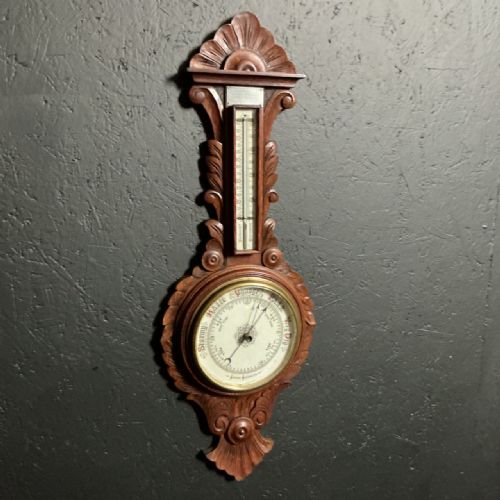
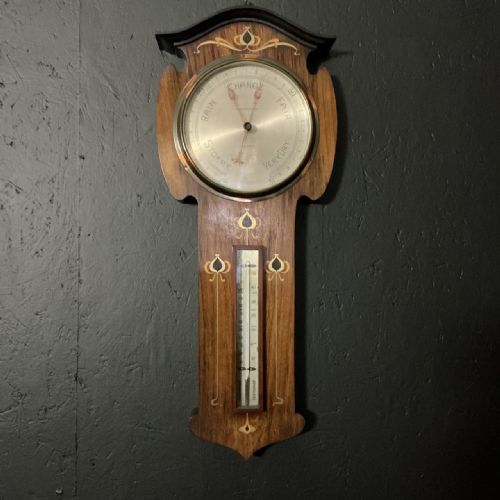
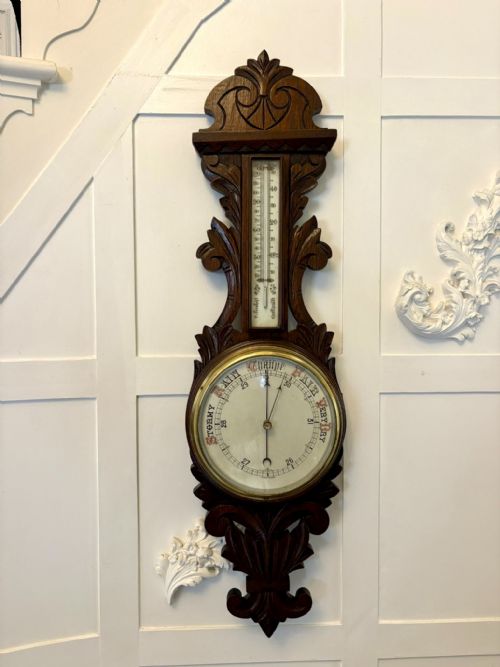
When you search for a victorian aneroid weather glass, you encounter sophisticated scientific instruments housed in decorative timber frames that span the nineteenth century and into the Edwardian era. These pieces measure air pressure via a sealed metal capsule rather than liquid mercury, making them stable enough for domestic wall hanging and transport.
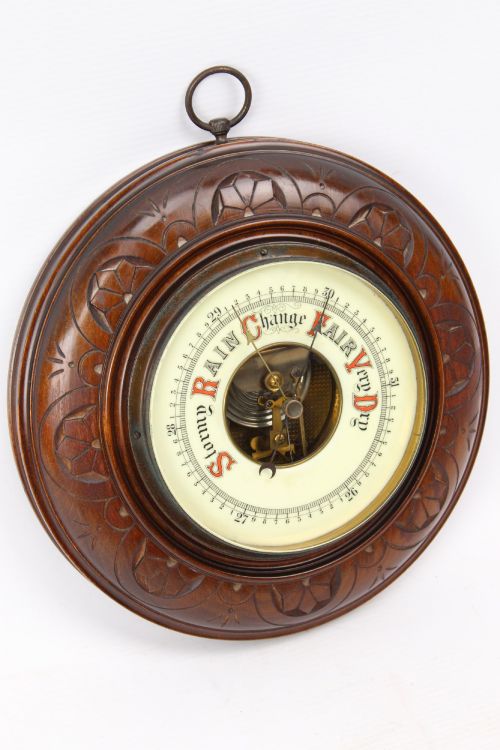
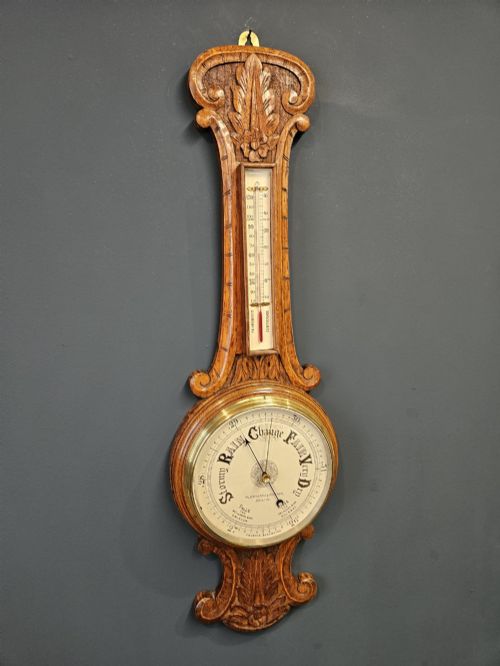
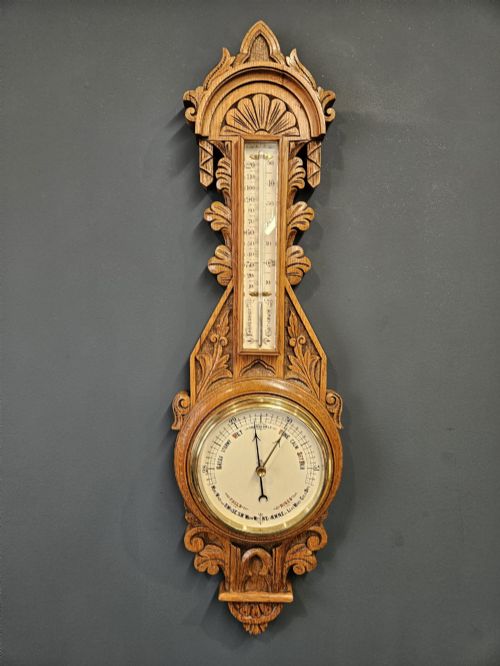
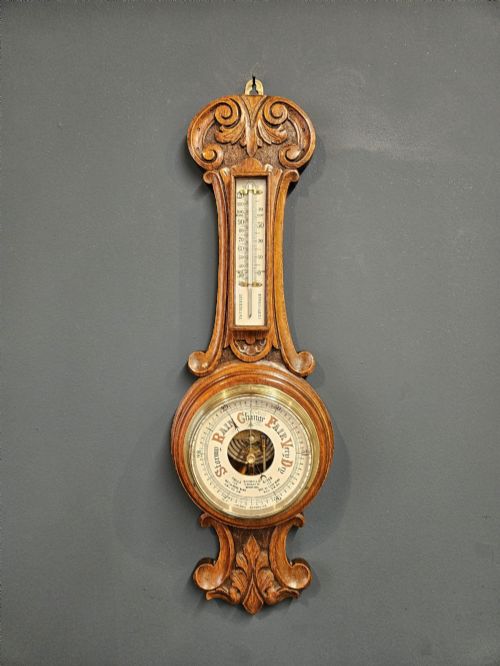
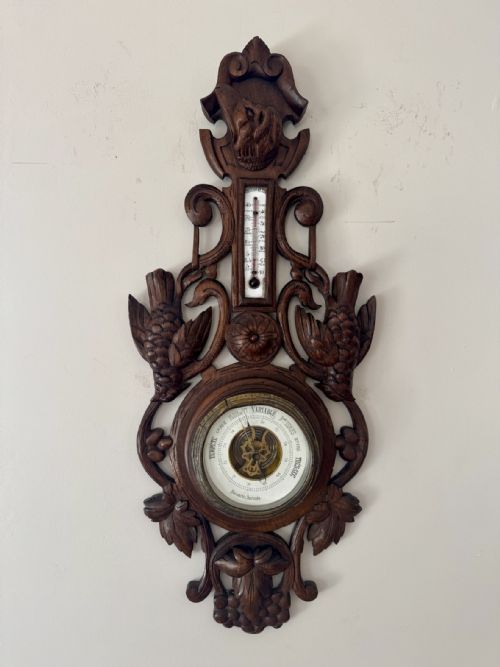
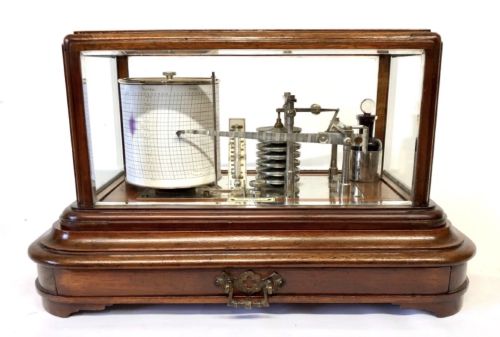
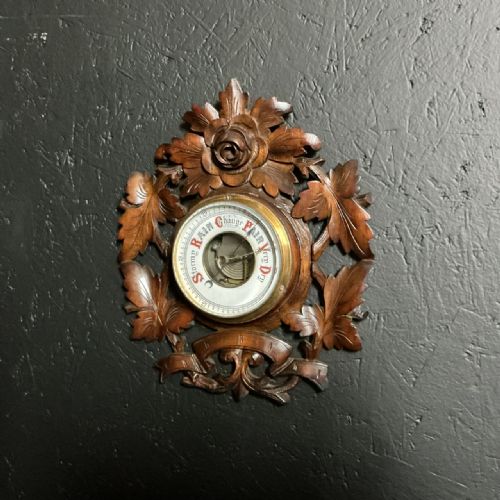
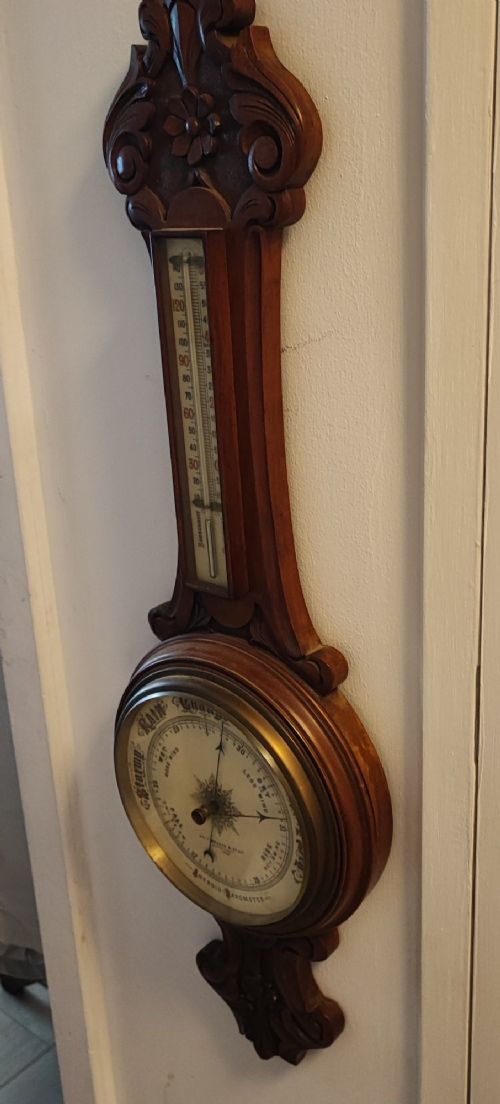
The most common formats on this page are carved oak and walnut banjo barometers, wall-hanging instruments featuring circular dials paired with thermometers. You will also find complex barographs recording pressure continuously on paper drums, alongside distinctively ornate Black Forest carved wooden frames depicting birds and foliage.
Origins range from British scientific instrument makers working in London to continental workshops producing elaborately carved Black Forest styles. Pieces date principally from the Victorian period, with occasional examples extending into the Edwardian decade.
Materials and Construction Techniques
Maker workshops built these instruments using dense cabinet timbers such as oak, mahogany, walnut, and rosewood, often shaping the housings through deep hand-carving or geometric inlay. Dial faces combined brass bezels, bevelled glass, and ceramic or porcelain enamelled scales to display the barometric readings clearly.
The internal aneroid mechanism utilised a corrugated vacuum capsule connected to levers and a needle indicator, replacing the traditional column of mercury. This delicate mechanical linkage required precise calibration by instrument makers to respond accurately to minute shifts in barometric pressure.
Victorian Aneroid Weather Glass Retail Price Guide 2026
Typical asking prices for victorian aneroid weather glass among the pieces listed under this phrase on Sellingantiques today, from the lower quarter to the upper quarter. They describe what is for sale here now, not the wider market.
Recorded periods span the Victorian era, the Edwardian years, and the nineteenth century.
Evaluating Craftsmanship and Finish
Quality separates through the depth and crispness of the timber carving, particularly visible in the foliage and animal motifs of Black Forest frames or the crisp mouldings on walnut and mahogany banjo cases. Superior examples retain their original bevelled glass, matching bezels, and signed maker dials without replacement parts.
The refinement of the mechanical movement and the legibility of the ceramic or porcelain dial further distinguish the finest instruments from standard production models. Maker attribution to established scientific houses adds a layer of distinction to the overall execution.
GAUPP & CO HONGKONG & SINGAPORE·Elliott Brothers·NEGRETTI & ZAMBRA·BAINES HARROGATE·W Watson & Sons·Dollond of London
The Victorian Aneroid Weather Glass Glossary
- Aneroid barometer
- An instrument that measures atmospheric pressure using a flexible metal vacuum capsule rather than liquid mercury. Changes in air pressure cause the capsule to expand or contract, moving a pointer across a calibrated dial.
- Barograph
- A recording meteorological instrument that draws a continuous graph of atmospheric pressure onto a rotating paper drum over a week. These devices typically incorporate an aneroid mechanism within a glazed mahogany or oak case.
- Banjo barometer
- A wall-mounted weather glass housed in a shaped wooden case resembling a banjo, usually combining a hygrometer or thermometer at the top with a large circular dial below.
- Bezel
- The metal ring, often brass, that holds the protective glass cover in place over the barometer dial. It frequently hinges open to allow access for setting indicators.
- Skeletonised
- A construction style that exposes the internal brass gears, levers, and aneroid capsule of the barometer rather than concealing them behind an opaque dial face.
Victorian Aneroid Weather Glass: Frequently Asked Questions
How do I set my aneroid barometer?
Adjust the setting hand to align with your current barometer needle using the small brass key or knob typically located on the glass bezel.
Check a local weather forecast to obtain the correct barometric pressure for your exact elevation before making the final adjustment.
Where should I hang a wall barometer?
Mount the instrument on an interior wall away from direct sunlight, radiators, and exterior draughts that cause artificial temperature fluctuations.
Ensure the wall fixing is secure because hardwood cased barometers and barographs carry considerable weight.
How does an aneroid barometer work?
A sealed thin metal box inside the instrument expands as air pressure drops and compresses as pressure rises.
A series of delicate springs and levers magnifies these tiny movements to turn the pointer across the marked weather dial.
Can antique weather glasses still predict weather?
Most surviving Victorian aneroid mechanisms remain functional and respond accurately to approaching atmospheric changes when properly calibrated.
Watch the movement of the needle over twenty-four hours rather than relying on the printed words like rain or set fair.