


Victorian Agricultural Oil Painting
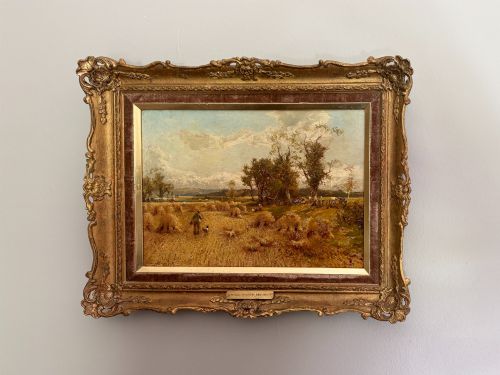
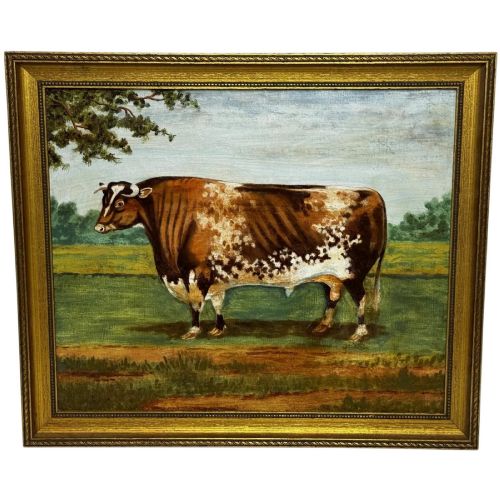
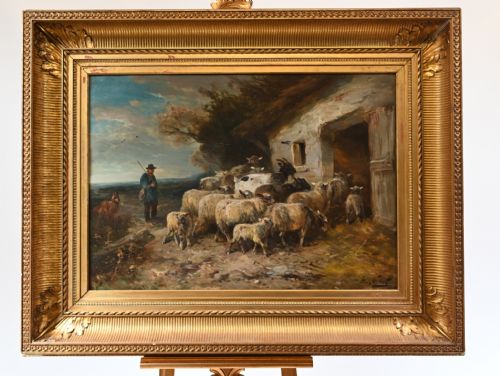
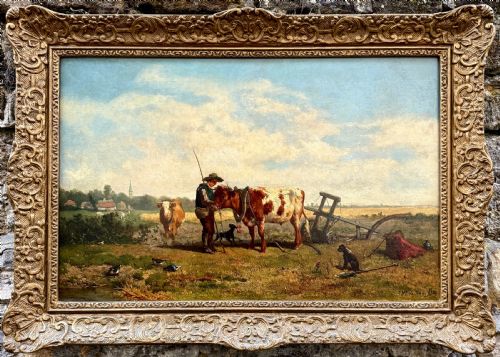
A victorian agricultural oil painting captures the heavy horses, prized cattle and working fields of the nineteenth-century countryside with direct, traditional brushwork.
Victorian Agricultural Oil Painting
A victorian agricultural oil painting depicts rural scenes centred on farming life, livestock and farmworkers across the nineteenth century and into the early twentieth century. These canvases document prized shorthorn bulls, flocks of sheep, harvest fields and farmyards with straightforward realism.
The version most likely to meet a buyer on this page is a framed oil on canvas created during the Victorian period, often showing cattle in stables or ploughmen with horses. Such works span British Realism, Victorian Pastoral and English Folk Art, reflecting the rural economy of the era.
Materials and Technique
These works are painted in oil paint on canvas stretched over wood frames, frequently housed in gesso and giltwood frames decorated with gold leaf. Artists utilised traditional layering and brushwork to render the textures of animal coats, straw and soil.
The construction combines woven canvas supports with wooden stretchers, finished with protective varnishes that have often aged to a warm tone over the underlying pigments.
Listings feature oil paintings on canvas executed within the Victorian period, utilising traditional wood frames and gold leaf gesso.
Assessing Quality
The distinction between works rests upon the anatomical accuracy of the animals, the handling of light within the landscape and the expressiveness of the brushwork. Skilled painters capture the muscular structure of shire horses and the characteristic proportions of shorthorn cattle rather than relying on stiff convention.
Compositional depth and the rendering of atmospheric conditions also separate standard decorative examples from accomplished pieces by named practitioners of the British School and European artists.
Henry Schouten·Johannes de Haas·A M Gauci·James Kyd·Percival Glenfern·James William Booth·Thomas Sidney Cooper·Arthur Charles Dodd·Joseph Paulman·J L VAN Leemputten·Frederick William Jackson·W E Millner·George Cole·William Greaves·W A Clark·William Huggins·William Sidney Cooper·Louis Marie Dominique Robbe·Frederick J Haycock·GEORGE WRIGHT
The Victorian Agricultural Oil Painting Glossary
- Oil on Canvas
- Pigments bound with drying oils applied to a woven fabric support. This combination provides flexibility and allows for subtle blending of tones.
- Giltwood Frame
- A wooden moulding coated with gold leaf or metallic powder. These frames enhance the visual weight of nineteenth-century canvases.
- Gesso
- A plaster-like mixture applied to wooden frames as a base for gilding. It creates a smooth surface for decorative mouldings.
- Victorian Pastoral
- An artistic style focusing on idealized or realistic country life. It emphasises the harmony between farmworkers, animals and the landscape.
- English Folk Art
- Art produced by self-taught or provincial painters working outside academic traditions. These pieces prioritize direct narrative and bold form.
Victorian Agricultural Oil Painting: Frequently Asked Questions
What subjects appear in these paintings?
The canvases show plough teams, harvest scenes, shire horses, sheep flocks and individual prized cattle inside stables or pastures.
Many works document specific rural breeds and the daily labour of farmworkers across the nineteenth century.
How do I hang and light an oil painting?
Hang the canvas on a secure wall away from direct sunlight and fluctuating heat sources to protect the oil paint and canvas.
Use picture lights designed for art to illuminate the surface without generating excessive warmth.
How do I identify the period of a painting?
Examine the style of the giltwood frame, the canvas weave on the reverse, and any artist signatures or inscriptions.
Victorian works often display nineteenth-century realists' attention to agricultural subjects and traditional clothing.
Are these paintings signed by the artist?
Many pieces bear signatures or initials from the artists who painted them, while others remain attributed to specific schools or followers.
Signatures are frequently located in the lower corners of the canvas.