



Victorian Adjustable Piano Stool
A victorian adjustable piano stool combines mechanical ingenuity with domestic seating, offering height adjustment for musicians at the keyboard.
Victorian Adjustable Piano Stool
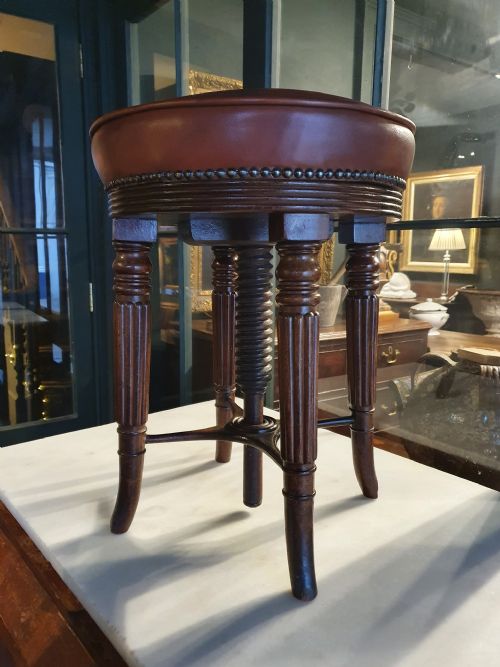
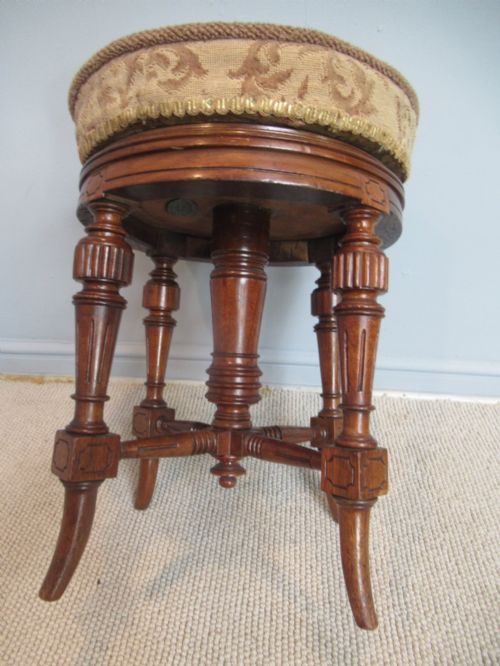
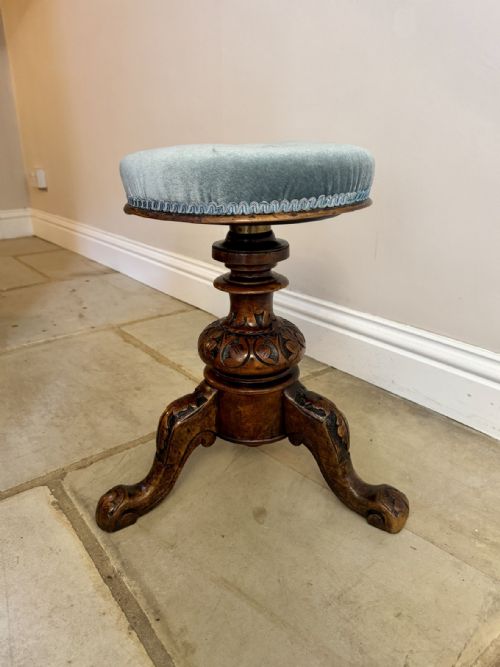
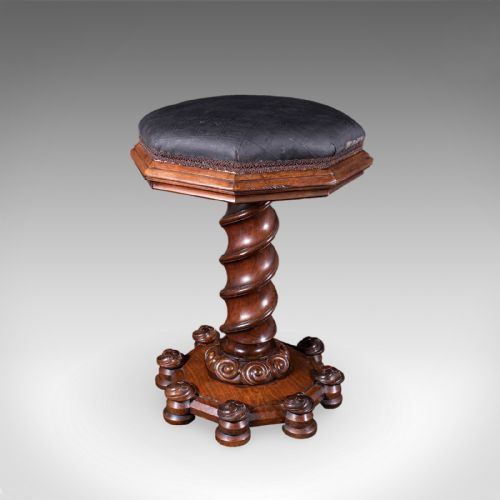
A victorian adjustable piano stool is a specialised seat designed to raise and lower for players at the keyboard. Most examples encountered here date from the nineteenth century, spanning William IV to late Victorian periods.
The primary forms take shape as circular swivel tops or rise-and-fall mechanisms resting on central pillars or tripod bases. Alongside traditional piano use, these pieces frequently serve as dressing table chairs or music room seats.
How they were made
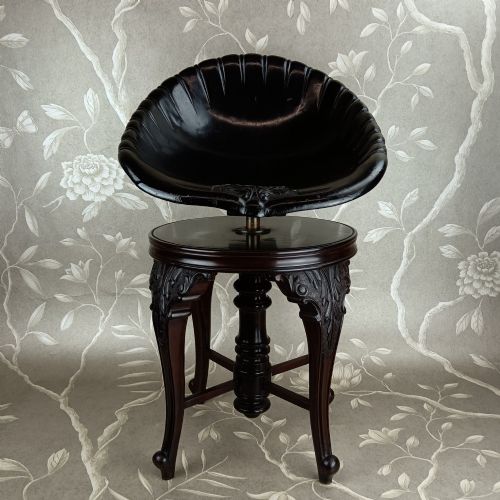
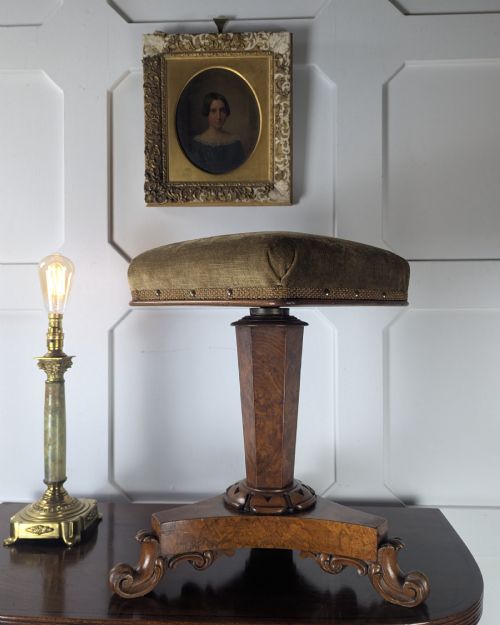
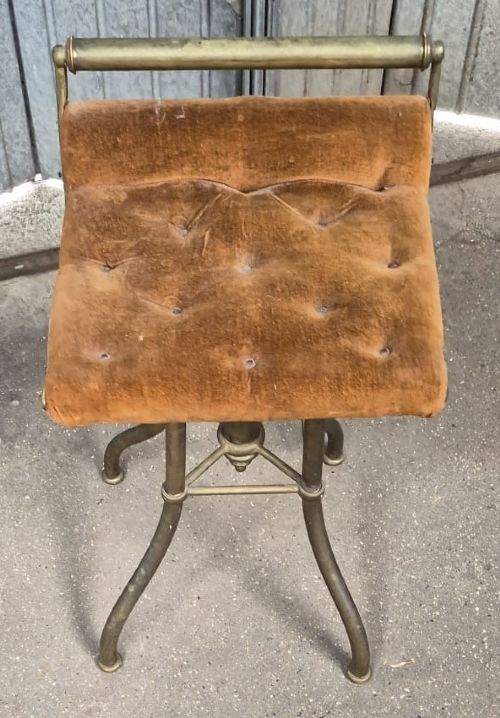
Cabinet makers utilised dense hardwoods such as walnut, mahogany, and rosewood for the frames and central columns, often incorporating carved details or ebonised finishes. Metal components, particularly brass framing and cast iron mechanisms, provide the screw-thread action required for height adjustment.
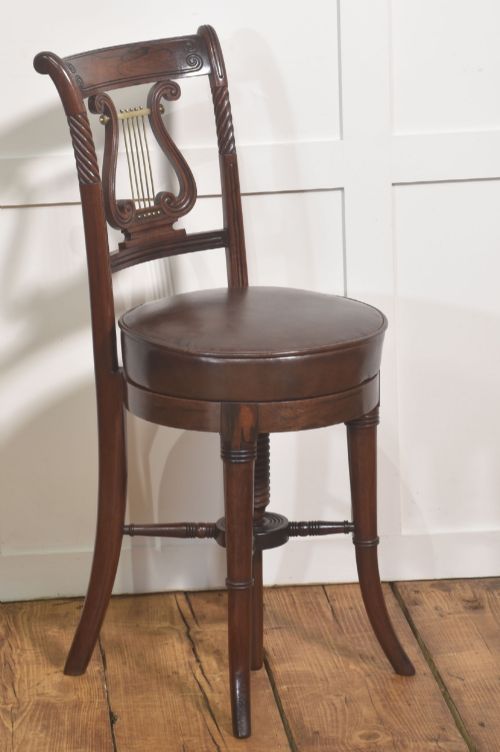
Seats are upholstered in varied textiles including velvet, fabric, tapestry, and leather, frequently secured over padding to ensure comfort during prolonged sessions at the instrument.
Listings span the nineteenth and early twentieth centuries, featuring walnut, mahogany, and rosewood forms with brass and cast iron mechanisms.
What varies in quality
Quality rests upon the precision of the mechanical screw action and the stability of the central column under movement. Robust joinery in the legs and refined carving on the wooden elements distinguish superior workshops from standard production pieces.
Jennens and Bettridge·Gillows·James Shoolbred·Brooks
The Victorian Adjustable Piano Stool Glossary
- Revolving
- Turning through a full circle on a central axis. This mechanism allows the seated player to rotate freely.
- Rise and fall
- An adjustable height mechanism operated by a threaded screw shaft. Turning the seat raises or lowers the sitting platform.
- Ebonised
- Wood finished to resemble ebony through staining or painting. This treatment creates a dark, uniform surface popular in later nineteenth-century design.
- Harpist seat
- A specialised stool featuring an adjustable backrest or angled support. These pieces accommodated musicians playing instruments that required freedom of arm movement.
Victorian Adjustable Piano Stool: Frequently Asked Questions
How do you adjust the height?
Most variants utilise a central wooden or metal screw thread concealed within the pillar. Rotating the seat top clockwise or anticlockwise raises and lowers the platform.
Some examples feature mechanical ratchets or rise-and-fall levers that allow quicker adjustments during musical practice.
Were these only used for pianos?
While manufactured primarily for keyboard players, their compact footprint and adjustable height made them suitable for other domestic tasks. They frequently served as dressing table seats or secondary chairs in parlours and music rooms.
Specialist variations like harpist chairs included supportive backs to aid players of different instruments.
How do I date a piano stool?
Dating relies on timber selection, turning styles, and the sophistication of the mechanical hardware. Early nineteenth-century pieces often display William IV rosewood or mahogany with heavy pedestal bases, while later Victorian versions incorporate walnut or ebonised surfaces with aesthetic movement influences.
Patent stamps and maker signatures found underneath provide definitive dates.
How do I care for the upholstery?
Maintenance depends entirely on whether the fabric is original tapestry, velvet, or leather. Gentle dusting with a soft brush preserves delicate textiles, while leather requires periodic conditioning to prevent cracking.
Avoid placing these seats in direct sunlight to protect both the timber polish and the fabric colours from fading.