



Victorian Academy Painting
These Victorian academy painting examples capture the rigorous academic standards and formal prestige of nineteenth-century British art.
Victorian Academy Painting
A victorian academy painting embodies the high artistic standards set by major institutions like the Royal Academy during the nineteenth century. These artworks reflect the dominant tastes of the period, ranging from historical genre scenes to detailed landscape compositions.
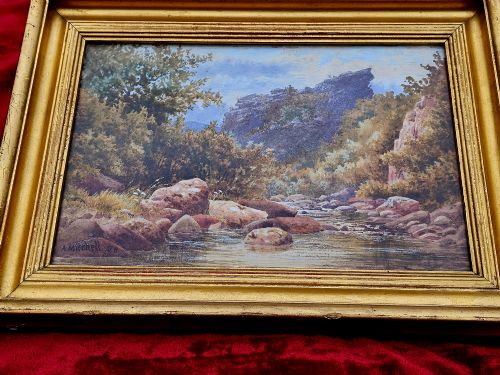
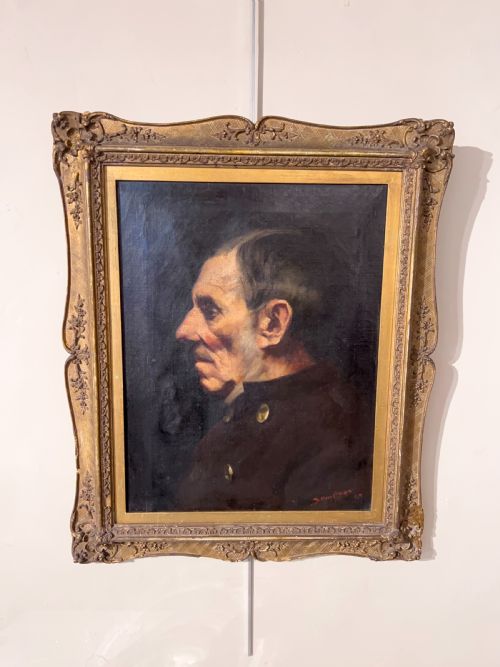
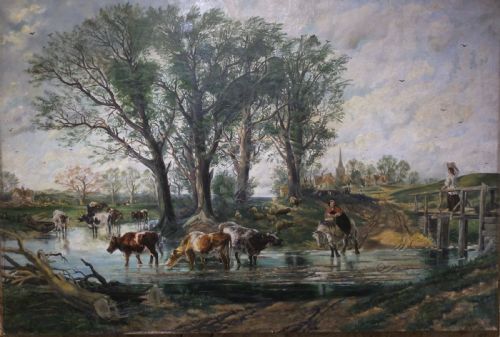
The selections on this page predominantly feature oil paintings on canvas alongside watercolour works, showcasing subjects such as portraits, landscapes of British rivers and Scottish scenery, and narrative genre pieces. Artists associated with prestigious bodies like the Royal Academy and the Royal Scottish Academy produced these works.
Buyers encounter pieces spanning various decades of the nineteenth century and extending into the early twentieth century. Each item demonstrates the formal training and exhibition history characteristic of academic fine art from this era.
Materials and Technique
Artists painted primarily with oil paint on stretched canvas, utilising the medium to build rich textures and tonal depth. Watercolours on paper also appear among the academic works.
Many of these paintings retain their original giltwood and gesso frames, often embellished with gold leaf to complement the scale and formal presence of the canvas.
Even a quiet still life of a seventeenth-century chair and a sword manages to carry academic ambition.
Distinctions in Quality
Quality rests in the precision of brushwork, the handling of light and shadow, and the structural composition of the canvas. Superior works display confident draughtsmanship and sophisticated narrative or atmospheric control.
The provenance and exhibition history significantly influence the standing of a piece, with documented displays at major institutions marking works of heightened academic importance.
Bertram Priestman RA·Frederick Goodall RA·George Vicat Cole RA·George Smith·Benjamin Williams Leader RA·Joseph Farquharson RA·Sir David Murray RA·Thomas Creswick RA·Robert Alexander Hillingford
The Victorian Academy Painting Glossary
- Royal Academy
- The prominent British art institution that set academic standards and hosted annual exhibitions for exhibiting artists. Membership denoted the highest tier of professional recognition.
- Oil on Canvas
- A traditional painting technique involving pigmented oil applied to a woven fabric support. This combination allowed artists to achieve rich colour saturation and subtle blending.
- Giltwood
- Wood carved and covered with a thin layer of gold leaf or gold paint. Frames rendered in this material frequently accompany nineteenth-century fine art.
- Genre Painting
- Artwork depicting scenes from everyday life, often featuring human figures engaged in domestic or narrative activities. These subjects formed a core category of academic exhibition pieces.
Victorian Academy Painting: Frequently Asked Questions
What defines a Victorian academy painting?
These works are formal fine art pieces created by artists connected to official institutions like the Royal Academy. They follow the strict compositional and thematic rules favoured by nineteenth-century establishments.
Subjects typically include historical narratives, detailed landscapes, and portraits, often bearing exhibition records from the period.
How were these paintings displayed originally?
Academic artworks were traditionally exhibited in crowded salon walls at annual institutional shows. Their presentation relied heavily on ornate giltwood and gesso frames.
These frames were designed to project authority and status, matching the grand scale of history and landscape subjects.
Are all these paintings in oil?
The majority of the selection consists of oil paint on canvas supports. These works utilise the deep tonality and layering capabilities of oil mediums.
Watercolour examples also appear, representing finished works on paper by academy-affiliated artists.
How do I identify a Royal Academy artist?
Artists often appended academic acronyms such as RA or RSA to their signatures or exhibition records. These letters indicated official membership in the Royal Academy or the Royal Scottish Academy.
Catalogues and painting titles frequently note specific exhibition histories from the nineteenth century.