
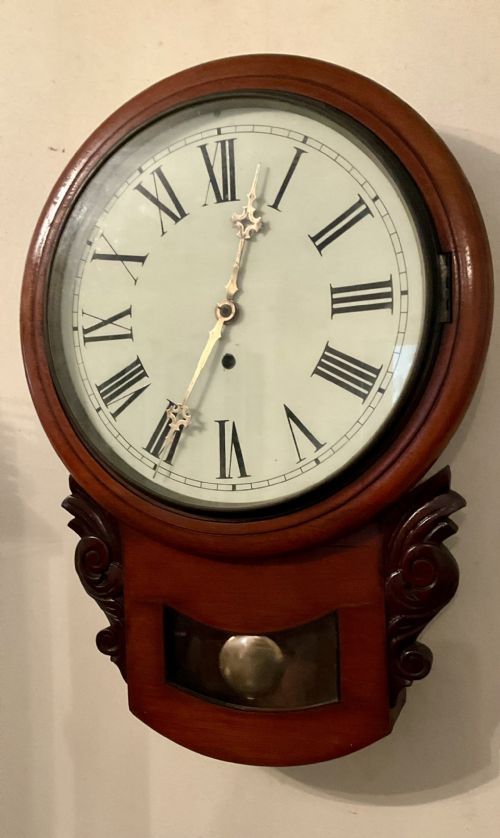


Victorian 8 Day Clock
A victorian 8 day clock brings mechanical rhythm into a room, measuring time across an entire week before requiring a fresh wind.
Victorian 8 Day Clock
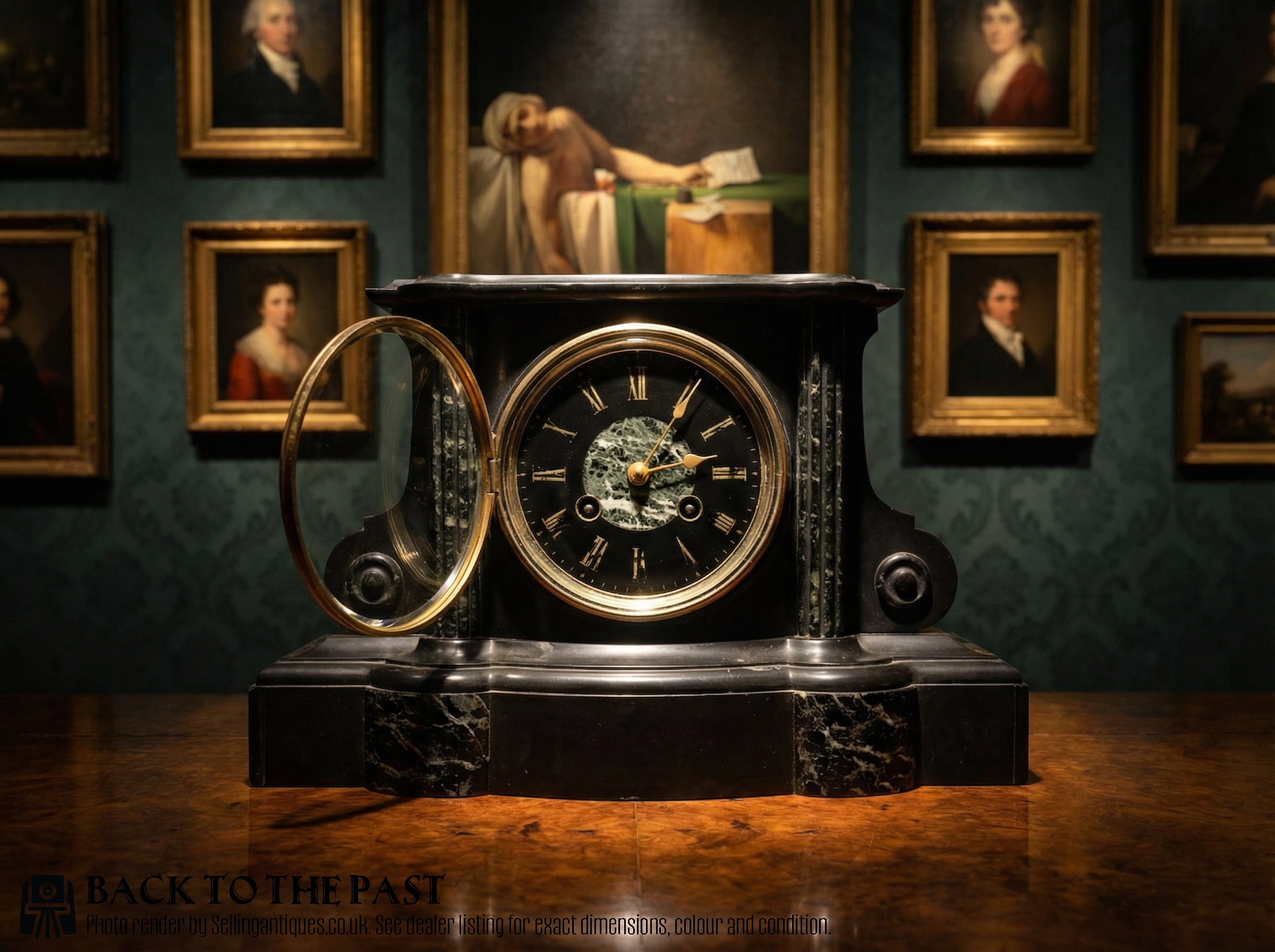
When searching for a victorian 8 day clock, buyers encounter a diverse selection of timepieces spanning mantel, wall, carriage, and longcase formats. These clocks were produced across the nineteenth century and into the Edwardian era, incorporating regional British workshop traditions alongside continental French and American imports.
The domestic interior of the period relied on these dependable movements for everyday scheduling. Buyers frequently meet mahogany or oak longcase clocks, heavy marble mantel pieces, brass-framed carriage clocks with glass panels, and circular dial wall clocks.
Cabinetry reflects prevailing tastes, ranging from restrained Victorian mahogany cases to elaborate French ormolu, boullework, and carved oak housings. Movements are engineered to run for approximately eight days per winding cycle, utilising weight-driven or spring-driven mechanisms.
Materials and construction
Makers housed these mechanisms in substantial timber enclosures, selecting figured mahogany, oak, walnut, rosewood, and maple veneers alongside heavy black slate and marble. Metal components combined brass gears and dials, glass viewing panels, enamel chapter rings, and occasional gilt bronze or ormolu mounts.
Movements relied on brass plates, steel pivots, and tooth-cut gears, often incorporating fusee cones to maintain even tension as the mainspring unwound. Dial faces featured painted metal, engraved brass, or white enamel with Roman numerals, protected behind hinged glass bezels.
Listings feature movements ranging from simple timepieces to complex three-train mechanisms with musical chimes.
Evaluating craftsmanship
The distinction between ordinary production and finer output lies in the execution of the movement and the cabinetry. Premium examples feature crisp weight or twin-fusee spring movements, hand-engraved backplates, and robust brass work by recognised makers.
Cabinet quality separates standard pieces from exceptional ones through the selection of flame mahogany veneers, fire-gilded ormolu mounts, heavy polished marble, and intact original glass panels. The precision of the dial painting and the integration of chiming or musical complications further elevate the work.
Mercer of London·H.A.C.·Drocourt Paris·Henri Jacot Paris·Thwaites of London·Dent of London·Winterhalder & Hofmeier·Mappin and Webb
The Victorian 8 Day Clock Glossary
- Fusee
- A conical pulley connected to the mainspring by a chain or cord, designed to equalise the torque as the spring unwinds. This mechanism ensures more consistent timekeeping throughout the eight-day running cycle.
- Gorge case
- A stepped brass carriage clock housing with a flat top and a swing handle, typical of fine nineteenth-century French production. The construction allows robust protection for the delicate platform escapement within.
- Drum head
- A circular clock case mounted atop a tall trunk, frequently seen on Scottish longcase clocks from the period. This distinctive profile showcases a round dial above a narrow waist.
- Skeleton clock
- An unhoused timekeeper with an openwork brass frame that exposes the gear train to view. These pieces typically sit beneath a glass dome on a wooden plinth.
- Champlevé
- An enamelling technique where troughs are dug into a metal surface and filled with vitreous paste before firing. The resulting colourful patterns decorate the brass cases of mid-to-late nineteenth-century mantel clocks.
Victorian 8 Day Clock: Frequently Asked Questions
How do I wind a victorian 8 day clock?
Most models require a key inserted into winding holes on the dial face to tension the springs or draw up the weights. Care must be taken not to overwind the mechanism once resistance is felt.
Clocks with twin or triple trains require separate winding for the timekeeping, striking, and chiming sections to maintain full operation across the week.
Where were these clocks placed in a victorian home?
Longcase and bracket clocks anchored the formal downstairs reception rooms, while carriage clocks travelled easily between bedrooms and parlours. Wall-mounted dial clocks served functional roles in hallways, kitchens, and offices.
Mantel pieces rested prominently above hearths as both ornamental centerpieces and reliable timekeepers for the household.
How do I tell an English clock from a French one?
English examples generally feature sturdy fusee movements housed in mahogany, oak, or walnut cases with understated dial designs. Their construction prioritises mechanical reliability and traditional joinery.
French pieces frequently utilise spring-driven barrel movements housed in marble, slate, or ormolu cases, often featuring visible escapements, elaborate pendulum suspensions, and decorative enamelwork.
What is the difference between a timepiece and a striking clock?
A timepiece simply measures and displays the hours and minutes without producing audible alerts. These require a single winding train dedicated solely to the motion of the hands.
A striking clock incorporates an additional gear train that sounds bells or gongs on the hour and half-hour, requiring a second or third spring or weight to be wound.