




Victorian Black Stone Clock
These victorian black stone clock pieces are heavy architectural timepieces built to anchor a room, combining dark stone with precise metal dials.
Victorian Black Stone Clock
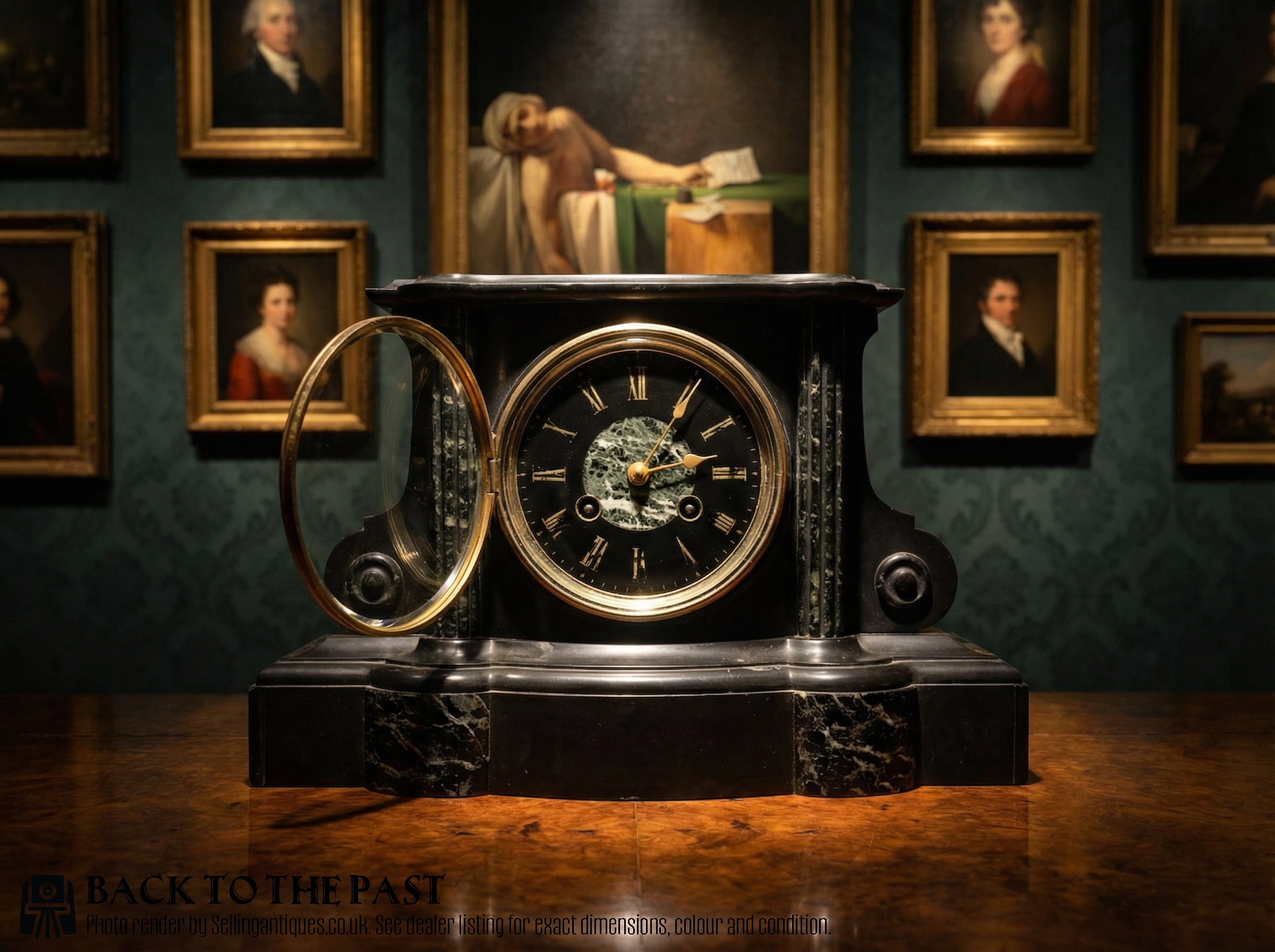
A victorian black stone clock is a substantial mantel timepiece originating from the nineteenth century, often utilising black slate or marble. These heavy timepieces sit solidly on a shelf or mantel, serving as both functional clocks and striking architectural ornaments.
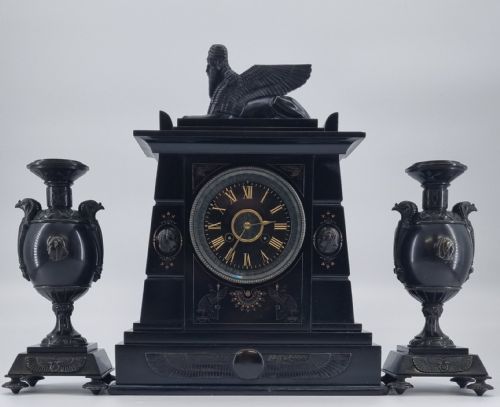
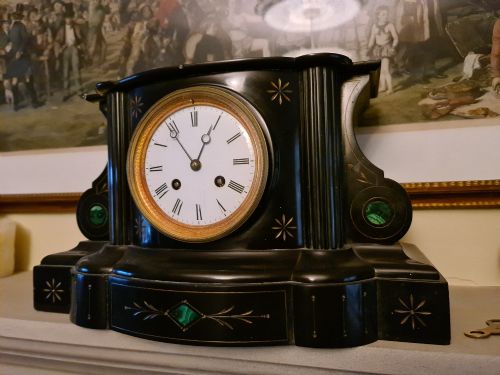
Most examples found here date from the eighteen sixties through the eighteen nineties, capturing various revival movements. Buyers frequently encounter drumhead forms, architectural cases, and garniture sets that include matching side ornaments.
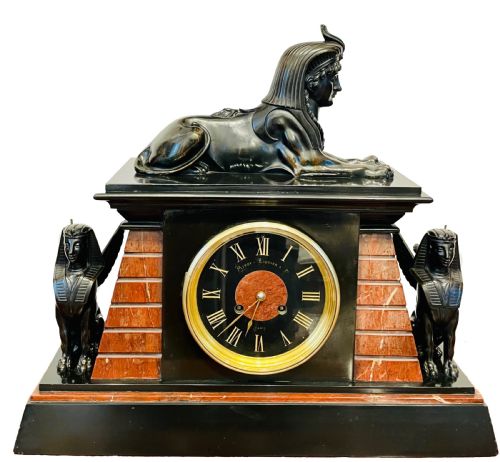
The aesthetic draws heavily on classical and Egyptian influences, resulting in imposing geometric cases. These pieces reflect the Victorian appetite for solid, imposing domestic decoration.
How they were made
The makers utilised dense black slate and marble as the primary structural materials for the heavy cases. These stones were cut and polished to achieve a smooth, monolithic appearance that mimicked high-end classical monuments.
Brass, bronze, and glass components were integrated to house and protect the enamel dials and eight-day movements. Metal mounts and incised detailing often highlighted the architectural lines of the stone body.
The inventory includes both standalone mantel clocks and complete garniture sets.
What varies in quality
The standard of workmanship shows most clearly in the precision of the stone cutting and the complexity of the architectural form. Simpler drumhead designs differ significantly from large architectural cases featuring elaborate classical or Egyptian revival motifs.
The presence of an original eight-day movement and matching garniture sets elevates the status of a piece. Finer examples display superior surface polish and more intricate metal detailing on the bezel and dial.
Philippes Paris
The Victorian Black Stone Clock Glossary
- Garniture
- A matched set of decorative objects, usually comprising a central clock flanked by two side pieces such as urns or obelisks. These sets provide symmetry on a mantelpiece.
- Drumhead clock
- A timepiece featuring a circular clock face housing mounted on a low rectangular or shaped stone base. This specific silhouette is common in nineteenth-century mantel designs.
- Egyptian Revival
- An artistic style incorporating ancient Egyptian motifs such as sphinxes, obelisks, and hieroglyphic incisions into Victorian design. It reflects the period's fascination with archaeological discoveries.
- Slate
- A fine-grained metamorphic rock used extensively for Victorian clock cases due to its ability to take a smooth, dark polish. It provides the heavy, solid foundation typical of these pieces.
- Eight-day movement
- A mechanical clockwork system that requires winding only once a week. This mechanism signifies a practical domestic standard for the period.
Victorian Black Stone Clock: Frequently Asked Questions
Where did people display these clocks?
These clocks were traditionally placed upon the mantelpiece in the principal rooms of a Victorian home. Their weight and imposing presence made them natural centerpieces for a room.
They often stood alongside matching garniture pieces to create a balanced, formal arrangement on the shelf above the fireplace.
How do I wind the movement?
Most of these timepieces utilise an eight-day mechanical movement accessed through the glass-covered dial face. A dedicated winding key is inserted into specific arbors on the dial to tension the spring.
Care must be taken not to overwind the mechanism, ensuring the clock maintains accurate time throughout the week.
What is a garniture set?
A garniture set consists of a central clock accompanied by two matching side ornaments, such as urns or architectural pillars. These additional pieces complete a symmetrical decorative scheme.
In Victorian interiors, placing these three items together on a large mantel created a sense of order and grandeur.
How do I tell different periods apart?
Dating relies on observing the decorative style and architectural influences present in the stone case. Pieces from the eighteen sixties often display distinct classical revival or Egyptian revival motifs.
Later Victorian examples from the eighteen eighties and nineties may feature simpler geometric lines or variations in the combination of slate and marble.