
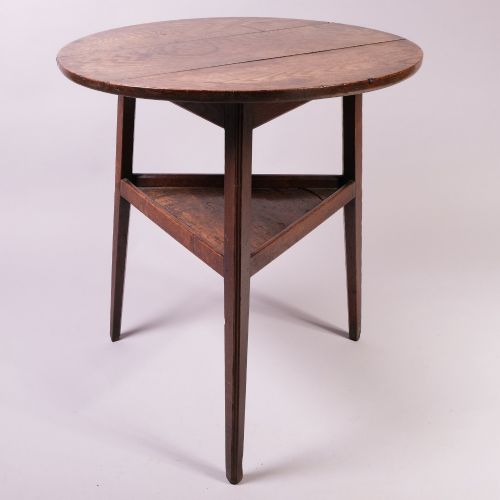
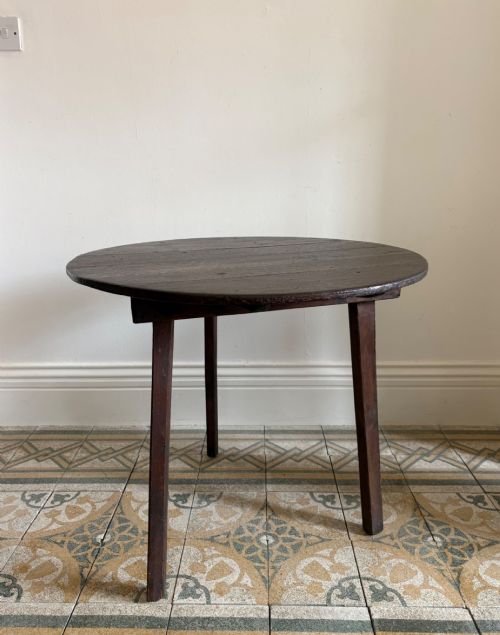
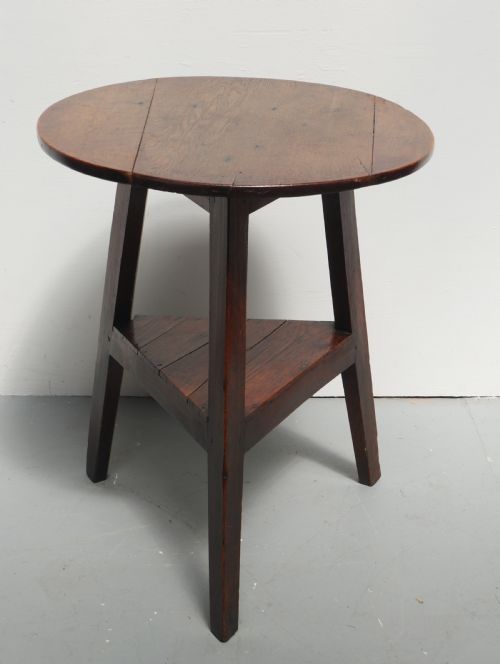


Vernacular Oak Cricket Table
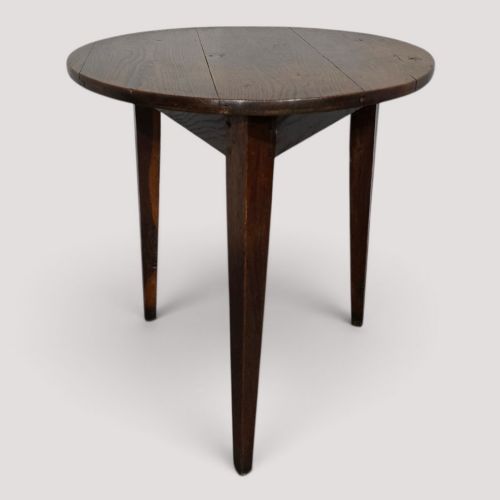
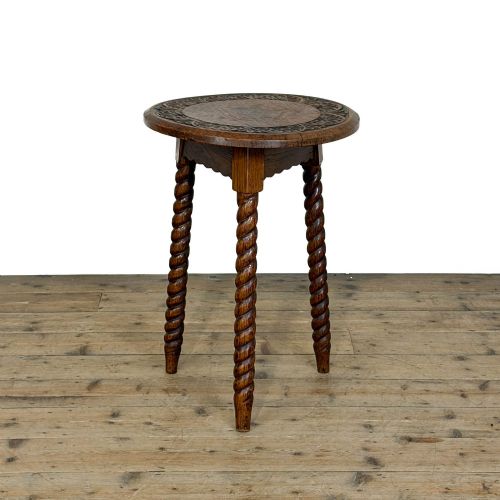
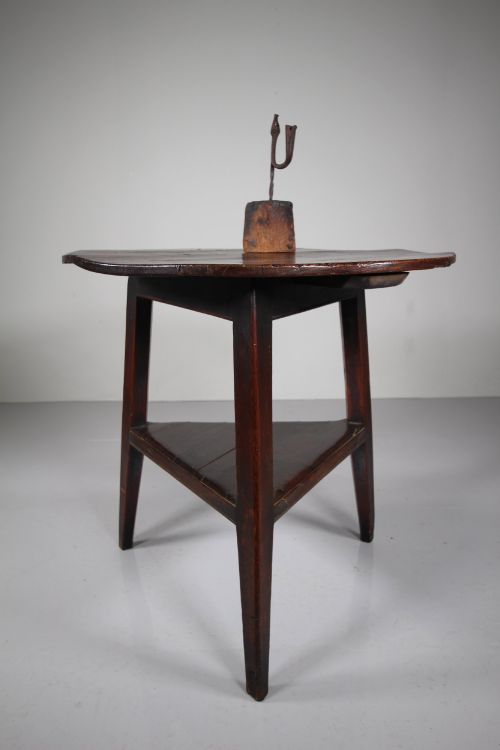
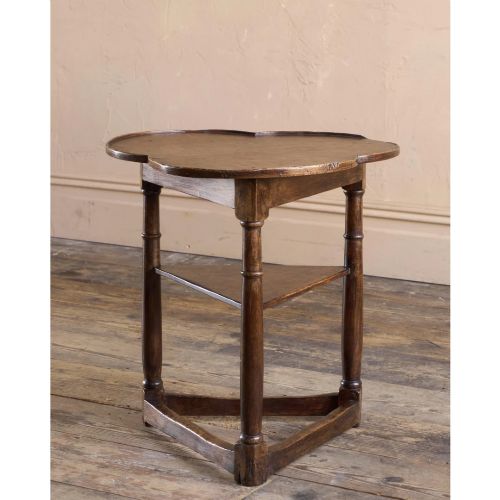
These vernacular oak cricket tables are robust three-legged country pieces shaped by everyday use in early domestic interiors.
Vernacular Oak Cricket Table
When you search for a vernacular oak cricket table, you enter the world of sturdy three-legged English and Welsh country furniture. These tables date primarily from the seventeenth, eighteenth, and nineteenth centuries, spanning Jacobean Revival, Georgian, and various regional vernacular styles. Most examples encountered here are modest side or occasional tables built for simple utility rather than formal display.
How they were made
Makers constructed these pieces using solid timber boards for the tops and turned or cleft legs pegged into the underside. Construction methods relied on basic joinery such as mortise and tenon joints or through-pegged legs that emerged directly through the table surface. Secondary timbers like pine frequently served for internal framing or bases while oak and ash formed the primary structures.
Surface preparation involved hand sawing and planing timber, leaving tool marks that reveal the work of country carpenters. Tables were finished with straightforward wax or left bare, though some regional pieces acquired layers of historic paint over time. This direct method of production prioritized stability and utility over ornamental refinement.
What varies in quality
Quality in these tables rests upon the integrity of the timber and the balance of the proportions. Superior examples retain their original pegged construction and untouched surface patination without excessive timber replacement in the top or legs. The thickness of the plank top and the splay of the tripod base dictate the visual harmony and structural strength of the piece.
Differences also arise in the choice of secondary woods and regional decorative touches such as edge moulding or primitive carving. Tables that survive with minimal alterations to their height and leg attachment represent the stronger end of the range. Simplicity of form combined with honest historic wear defines the better specimens.
The Vernacular Oak Cricket Table Glossary
- Vernacular
- Furniture made by local carpenters for everyday domestic use rather than following high-style metropolitan fashions. It relies on regional traditions and readily available local materials.
- Tripod base
- A support structure utilising three legs, which ensures the table remains stable on uneven floors without rocking. This configuration is defining for the cricket table type.
- Trefoil top
- A table surface shaped with three lobes reminiscent of a clover leaf. This uncommon variant adds architectural interest to the standard circular design.
- Plank top
- A surface constructed from joined solid timber boards rather than a single wide slab. These boards are typically secured with underside battens to prevent warping.
- Cleft timber
- Wood split along the natural grain rather than sawn, producing greater tensile strength. Country makers often utilised this technique for legs and stretchers.
Vernacular Oak Cricket Table: Frequently Asked Questions
What is a cricket table?
A cricket table is a small, three-legged occasional table traditionally used in English and Welsh country houses. The three-legged design provided inherent stability on uneven stone floors.
These pieces served various domestic functions beside firesides or in corners before evolving into sought-after items for modern interiors.
How old are these tables?
The examples available here span from the seventeenth century through the Georgian era and into the nineteenth century. Most date from the eighteenth century, reflecting traditional country craftsmanship.
Dating relies upon construction methods, timber choice, and the presence of historic wear patterns rather than exact documentation.
Where were they made?
These tables originated in rural workshops across England and Wales, with specific regional examples noted from locations like Monmouthshire and Snowdonia. Local carpenters utilised whatever timber grew nearby.
Oak, ash, elm, and fruitwood reflect the native woodlands accessible to the makers of each district.
How do I use one at home?
Their compact size and three-legged footprint allow these tables to fit easily beside chairs or in narrow hallways as occasional surfaces. They work well displaying small objects or holding lamps.
Their robust construction suits everyday use, though placement away from direct heat sources helps preserve the old timber.