


Green Painted Accent Table
These green painted accent table pieces bring character and colour to a room through centuries of decorative traditions.
Green Painted Accent Table
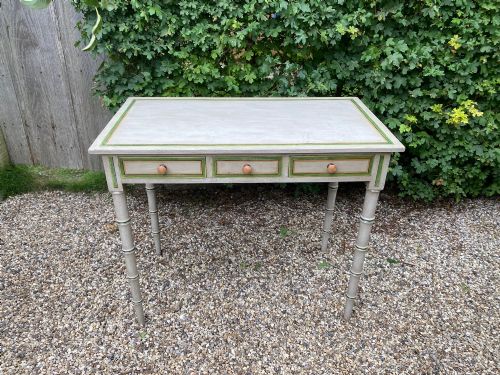
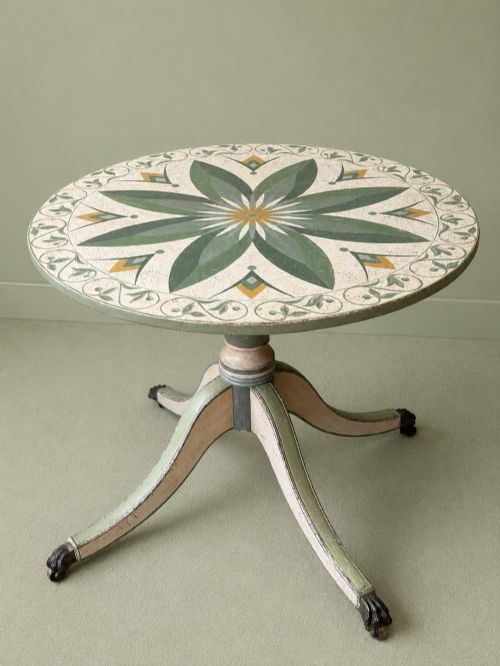
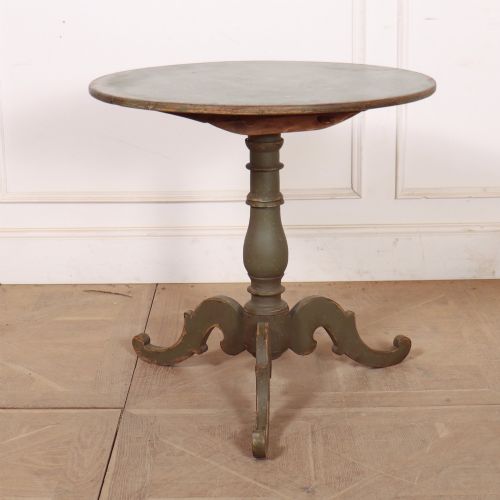
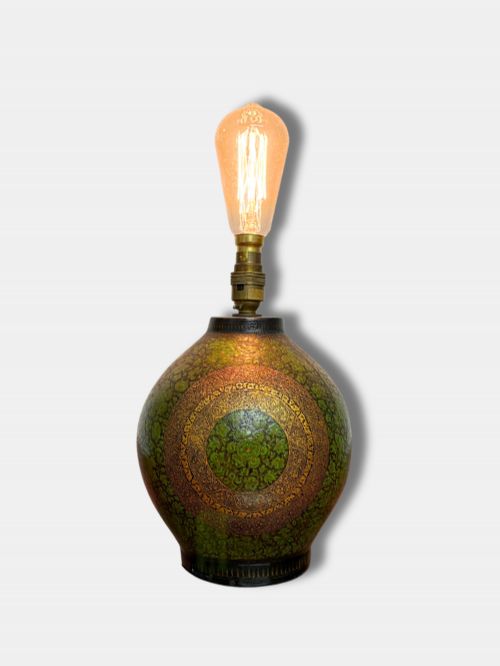
A green painted accent table encompasses a variety of smaller furniture forms designed to sit beside seating or against walls while offering surface space. The selection spans distinct historical periods, featuring items originating from English, French, Italian, Swedish, and Kashmiri traditions.
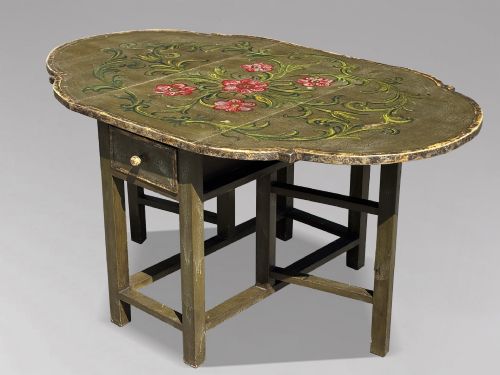
Most examples function as lamp tables, occasional tables, or side tables, while others take the form of tilt-top tables, writing desks, and drop-leaf surfaces. These pieces display diverse stylistic influences ranging from English Country and Regency to French Neoclassical and Italian Folk Art.
Materials and construction methods
Makers primarily utilised wood, pine, and timber as foundational materials for these tables, shaping them into side tables, drop-leaf tables, and occasional furniture. Brass details and inset marble tops occasionally appear on specific French and English forms to add functional weight and visual contrast.
Surfaces received layers of paint, often combined with gilt gold highlights or parcel-gilt detailing, particularly on Italian, Kashmiri, and French Neoclassical examples. Some nineteenth-century pieces incorporate faux bamboo turning alongside traditional joinery.
Decorative schemes vary widely across regions, encompassing plain painted finishes, floral motifs, and intricate folk art patterns. Papier-mache serves as the primary base material for specific tray top designs.
Listings feature items from the eighteenth, nineteenth, and early twentieth centuries, spanning English, French, Italian, Swedish, and Kashmiri origins.
Distinguishing quality across the selection
The sophistication of the painted surface significantly influences the overall character of each piece, distinguishing simple folk art applications from refined gilt and parcel-gilt detailing. Original painted finishes carry a distinct presence compared to pieces featuring later decorative additions.
Materials contribute to the distinction between standard timber frames and pieces incorporating specialised elements like solid marble tops or brass hardware. The structural integrity of tilt-top mechanisms, drop-leaf hinges, and turned supports demonstrates the underlying craftsmanship of the period.
The Green Painted Accent Table Glossary
- Lamp table
- A small freestanding table specifically scaled to hold a table lamp beside a chair or sofa. These compact surfaces appear across eighteenth and nineteenth-century English and French traditions.
- Tilt-top table
- A table featuring a hinged surface that rotates to a vertical position when not in use. This mechanism allowed tables to be stored flat against walls in smaller rooms during the Victorian era and earlier periods.
- Gueridon
- A small French occasional table or stand, often round and supported by a central pillar or multiple legs. These frequently incorporate decorative painted finishes and marble tops.
- Parcel-gilt
- A decorative technique where specific carved details or raised elements are highlighted with gold leaf over a painted ground. This method appears on French and Italian pieces.
- Cricket table
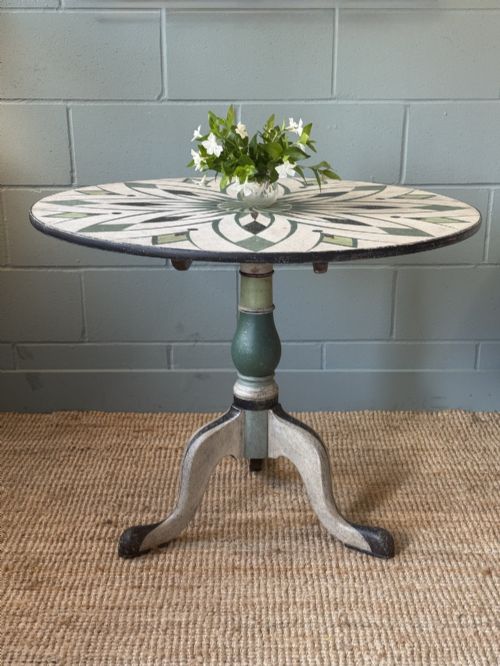
- A small, lightweight English table traditionally featuring three splayed legs and a round wooden top. Welsh country examples often display simple painted surfaces suited for casual use.
Green Painted Accent Table: Frequently Asked Questions
Where should I place a lamp table?
These compact tables fit easily beside seating arrangements, reading chairs, or in narrow hallways where surface space is limited. Their modest proportions allow them to integrate into rooms without overwhelming existing layouts.
Selecting a piece with a marble top or a secure wooden surface ensures adequate stability for holding lighting fixtures or decorative objects safely.
How do I care for painted wooden surfaces?
Maintenance involves dusting with a soft, dry cloth and avoiding harsh chemical cleaners that might compromise the painted finish. Keeping tables away from direct heat sources and strong sunlight preserves the integrity of the wood and paint over time.
Using coasters or protective mats helps prevent moisture rings on antique wooden and painted surfaces during daily use.
What is the difference between a side table and an occasional table?
Side tables typically serve a permanent function against a wall or beside furniture, whereas occasional tables are designed to be moved around a room as needed. Both forms offer practical surface space within living areas and bedrooms.
Historical examples from the eighteenth and nineteenth centuries often reflect regional preferences in their leg shapes and overall proportions.
How can I identify French Neoclassical styles?
French Neoclassical pieces generally feature restrained classical proportions, symmetrical designs, and balanced decorative elements. These tables often incorporate parcel-gilt details and marble tops that reflect classical architecture.
Such items contrast with the more rustic appearance of English country or Italian folk art furniture found within the same period.