


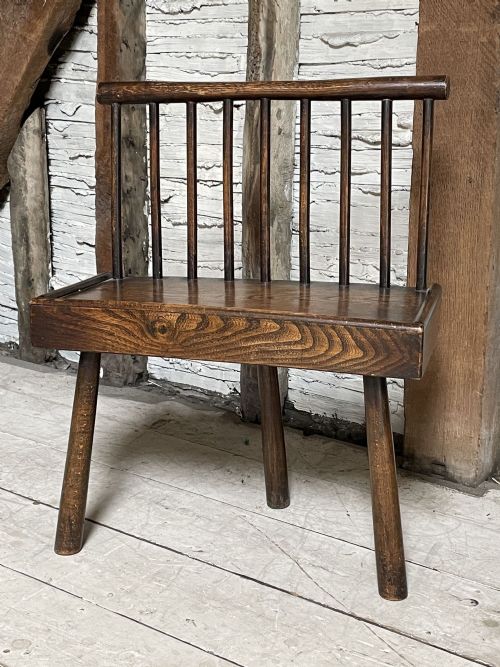


Vernacular Oak Childs Chair
These vernacular oak childs chair pieces are sturdy domestic seating from country workshops, offering small-scale historical charm and robust regional craftsmanship.
Vernacular Oak Childs Chair
A vernacular oak childs chair brings centuries of domestic history into a room through small-scale seating built by regional carpenters. These pieces span periods from the seventeenth century through the nineteenth century, including Georgian and later vernacular examples.
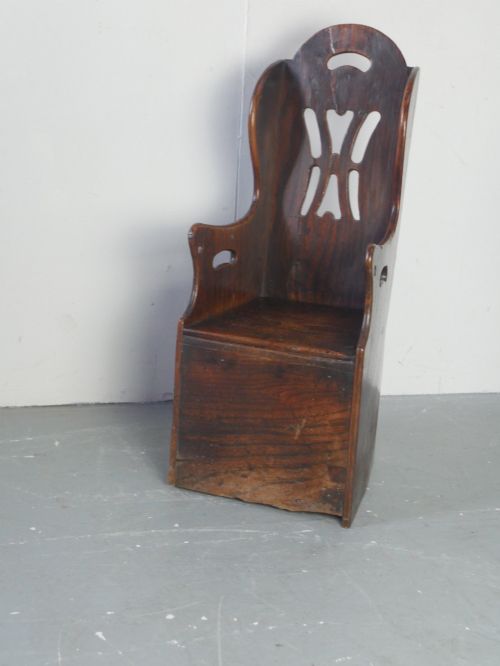
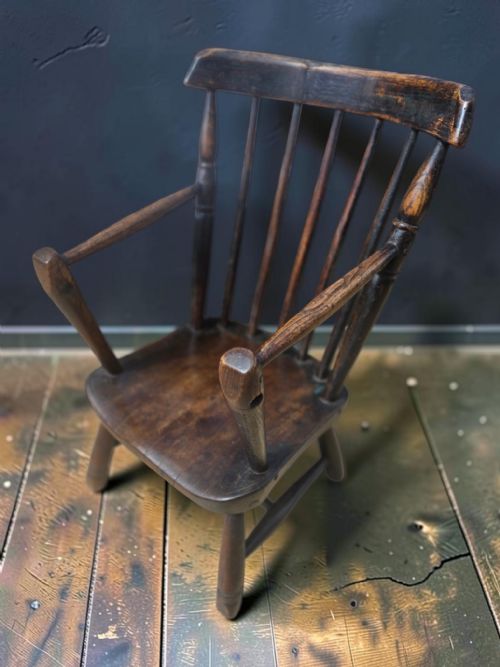
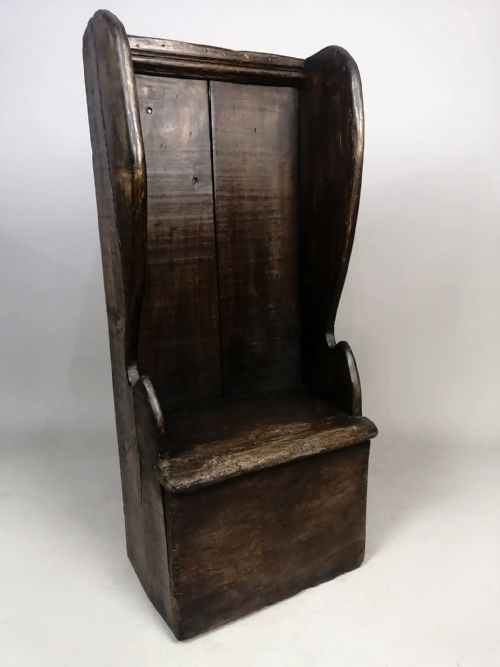
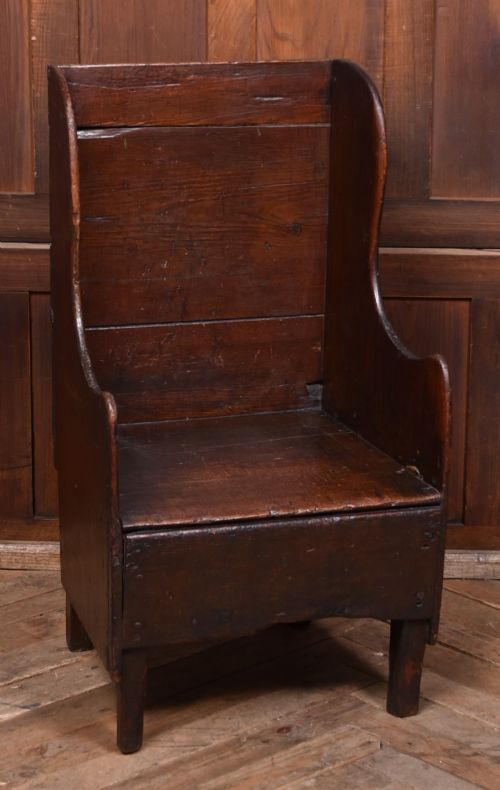
The selections on this page appear in various domestic forms such as standard children's chairs, lambing chairs, high chairs, rocking chairs, stickbacks, Windsor-style hoops, ladderbacks, and settle combinations. Their origins stretch across English and Welsh regional traditions, showing the practical needs of past households.
Buyers most frequently encounter nineteenth-century oak versions alongside earlier eighteenth-century and seventeenth-century survivals. Alongside solid oak, these chairs frequently incorporate elm, ash, fruitwood, and rush seating.
Materials and construction
Construction relies heavily on native timbers such as oak, elm, ash, and fruitwood, selected for local availability and structural strength. Carpenters utilised traditional joinery, pegging, and stick-construction techniques to form rigid frames suited to daily use.
Seating areas often utilise woven rush or solid timber panels, while secondary treatments include painted surfaces or natural finishes that highlight the grain. Rocking variations incorporate curved wooden runners attached beneath the feet for movement.
Early makers occasionally added miniature rockers to keep restless children happily in motion near the hearth.
Character and survival
Quality in a vernacular oak childs chair rests upon the integrity of its original construction and the degree of historical survival. Untouched patination, genuine surface wear from generations of use, and minimal intervention separate superior examples from heavily restored pieces.
Proportion and regional idiosyncrasy also define the standard of a piece, as vernacular makers balanced utility with expressive local design. Sharper execution in turned spindles, well-integrated rockers, and sound timber joints distinguish the finer workshop output from simpler utilitarian seating.
The Vernacular Oak Childs Chair Glossary
- Lambing chair
- A high-backed wooden chair featuring enclosed sides designed to shield the occupant from drafts. These miniature versions provide the same hooded protection on a smaller scale.
- Windsor chair
- A chair built with a heavy wooden seat into which the legs and back spindles are separately inserted. Hoopback versions feature a continuous bentwood bow forming the back and arms.
- Ladderback
- A chair back constructed from horizontal wooden slats or rails positioned between two vertical uprights. This traditional frame frequently supports woven rush seating.
- Stick chair
- A form of seating where turned or shaped wooden sticks are tenoned directly into a solid wooden seat. These regional pieces reflect straightforward domestic construction.
- Vernacular
- Objects built by local craftsmen following traditional regional patterns rather than high-style academic designs. These pieces prioritise functional utility and local materials.
Vernacular Oak Childs Chair: Frequently Asked Questions
What is a vernacular oak childs chair?
These pieces are small-scale domestic seats produced by regional makers using local hardwoods like oak, ash, and elm. They reflect traditional country styles rather than urban furniture fashions.
Built for daily use in past households, they survive in various forms including lambing chairs, high chairs, and rockers.
How were these childs chairs used?
Families used these small chairs to seat young children safely at table height or near the hearth. Rocking versions and enclosed lambing designs offered comfort and protection from cold draughts.
Their sturdy construction ensured they could withstand active household use by children over generations.
How do I date an old childs chair?
Dating relies on examining construction methods, tool marks, timber shrinkage, and regional style characteristics. Seventeenth-century and eighteenth-century examples often display pegged joinery and hand-rived wood.
Nineteenth-century pieces frequently show more standardised turning and varied secondary timbers like fruitwood or elm.
Can I use these chairs in a modern home?
These historic chairs function well as decorative display pieces or functional seating in traditional and contemporary interiors. Their compact scale makes them suitable for placement in living rooms, hallways, or nurseries.
Placing them away from direct heat sources helps preserve the historic timber and surface finish.