
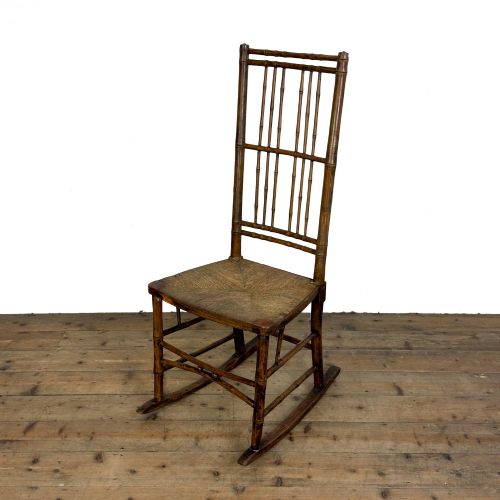
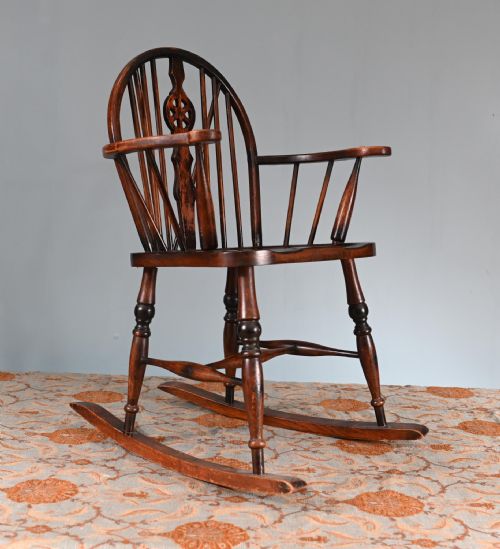


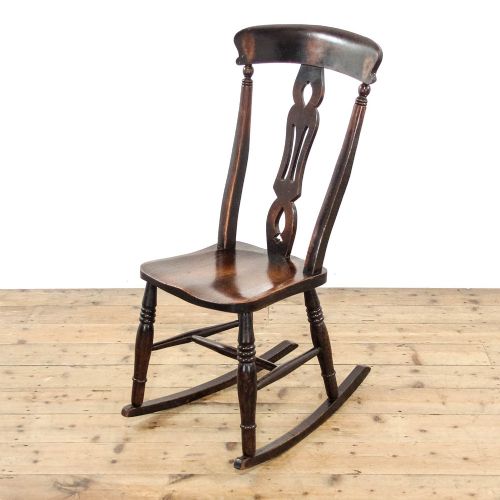


Traditional Wooden Nursery Rocker
A traditional wooden nursery rocker brings children's seating and play from past centuries directly into the family home.
How they were made
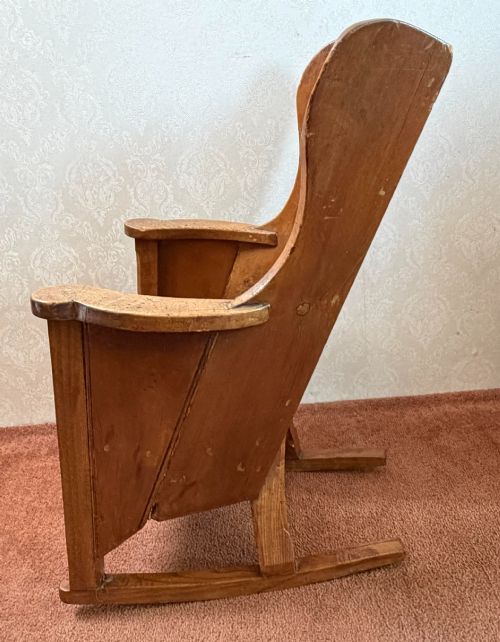
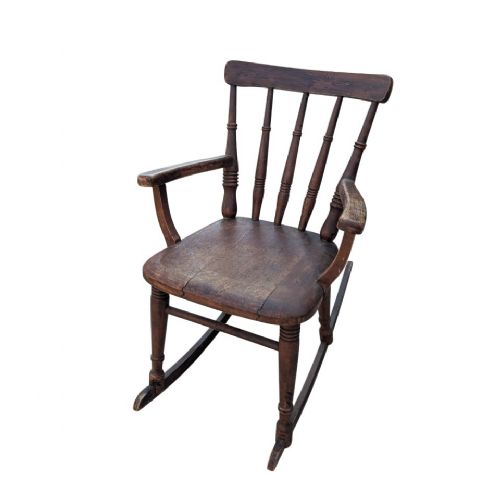
Construction relies heavily on traditional wood types including oak, beech, pine, mahogany, elm and bentwood. Joinery incorporates moulded panelled seats and backs, alongside turned spindles and bent timber components.
Surfaces receive various treatments, appearing in bare timber, original paint, ebonisation or faux bamboo carving. Upholstery and support elements sometimes utilise leather, horsehair, rush and cane.
What varies in quality
The distinction between ordinary items and finer examples rests upon the integrity of the original construction and the survival of early surfaces. Pieces retaining original paintwork, authentic hardware and undisturbed timber patination command greater interest from collectors.
Design complexity and regional craftsmanship also separate standard utility items from more ambitious workshops. Elaborate carvings, distinctive regional Windsor forms and documented maker attributions elevate the standing of individual nursery pieces.
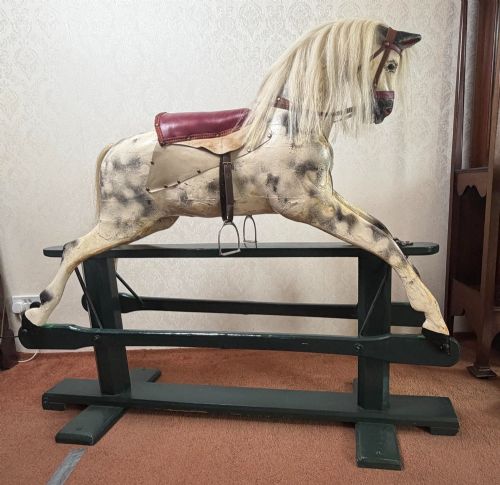
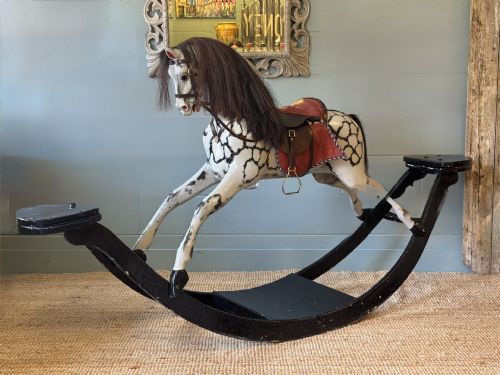
Several rocking horses arrive bearing the weathered scars of endless imaginary gallops through Victorian playrooms.
G & J Lines of London
The Traditional Wooden Nursery Rocker Glossary
- Windsor
- A traditional chair construction method where legs and back spindles are wedged directly into a solid carved wooden seat.
- Wheelback
- A chair design featuring a decorative splat shaped like the spokes and rim of a wooden cartwheel.
- Bentwood
- Wood steamed and bent under pressure into curved structural shapes, commonly utilised in Edwardian seating.
- Ebonised
- Timber finished with a dark stain or paint to imitate the heavy appearance of ebony wood.
- Rockers
- The curved wooden arcs attached to the base of a chair, cradle or toy to permit a gentle rocking motion.
Traditional Wooden Nursery Rocker: Frequently Asked Questions
How do I date a wooden rocking chair?
Dating relies on observing construction methods, tool marks, timber choices and stylistic cues associated with specific periods like the Victorian era or earlier centuries.
Changes in turning styles and assembly techniques help narrow down the decade of manufacture.
Are old rocking horses safe for children?
Historic rocking horses are primarily constructed as decorative antiques rather than modern toys. Many feature rigid wooden platforms or early curved rockers that lack contemporary safety standards.
Collectors generally preserve them for display rather than active play.
What is a nursing rocking chair?
A nursing rocking chair is historically designed with a slightly lower seat and often lacks arms to accommodate the wide garments worn by mothers during infant feeding.
These pieces provide a comfortable seating height combined with a soothing motion.
How should I care for antique nursery wood?
Maintenance involves keeping wooden pieces away from direct heat sources and dramatic humidity fluctuations to prevent timber splitting. Gentle dusting with a dry cloth preserves the historic surface finish.
Avoid harsh chemical cleaners that strip original patina.