


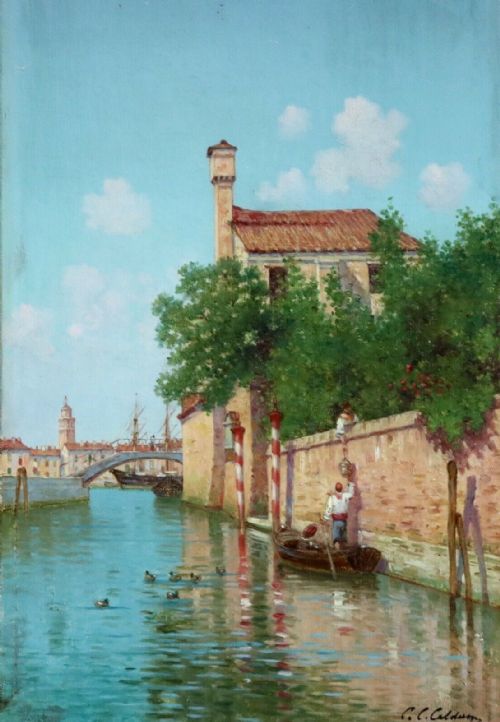
Venice Gondola Oil Painting
A venice gondola oil painting brings the light and water of the lagoon straight into a room through oil paint on canvas.
Venice Gondola Oil Painting
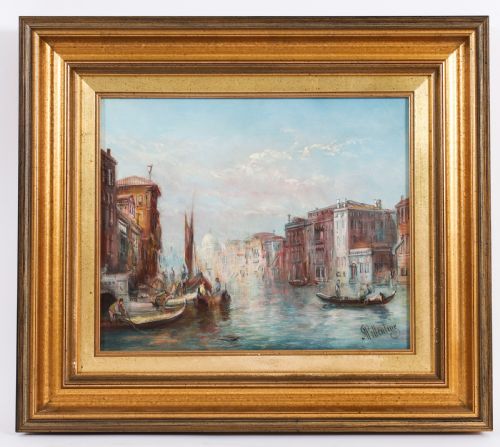
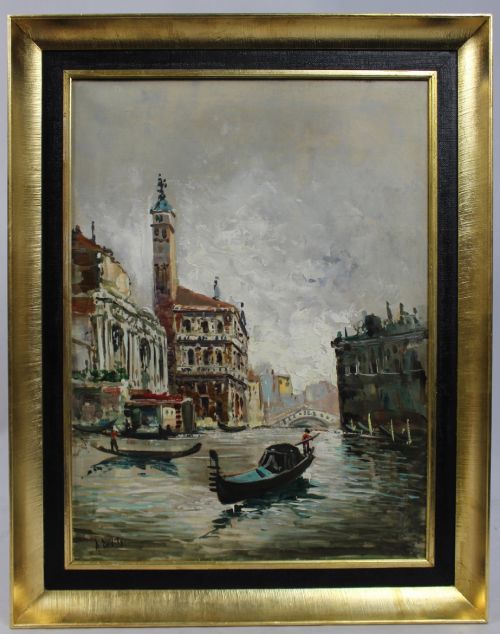
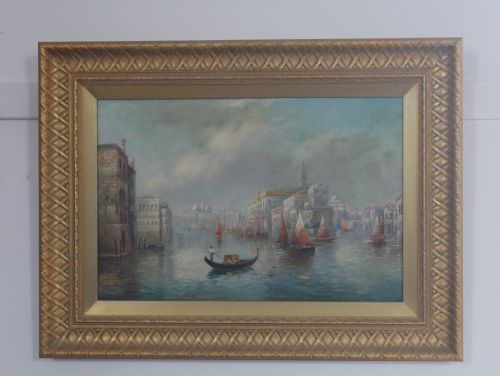
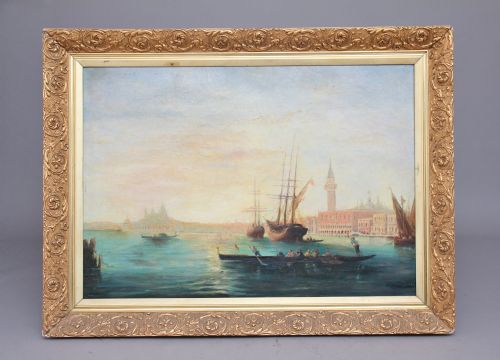
A venice gondola oil painting captures the water, palaces, and vessels of the Italian city through various historical periods. The works range from nineteenth century romanticism and Victorian depictions to mid-century impressionism.
Buyers frequently encounter nineteenth century canvases alongside early twentieth century interpretations of the Venetian lagoon. These paintings often focus on specific landmarks such as the Grand Canal, the Ducal Palace, and the Bridge of Sighs.
The format typically involves oil paint applied to canvas, frequently housed within wooden frames. Some pieces emphasise the atmospheric haze of the water, while others detail the architecture and gondolieri.
How they were made
Artists utilised oil paint on canvas substrates to build up rich textures and tonal depths. The medium allowed for slow drying times, enabling painters to blend colours and capture the shifting light on the water.
Many works incorporate wooden frames, often finished with gilt or giltwood to complement the oil paintings. The combination of canvas and wood provided a stable structure for handling thick brushwork and fine detail.
The listings combine oil paint on canvas with wooden and giltwood frames across various nineteenth and twentieth century styles.
What varies in quality
The skill in handling light and atmosphere distinguishes the more accomplished canvases from simpler decorative works. Painters who successfully rendered the specific luminosity of the Venetian lagoon achieve greater depth in their compositions.
Frame selection and preservation also influence the overall character of the piece. Original giltwood frames that harmonize with the canvas contribute to the historical integrity of the artwork.
Alfred Pollentine·Antonio DeVity·F.D. Campo·Marc Aldine·Jane Vivian·Charles Clement Calderon·J. Cullen
The Venice Gondola Oil Painting Glossary
- Canvas
- A heavy woven fabric used as a surface for oil painting. It provides the primary support for pigment across most of these works.
- Giltwood
- Wood carved and covered with a thin layer of gold leaf. This material frequently appears in the ornate frames surrounding the paintings.
- Impressionism
- An art style focused on accurate depiction of light and its changing qualities. This approach is visible in several mid-century and Italian works on this page.
- Lagoon
- The shallow body of water surrounding Venice. Artists frequently depicted its specific expanse and atmospheric conditions in their townscapes.
Venice Gondola Oil Painting: Frequently Asked Questions
What periods do these paintings cover?
The available selection spans from the Victorian era and nineteenth century romanticism through to mid-century impressionism in the nineteen sixties.
Most pieces date between the late nineteenth century and the early decades of the twentieth century.
How should I display an oil painting?
These works require placement away from direct sunlight and excessive moisture to protect both the canvas and the oil pigments.
Ensuring stable room temperatures helps preserve the integrity of the paint layer and any associated giltwood framing.
What subjects appear alongside gondolas?
Artists frequently recorded prominent Venetian landmarks including the Grand Canal, the Ducal Palace, and the Bridge of Sighs.
Views also encompass broader expanses of the Venetian lagoon and surrounding cityscape architecture.
Are these works signed by artists?
Several pieces feature signatures from listed painters such as Alfred Pollentine, Antonio DeVity, and Jane Vivian.
Other works remain attributed through period style or specific gallery records.