




Italian Impressionist Art
Italian impressionist art captures the luminous light and bustling canals of southern Europe through swift brushwork and vibrant pigments.
Italian Impressionist Art
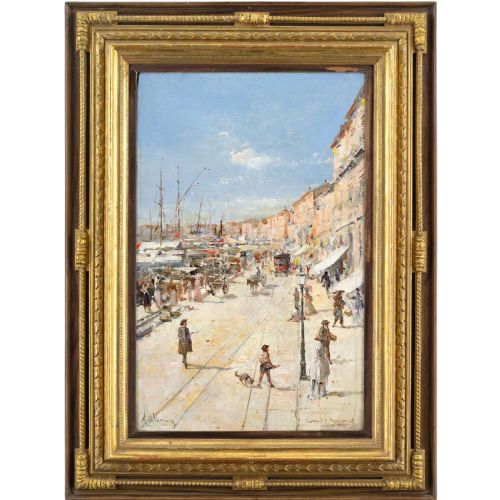
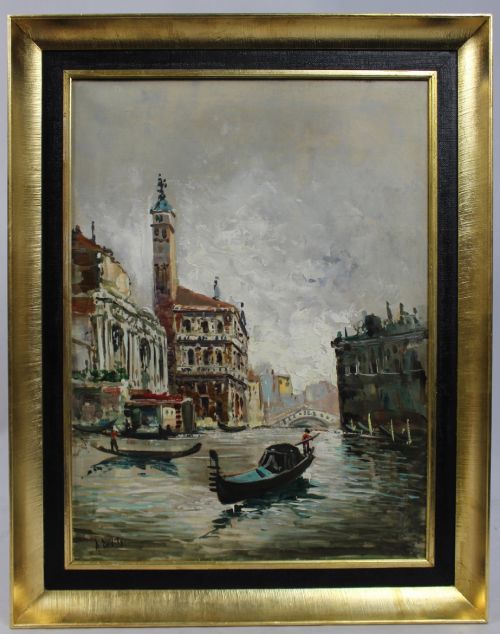
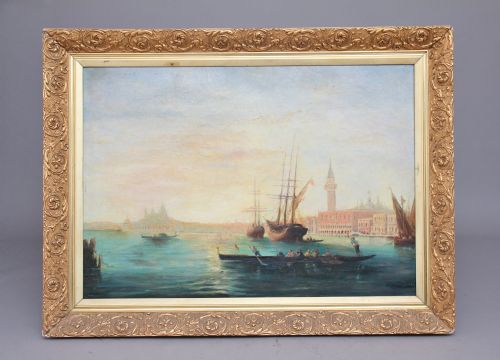
Italian impressionist art encompasses paintings and watercolours that reflect the atmospheric conditions of cities and coastlines. Buyers examining this category encounter depictions of Venetian lagoons, grand canals, and sunlit Sicilian streets created across the nineteenth and twentieth centuries.
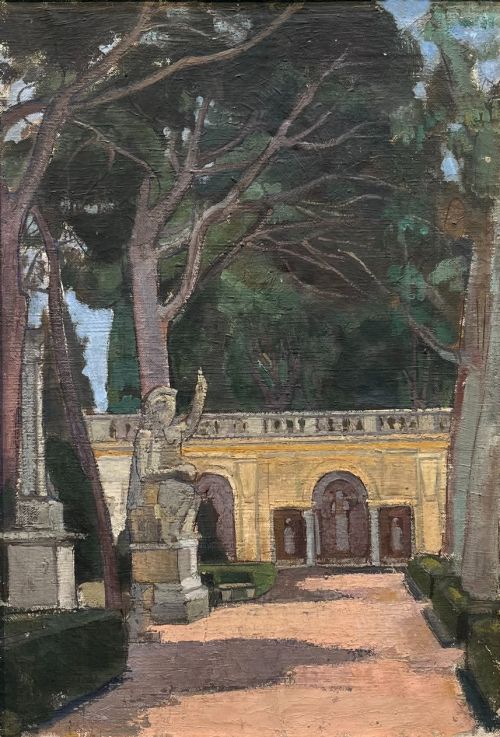
The selection ranges from traditional nineteenth century works to mid-century impressionism. Many pieces focus on specific urban landscapes such as Messina and Rome alongside quiet garden scenes.
Surviving examples include works by continental painters as well as British artists travelling through Italy. These paintings preserve historical views of architecture and daily life rendered with loose, expressive handling.
Materials and technique
Artists executed these works primarily with oil paint on canvas or watercolour applied to paper. Wooden supports and giltwood frames also appear frequently among the surviving pieces.
The technique relies on visible brushstrokes and careful attention to natural light rather than rigid academic finish. Pigments capture the shifting glare of water and stone across different decades of the modern era.
Gondoliers navigate eternal waters beneath painted bridges, forever frozen mid-stride while tourists watch from silent canvas mansions.
Judging quality in the medium
Quality rests upon the handling of light and the sureness of the draughtsmanship. Stronger compositions demonstrate a confident command of tone that brings depth to water and shadow.
The harmony of the palette and the preservation of the original surface condition heavily influence desirability. Framed works retaining appropriate period giltwood enhance the overall presentation.
Augusto Alberici·Antonio DeVity·Umberto Volpato·Attilio Toro·Vincenzo Irolli·Vittore Zanetti Zilla·Hercules Brabazon Brabazon·Roberto Venturi·Emanuele Cappello·Charles Clement Calderon
The Italian Impressionist Art Glossary
- Canvas
- A heavy woven fabric stretched across a wooden frame to serve as a painting surface. It provides a flexible and durable ground for oil paint.
- Giltwood
- Wood that has been coated with a thin layer of gold leaf or metallic gilt powder. This finish is commonly found on decorative picture frames.
- Impressionism
- An art style characterised by relatively small, thin yet visible brush strokes and open composition. Emphasis is placed on accurate depiction of light in its changing qualities.
- Watercolour
- A paint consisting of pigment suspended in a water-based solution. It is typically applied to paper to achieve translucent effects.
- Lagoon
- A stretch of salt water separated from the sea by a low sandbank or coral reef. The Venetian lagoon forms a frequent subject in these paintings.
Italian Impressionist Art: Frequently Asked Questions
What subjects do these paintings show?
The works predominantly feature Italian scenes such as Venetian canals, gondolas, cathedrals, and cityscapes. Coastal views and garden settings also recur across the selection.
Artists frequently recorded famous landmarks like the Bridge of Sighs and the Grand Canal under various daylight conditions.
How do I date an oil painting?
Dating relies on stylistic evidence, signatures, stretcher construction, and canvas types. Many pieces bear inscribed dates or carry documentation from their period of origin.
Comparative analysis with known works by the same artist helps narrow down the decade of creation.
What is the difference between oil and watercolour?
Oil paint utilises a slow-drying medium that allows for rich texture and layered blending on canvas. Watercolour uses water-soluble binders on paper to produce luminous, transparent effects.
Both mediums captured the bright atmosphere of Italy through distinct technical approaches.