


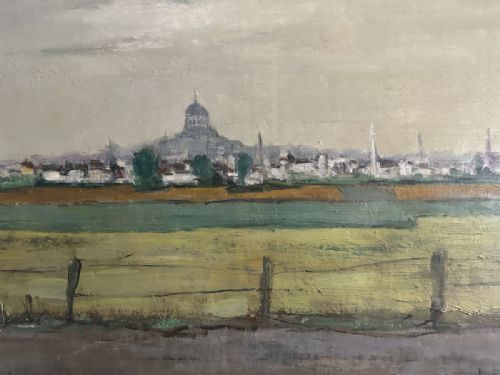

European Cityscape Oil Painting
These european cityscape oil painting works capture bustling continental squares and quiet canals through layered brushwork on canvas and wood.
European Cityscape Oil Painting
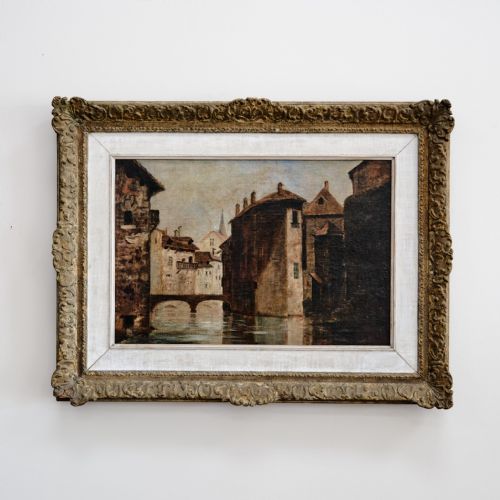
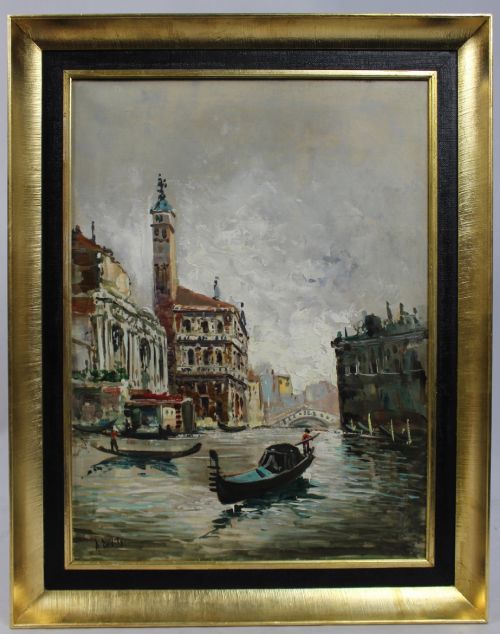
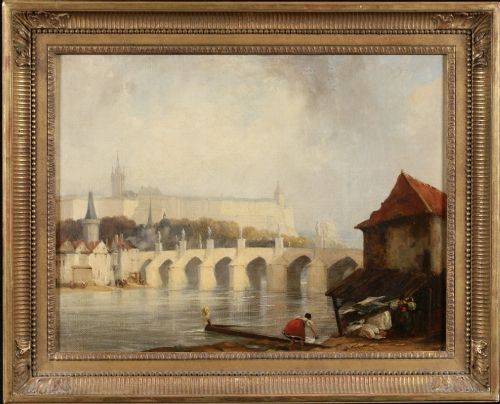
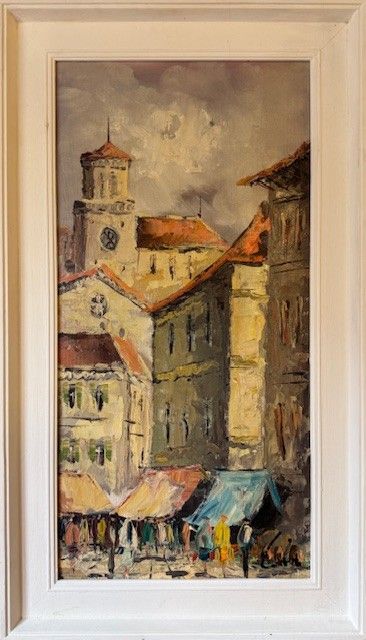
A european cityscape oil painting records urban life, architecture and waterways across the continent from Georgian times through the mid-century period. The pieces on this page span French market squares, Venetian canals, German expressionist waterways and Dutch architectural views.
Buyers encounter works ranging from 19th-century French and English schools to mid-century impressionist and expressionist interpretations. Canvas and wood serve as the primary supports for these diverse urban scenes.
Makers recorded in the evidence include Antonio DeVity, E A Minardo, Frederick Tully Lott, William George Meadows, Lewis J Wood, Job de Vogel, Ludwig Hermann, Henry Schafer and Letitia Marion Hamilton.
Materials and technique
Artists built these scenes using oil paint applied to canvas or wood panels, often incorporating gesso preparations. Brushwork varies from tight architectural precision in 19th-century views to looser mid-century impressionism.
Frames frequently utilise giltwood and gold leaf, matching the traditional presentation methods of Victorian and Georgian periods.
Materials recorded across the inventory include canvas, wood, oil paint, gesso, gold leaf and giltwood.
Quality and execution
Superior works demonstrate confident handling of perspective, light and architectural detail, distinguishing accomplished artists from anonymous or decorative studio output. The strength of composition and atmospheric depth separate finer canvases from simpler topographical records.
The preservation of the original paint surface and the harmony of the framing, particularly with period giltwood, influence the overall integrity of the piece.
Antonio DeVity·E A Minardo·Frederick Tully Lott·William George Meadows·Lewis J Wood·Job de Vogel·Ludwig Hermann·Henry Schafer·Letitia Marion Hamilton
The European Cityscape Oil Painting Glossary
- Canvas
- A heavy woven fabric stretched across a wooden frame to serve as a painting support.
- Giltwood
- Wood carved and coated with gold leaf or metallic paint, common in traditional picture frames.
- Impressionism
- A style of painting emphasising light and rapid brush strokes rather than precise detail.
- Expressionism
- An artistic style where the artist distorts reality for emotional impact through bold colour and form.
- Gesso
- A plaster mixture applied to wood or canvas to create a smooth surface for oil painting.
European Cityscape Oil Painting: Frequently Asked Questions
How do I date a cityscape oil painting?
Dating relies on stylistic evidence such as the architectural clothing of figures, the framing materials and the brushwork techniques characteristic of periods like the Georgian era or the mid-century decades.
Signatures, artist records and stretcher construction on the reverse of the canvas provide additional chronological clues.
Where were these paintings displayed?
These works typically hung in domestic parlours, libraries and formal reception rooms of 19th-century homes as records of continental travel and urban scenery.
Mid-century examples often found places in modern apartments reflecting a broader interest in international townscapes.
How should I care for an oil painting?
Keep paintings away from direct sunlight and steady humidity levels to prevent the canvas from slackening and the oil paint from cracking.
Dust the surface gently with a soft, dry brush and avoid chemical cleaners on both the canvas and the giltwood frame.
What is the difference between Dutch and French school paintings?
Dutch school works often focus on atmospheric harbour scenes and muted canal views with careful attention to atmospheric light and water.
French school pieces frequently emphasise bright market squares, bustling cathedrals and dynamic impressionistic colour palettes.